Article Directory
The pump is the part of a perfume bottle a customer touches every single day, long after the box and label are forgotten. An FEA15 crimp pump is one of the most widely specified mechanisms for fine fragrance packaging, valued for the tight, tamper-resistant seal it forms against the bottle neck. This guide covers what the pump is, how it is built, where it is used, and how it compares with screw-style alternatives.
An FEA15 crimp pump is a perfume spray pump dispenser built to a standard neck-fitting diameter, secured to a glass bottle by crimping a thin aluminum collar around the bottle's neck rather than threading it on. This crimp neck pump system forms a mechanical seal that is difficult to remove without damaging the collar, which is precisely why fine fragrance producers favor it — it signals to the customer that the bottle has never been opened.
A fragrance bottle atomizer pump works by drawing liquid up a dip tube through a piston-and-spring mechanism, then forcing it through a micro-calibrated nozzle that breaks the stream into a fine mist. The FEA15 designation refers to the neck fitting size, which determines which bottle necks the cosmetic fine mist sprayer can be crimped onto.
Crimp pumps are not a single fixed design — output style, collar finish, and actuator shape all vary depending on the packaging brief.
Calibrated for a wide, even mist suited to fragrance application at a distance from the skin.
The general category built around the aluminum crimp collar rather than a threaded closure.
An alternative closure style, threaded onto the bottle neck instead of crimped — used here as a comparison point.
Refers to the actuator and nozzle head, which can be swapped across finishes without changing the pump body.
Describes the collar material specifically, which affects both seal strength and finished appearance.
Choosing between a crimp pump vs screw pump for perfume bottles usually depends on whether tamper evidence or ease of assembly matters more to the brand's production line — a decision explored further in the comparison section below.
Within the perfume packaging industry, the crimp format is especially common on cosmetic fragrance bottles positioned at the premium end of a brand's range, where the tactile click of a crimped pump reinforces a sense of quality. Luxury scent atomizers and personal care spray products both rely on the same underlying mechanism, scaled down further for travel size perfume containers where a compact pump body and shorter dip tube are needed.
Fine mist atomization is the property most closely associated with perceived quality — a coarse or uneven spray reads as a lower-grade product regardless of what is inside the bottle. A leak proof sealing pump protects against loss during shipping and storage, while consistent spray output ensures the fragrance is dosed the same way on the hundredth use as on the first. A corrosion resistant spring system matters more than it might seem, since the spring sits in near-constant contact with the fragrance concentrate, and a smooth actuation mechanism is what makes the daily habit of applying scent feel effortless rather than stiff.
Production combines precision plastics work with metal forming and fine calibration before a finished pump is ready to ship.
Plastic injection molding pump parts
Stainless steel spring assembly
Micro nozzle spray calibration
Crimp collar assembly process
Automated pump assembly line
The body, piston, and actuator begin as plastic injection molding pump parts formed to tolerances fine enough to maintain an airtight seal at the piston chamber. A stainless steel spring assembly is fitted to return the actuator after each press, chosen specifically for resistance to the fragrance formulation it will sit in. Micro nozzle spray calibration follows, tuning the droplet size the pump produces, before the crimp collar assembly process fixes the finished pump to a sample neck for a fit check. From there, an automated pump assembly line brings the components together at production scale with in-line testing for spray consistency and leak resistance.
The crimp neck vs screw neck bottles decision often reflects brand positioning as much as engineering. A sealing performance comparison generally favors the crimp format, since threads can loosen slightly over time in a way a crimped collar cannot. Leakage resistance in spray systems is one of the main reasons luxury packaging pump design continues to specify crimp mechanisms, even though assembly efficiency in pump systems tends to favor the screw format on high-speed filling lines.
Most disadvantages of perfume crimp pumps trace back to two root causes: a nozzle that has dried out from disuse, or a seal that was never perfectly matched to the bottle neck at assembly. Understanding why perfume sprayers stop working usually starts with checking whether the issue is a clogged nozzle or a genuine mechanical fault in the pump body, since the fix for each is very different.
Sustainability expectations and demand for more refined sensory experiences are both shaping where pump technology, including the FEA15 crimp pump category, is headed next.
Eco friendly refillable perfume systems are becoming a more visible design priority as brands look to reduce single-use glass and metal waste without compromising the premium feel of the pump mechanism. Precision micro mist technology continues to improve droplet consistency, and recyclable cosmetic packaging pumps are being engineered from simplified material combinations that are easier to separate at end of life. Airless fragrance dispensing systems are also gaining ground in categories where formulation stability matters as much as spray quality, offering an alternative worth watching alongside traditional crimp mechanisms.
 |
 |
A perfume pump built to a standard neck-fitting size, secured to the bottle by crimping an aluminum collar around the neck.
Pressing the actuator drives a piston that pulls liquid up a dip tube and forces it through a nozzle that atomizes it into a fine mist.
Crimp pumps generally offer a stronger, more tamper-evident seal, while screw pumps are faster to assemble and easier to replace.
Most commonly due to a dried or clogged nozzle, though worn seals or spring fatigue can also be the cause after extended use.
Some designs support refilling, particularly in refillable packaging systems built specifically for that purpose.
A pump calibrated to break liquid into very small, evenly dispersed droplets rather than a coarse stream or spray.
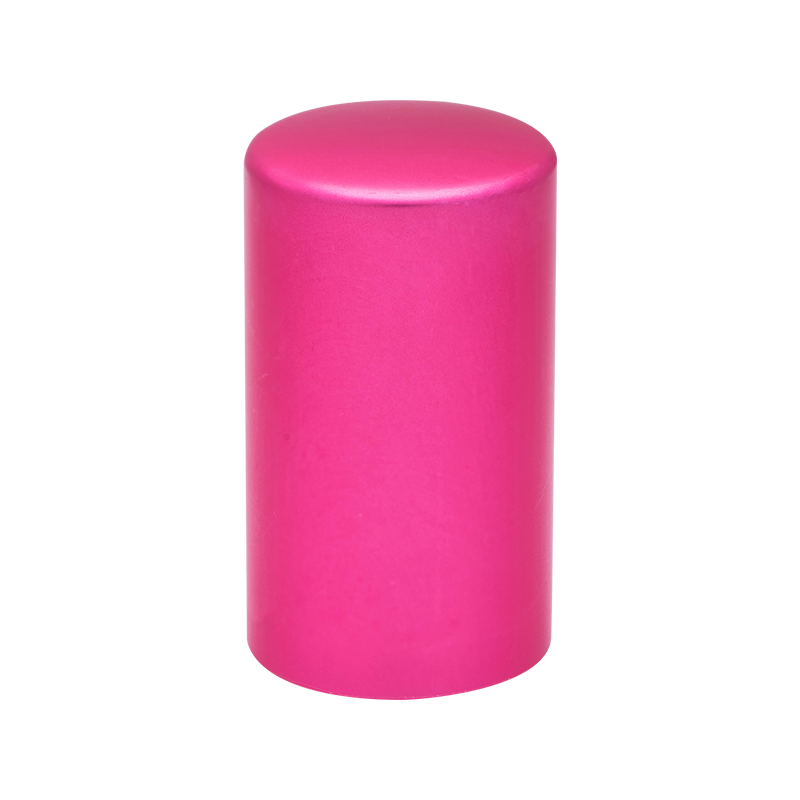 XY-LZ-18.6*32 Straight Perfume Bottle Aluminum Cap For Luxury Glass Fragrance Bottles, Minimalist Design
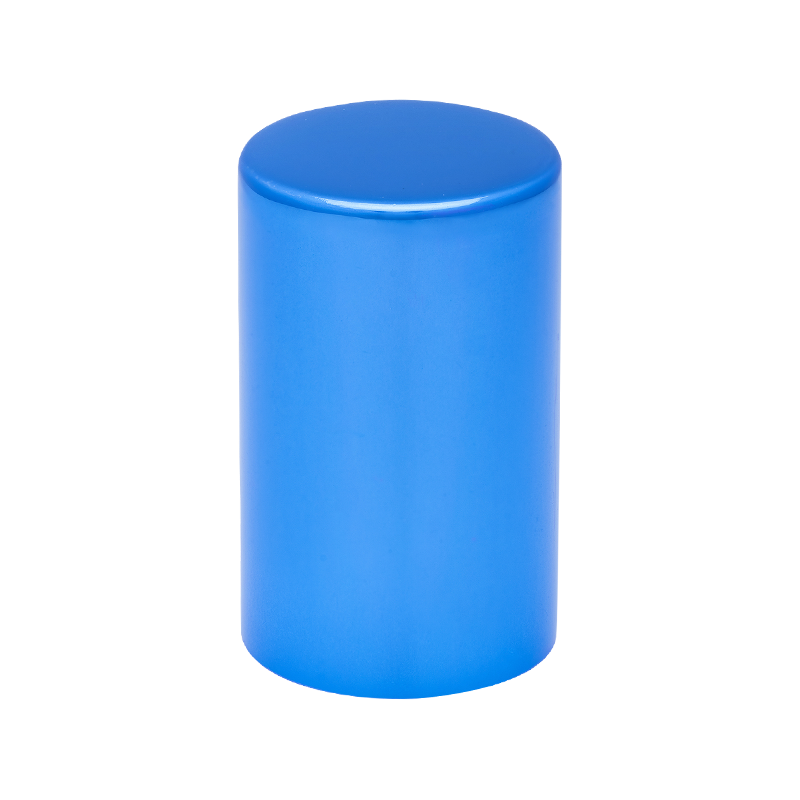 XY-LZ-20.6*34 Multiple Colors Straight Perfume Aluminum Cap/Lid For Fragrance, Essential Oil Bottle
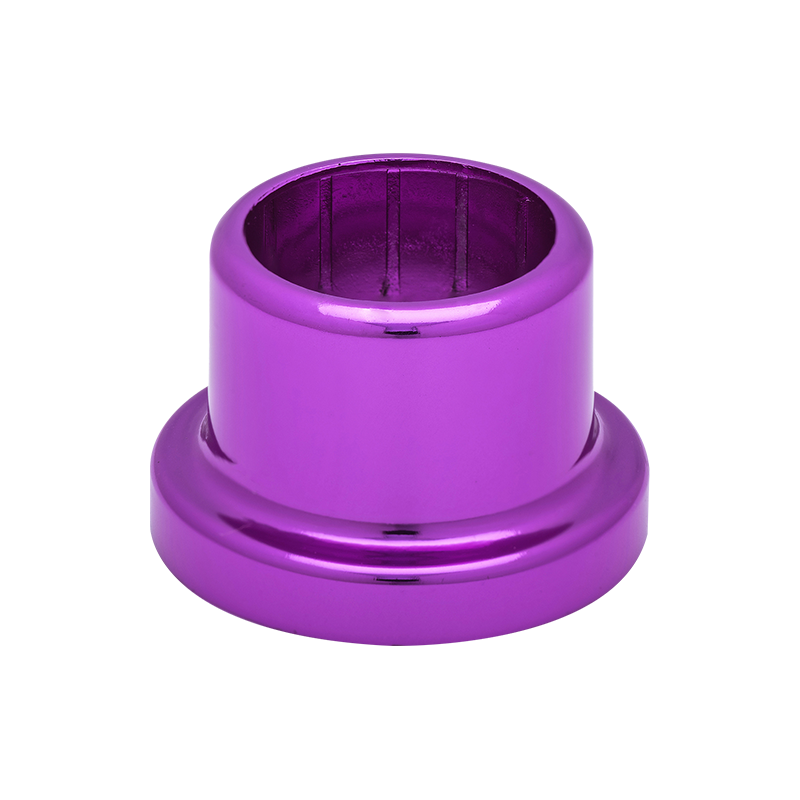 XY-ZT-17.05*15.6 22.8*4 Aluminum Cosmetic Perfume Collar With Step
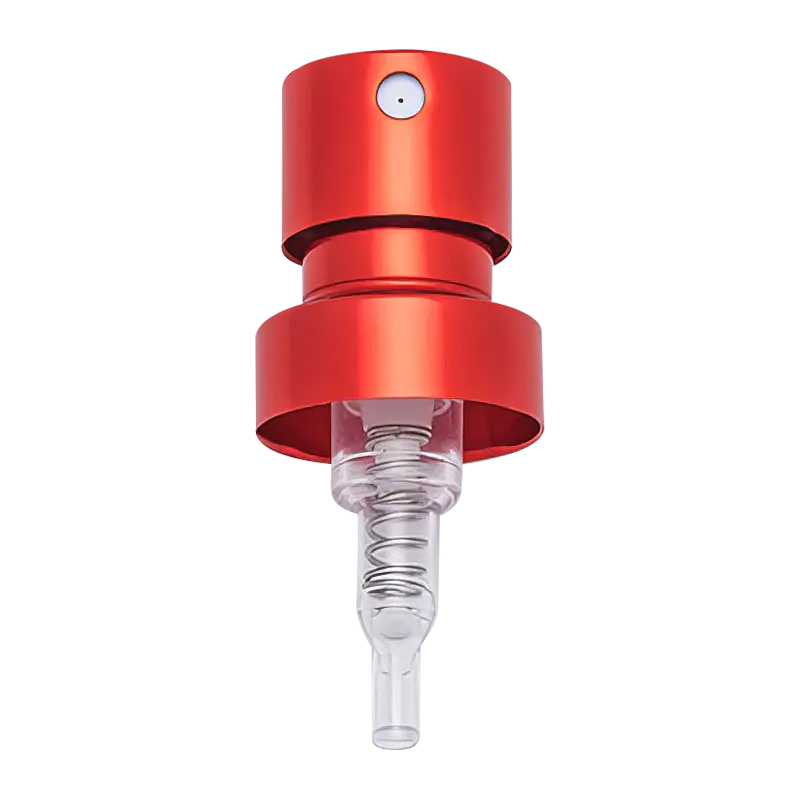 XY-PT-⊘15JDGB 15mm Crimp perfume fine mist pump sprayer high type
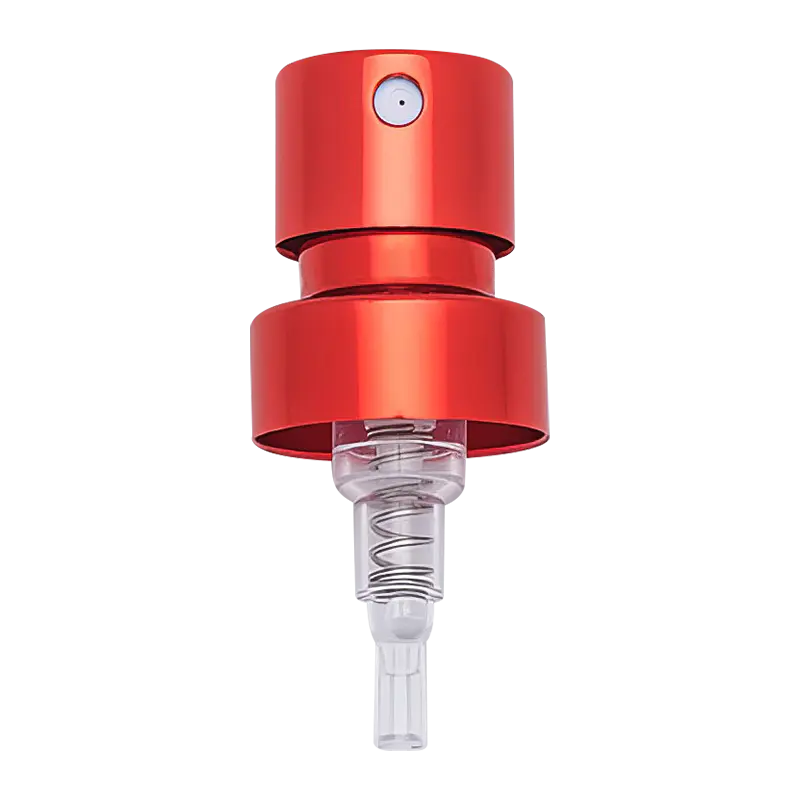 XY-PT-⊘15JDAB 15mm Crimp perfume fine mist pump sprayer short type
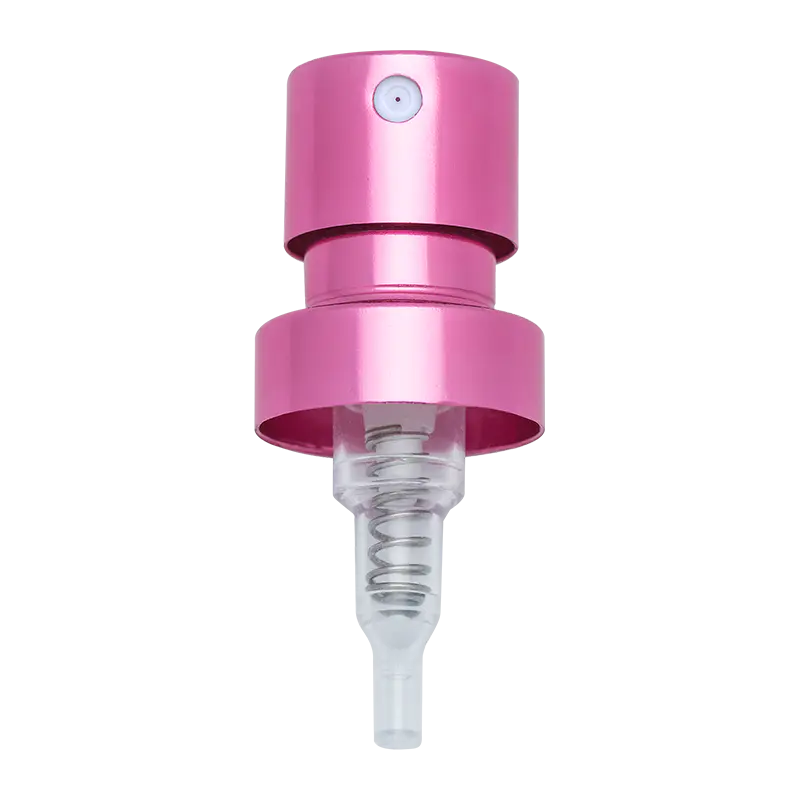 XY-PT-⊘15ABMG 15mm Crimp perfume fine mist pump sprayer short type
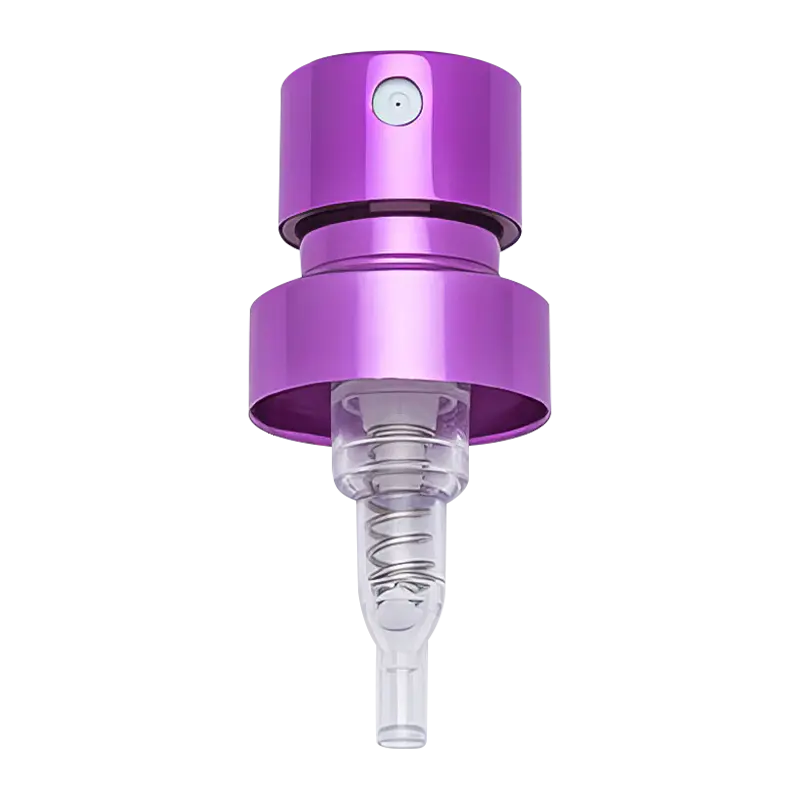 XY-PT-⊘15CAMG 15mm Crimp perfume fine mist pump sprayer shorter type
Tel: +86-13812990918
Phone: +86-512-58962260
Address: No.3, Xiangqun Road, Leyu, Zhangjiagang.


 English
 русский
 Español
 عربى
عربى Português