 English
 русский
 Español
 عربى
عربى Português
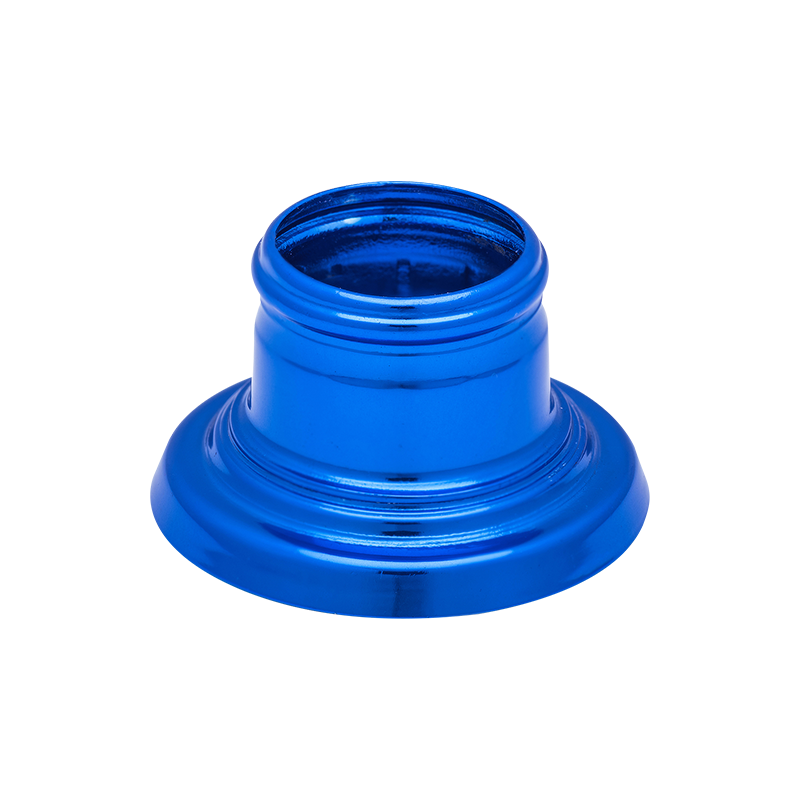
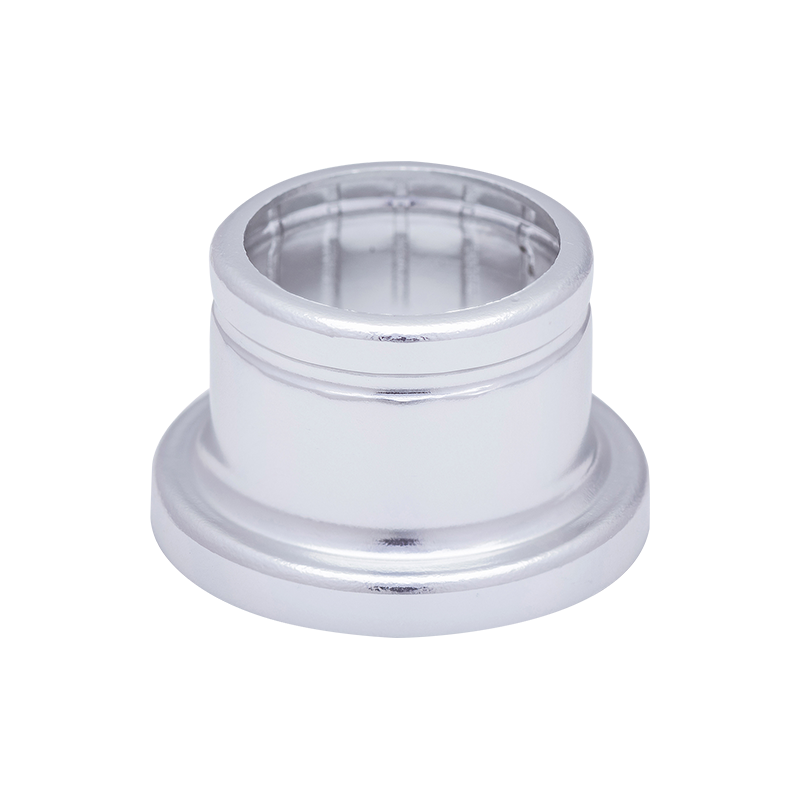
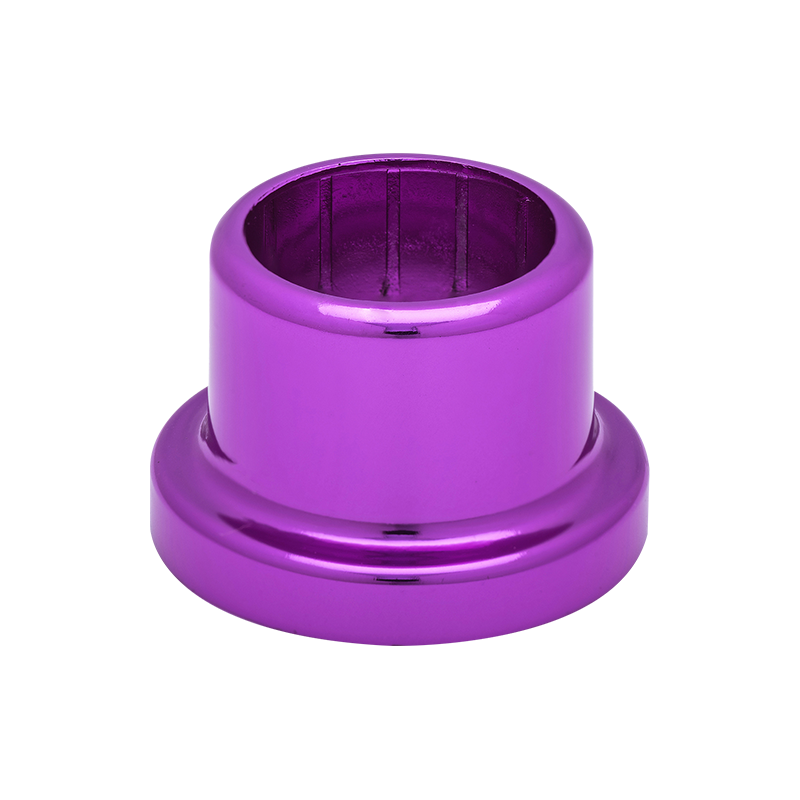
A Perfume Collar with Step is a precision-machined aluminum component that sits between a fragrance pump and its bottle neck, providing a raised stepped seat that simultaneously centers the pump, creates a leak-proof seal, and delivers a refined decorative finish. It is the single component most responsible for whether a luxury perfume bottle looks and functions as intended after assembly.
What a Perfume Collar with Step Actually Does
The "step" refers to a machined shoulder — a concentric ledge formed into the inner bore of the collar. When the pump stem is inserted, the step catches the pump ferrule at a precise depth, preventing over-insertion, controlling crimp height, and distributing clamping force evenly around the bottle neck. Without this feature, pumps can tilt off-axis, crimp unevenly, or allow micro-gaps that cause fragrance evaporation or leakage in transit.
Three functions are delivered simultaneously by the stepped design:
- Mechanical registration: The step sets a fixed axial stop, so every pump sits at the identical height regardless of manual assembly variation.
- Sealing geometry: The step face compresses the pump gasket uniformly, creating a 360-degree contact seal rather than a point seal.
- Visual alignment: The collar outer profile aligns flush with or slightly proud of the bottle finish, giving the neck a coherent, jewellery-like appearance.
Material and Finish Options That Affect Performance
Most perfume collars with step are manufactured from 6061 or 6063 aluminium alloy. The choice of alloy and surface treatment directly affects corrosion resistance, weight, and decorative range:
| Alloy / Finish | Typical Use Case | Key Property |
|---|---|---|
| 6061-T6, anodised | Mass-market and mid-range fragrance | Hard surface, resists scratching; anodise layer 10–25 microns |
| 6063-T5, anodised | Luxury / ultra-smooth decorative | Finer grain, accepts mirror-bright anodise and dye penetration |
| 6061, UV lacquer coated | Colour-matched to bottle cap | Wide colour range; lacquer thickness 15–30 microns |
| 6063, PVD gold or rose gold | Prestige niche and designer fragrance | PVD layer 0.3–0.5 microns; excellent abrasion resistance |
| 6061, brushed + clear anodise | Minimalist masculine fragrance lines | Satin texture; conceals minor handling marks |
Anodised aluminium is by far the most common choice because it is lightweight (density 2.7 g/cm3 versus 8.9 g/cm3 for brass), chemically inert to fragrance compounds, and recyclable — an increasingly stated requirement in European fragrance packaging regulations.
Dimensional Tolerances That Determine Fit
The stepped collar must be machined to tight tolerances to function correctly. Even a 0.05 mm oversize on the bore will cause the pump to rattle; 0.05 mm undersize makes assembly impossible on an automatic filling line running at 3,000–6,000 bottles per hour.
| Dimension | Typical Range | Tolerance Class |
|---|---|---|
| Inner bore diameter (below step) | 13 mm – 24 mm | +0 / -0.03 mm |
| Step seat diameter | 15 mm – 26 mm | +0.02 / -0 mm |
| Step depth (axial) | 1.0 mm – 2.5 mm | +/- 0.05 mm |
| Overall collar height | 8 mm – 22 mm | +/- 0.1 mm |
| Outer diameter | 18 mm – 32 mm | +/- 0.05 mm |
CNC-turned collars produced on Swiss-type lathes consistently hold these tolerances across production runs of 100,000+ pieces. Casting or sintering processes cannot reliably achieve sub-0.05 mm step tolerances and are therefore not used for functional pump collars.
How the Step Geometry Affects Crimping on Filling Lines
Automated crimping heads on fragrance filling lines apply a radial force of typically 800–2,000 N around the collar's lower skirt to lock it to the bottle neck. The step geometry plays a critical role here:
- The step prevents axial movement during the crimp stroke, so the crimping head does not need to apply a downward holding force simultaneously — simplifying tooling design.
- A correctly dimensioned step ensures the crimp groove on the bottle finish and the crimp zone on the collar align within 0.2 mm, producing a reliable lock without glass stress fractures.
- Step collars designed with a 5–8 degree chamfer on the step face allow the pump gasket to self-centre during insertion, reducing assembly rejects from off-axis gasket placement to below 0.3% on well-maintained lines.
By contrast, collars without a step rely entirely on operator or machine positioning, which typically yields 1.5–3% assembly defect rates in high-speed filling environments.
Standard Neck Finishes the Collar Must Match
Perfume bottles follow established neck finish standards derived from FEA (Fragrance & European Affairs) and GCMI (Glass Container Manufacturers Institute) specifications. A stepped collar must be designed around the specific finish it will be used on:
| Neck Finish | Neck OD (mm) | Common Collar OD (mm) | Application |
|---|---|---|---|
| FEA 15 | 15.0 | 18–20 | Miniature and travel-size fragrances (5–30 ml) |
| FEA 18 | 18.0 | 21–24 | Standard 50–100 ml fragrance bottles |
| FEA 20 | 20.0 | 23–26 | Larger capacity bottles (100–200 ml) |
| Custom finish | Varies (11–28) | Custom matched | Bespoke designer or niche fragrance houses |
The FEA 18 finish is by far the most prevalent globally, accounting for an estimated 60–65% of pump fragrance bottles in commercial production. Any manufacturer supplying stepped collars should stock FEA 18-compatible tooling as a baseline.
Quality Control Points Buyers Should Verify
When specifying or sourcing a perfume collar with step, these are the quality checkpoints that distinguish reliable suppliers from commodity ones:
- Step concentricity: The step bore should be concentric with the outer diameter within 0.03 mm TIR (Total Indicator Reading). Eccentric steps cause visible pump tilt on the finished bottle.
- Burr-free step face: Machining burrs on the step seat puncture pump gaskets. Inspect with 10x magnification; reject any part with visible edge material.
- Anodise uniformity: Measure anodise thickness at four quadrants of the collar using an eddy-current gauge; variation greater than 3 microns indicates inconsistent bath control.
- Dimensional SPC records: A competent supplier provides Statistical Process Control charts for bore diameter and step depth, demonstrating Cpk values above 1.33.
- Salt spray test: For collars used in humid climates or bathroom-shelf display, request 96-hour neutral salt spray test data per ISO 9227 on the finished surface treatment.
Customisation Possibilities for Brand Differentiation
The outer profile of a stepped collar offers significant scope for brand expression without changing the functional step geometry. Common customisation approaches include:
- Knurling or fluting: Vertical or diagonal knurl patterns machined into the collar waist, providing grip texture and visual identity. Pitch typically 0.5–1.0 mm.
- Laser engraving: Brand name, logo, or pattern engraved to a depth of 0.1–0.2 mm directly into the anodised surface. Engraving depth greater than 0.3 mm risks penetrating the anodise layer and exposing bare aluminium.
- Two-tone finishing: Lower skirt anodised in one colour, upper visible band PVD or lacquer in a contrasting colour — a technique used by several top-10 fragrance brands.
- Curved or tapered outer profile: The outer wall can be CNC-turned to a concave or convex taper matching the bottle shoulder radius, creating a seamless visual flow from bottle to pump.
- Hot stamping: Foil stamping in gold, silver, or holographic applied to a flat panel machined into the collar face.
Lead times for custom profiles typically run 4–8 weeks for tooling and first article approval, followed by 3–5 weeks for production quantities of 50,000 pieces or more.
Compatibility Checklist Before Finalising a Collar Specification
Before approving a perfume collar with step for production, verify these items against both the bottle and pump specifications:
- Bottle neck finish OD and finish type (FEA 15, 18, 20, or custom)
- Pump ferrule diameter and ferrule shoulder height — these set the required step diameter and depth
- Pump dip tube length — confirms collar height does not restrict dip tube insertion
- Crimping head tooling inner diameter — must clear the collar outer diameter by at least 0.5 mm
- Cap inner diameter — the collar must not protrude into the cap skirt clearance zone
- Fill height specification — the collar height affects pump uptake depth and residual volume
Working through this checklist with dimensioned drawings before ordering tooling saves an average of 3–6 weeks of re-tooling delays and eliminates the most common source of costly collar-related assembly line stoppages.