Article Directory
A high quality customized aluminum perfume collar is the precision-engineered metal ring that seats between a fragrance bottle's neck and its pump or spray head — defining the product's visual identity and ensuring an airtight, leak-proof seal. Aluminum is the material of choice in luxury perfumery because it machines to tight tolerances, accepts virtually any surface finish, resists corrosion from alcohol-based fragrances, and projects the premium weight and tactile quality that consumers associate with fine fragrance.
In fine fragrance packaging, the collar — sometimes called a ferrule, pump collar, or crimping ring — occupies a small but structurally and aesthetically critical position in the bottle assembly. It is the metal component that:
The collar clamps around the pump stem or spray head, holding it firmly against the bottle neck. In a correctly specified collar, the clamping force is distributed evenly around the circumference — preventing pump rotation, wobble, or pull-out under repeated use. Dimensional accuracy of the inner diameter (typically within ±0.05mm) is critical to achieving consistent clamping force across a production run.
The collar compresses a gasket (typically LDPE or PTFE) between the pump base and the bottle neck, creating an airtight and liquid-tight seal. Seal integrity is non-negotiable: alcohol-based fragrances at concentrations of 70–95% ethanol will evaporate through any gap within weeks, causing fragrance degradation and bottle weight loss that triggers consumer and regulatory complaints.
The collar is one of the first metal elements the consumer touches and sees. Its finish — whether mirror-polished, brushed, anodized, PVD-coated, or painted — directly signals the product's tier and brand personality. Luxury maisons invest heavily in custom collar profiles, engraved brand marks, and proprietary finish combinations that cannot be replicated by competitors without the same tooling investment.
Crimped aluminum collars deform permanently during installation and cannot be removed without visible damage — providing a built-in tamper-evidence function. For prestige fragrance SKUs, this protects against refilling with counterfeit product and is increasingly specified as a brand protection requirement alongside serialized printing and authentication holography.
Several materials — zinc alloy (zamak), brass, stainless steel, ABS plastic with metallic coating — compete for use in perfume collar applications. Aluminum consistently wins in premium applications for a combination of functional and commercial reasons. The comparison below examines the most relevant parameters:
| Property | Aluminum (6061/6063) | Zinc Alloy (Zamak) | Brass | ABS + Plating |
|---|---|---|---|---|
| Density (g/cm³) | 2.70 | 6.6–6.7 | 8.4–8.7 | 1.1 (base) |
| Alcohol Corrosion Resistance | Excellent | Good (coated) | Good | Variable |
| Anodizing Capability | Excellent (Type II, III) | Not possible | Not possible | Not applicable |
| Surface Finish Range | Mirror, brush, matte, anodize, PVD, paint | Polish, plate, paint | Polish, plate, PVD | Metallic coating only |
| Machining Precision | Excellent (±0.02mm achievable) | Good (die-cast; ±0.1mm) | Excellent | Limited (mold tolerance) |
| Weight (premium perception) | Good — lighter than brass/zinc | Heavy — may feel excessive | Very heavy | Light — may feel cheap |
| Recyclability | Excellent (closed-loop) | Good | Good | Poor |
| Unit Cost (relative) | Medium | Low-Medium | High | Low |
The decisive advantage of aluminum is the combination of anodizing capability and high-precision machinability. No other material can be anodized to produce the hard, durable, color-stable surface that defines modern luxury fragrance packaging aesthetics — and no die-cast alternative matches the dimensional repeatability of a CNC-turned aluminum collar across production runs of 10,000 to 500,000 pieces.
When brands approach manufacturers for customized aluminum perfume collars, the specification covers several independent dimensions — each offering meaningful differentiation opportunities. Understanding the full scope of what is customizable prevents both under-specification (missing opportunities) and over-specification (unnecessary cost).
The primary dimensional specifications are the inner diameter (ID), outer diameter (OD), height (H), and wall thickness (T). Standard collar dimensions for fine fragrance pumps typically cluster around ID 15mm (for standard spray pumps), ID 18mm (for larger spray and pump heads), and ID 20–24mm for ultra-luxury and niche formats. Wall thickness typically runs 0.8–2.5mm depending on the structural requirement and the desired visual weight. Height ranges from 8mm (minimal, delicate) to 30mm (statement collar with significant visual presence). Custom geometries can include taper angles, stepped profiles, flanges, and undercuts — though these increase tooling complexity and unit cost.
Surface finishing is where the greatest visual differentiation is achieved. The most commonly specified finishes for luxury aluminum perfume collars are:
Ra below 0.1 μm surface roughness. Achieved by multi-stage mechanical polishing followed by electropolishing. Projects maximum luxury. Shows fingerprints; requires anti-smudge topcoat for consumer use.
Linear grain texture applied by abrasive belt or wheel. Ra 0.4–1.6 μm. Conceals fingerprints; projects refined, understated luxury. Most popular finish for mid-to-premium tier fragrance packaging.
Electrochemical oxide layer 5–25 μm thick. Produces vibrant, durable colors integrated into the metal surface. Hardness approximately 250 HV. Salt spray resistance: 500+ hours (ASTM B117). Available in virtually any Pantone-matched color.
Oxide layer 25–75 μm. Hardness 400–600 HV — approaching ceramic. Typically dark grey to black in appearance. Used for ultra-durable, matte-black luxury aesthetics. Wear resistance superior to standard anodize.
Physical vapour deposition applies metallic compound films (TiN, TiCN, CrN) at 0.5–5 μm thickness. Produces gold, rose gold, gunmetal, champagne, and other metallic colour effects that cannot be achieved by anodizing. Hardness above 2,000 HV. Market-standard for luxury gold collar aesthetics.
Powder or liquid coating applied electrostatically and cured at 160–200°C. Enables opaque colour-matched finishes (any RAL or Pantone reference). Film thickness 40–100 μm. Adhesion tested per ISO 2409 cross-cut method. Required for white, cream, pastel, and vivid colour collars.
Beyond base finish, additional decoration processes apply brand identity directly to the collar surface:
The collar's internal thread or crimping profile must be matched precisely to the pump standard used. The three dominant standards in global fine fragrance packaging are:
The production sequence for a precision aluminum perfume collar involves multiple controlled processes, each contributing to the final quality level. Understanding the manufacturing flow helps brands evaluate supplier capabilities and identify quality checkpoints to include in purchase specifications.
Aluminum alloy bar or tube stock is selected by grade (6061-T6 for maximum strength; 6063-T5 for superior surface finish after anodizing). Incoming material is verified by spectroscopic analysis (OES) to confirm alloy composition and temper designation. Certification to EN 573 or ASTM B221 is standard for premium fragrance packaging production.
Bar stock is loaded into a CNC lathe (Swiss-type for small diameters; conventional CNC turning for larger formats). The collar profile — ID, OD, height, thread form, flanges — is machined in a single setup to eliminate re-chucking errors. Modern CNC turning centres achieve surface roughness of Ra 0.4 μm before finishing and dimensional repeatability of ±0.02mm across a production run. Secondary milling operations add flat surfaces, slots, or holes for functional or decorative requirements.
Machined collars are tumble-deburred to remove cutting burrs, then ultrasonically cleaned in a sequence of alkaline degreaser, rinse, and deionised water stages. Pre-treatment for anodizing includes an alkaline etch (to reveal the aluminum grain structure) followed by brightening in nitric/phosphoric acid mix (for mirror-bright anodizing) or desmutting to remove alloying element smut. This pre-treatment sequence is critical: poor cleaning causes anodizing adhesion failures and colour non-uniformity.
The specified finish process is applied: anodizing in a sulfuric acid bath at controlled temperature (18–22°C) and current density (1.2–1.8 A/dm²) for Type II; PVD in a vacuum chamber at pressures below 1×10⁻³ mbar; or electrostatic painting in a spray booth followed by curing oven. Color-anodized parts are dyed before sealing — the sealing step (hot DI water or mid-temperature nickel acetate seal) closes the anodize pores and locks in the dye. Sealing quality is verified by acid dye drop test per ISO 2143 or ASTM B136.
Engraving, laser marking, printing, or embossing is applied to finished collars. For multi-process decoration (e.g., anodized base + laser mark + hot stamp), each process is applied in the correct sequence and inspected between steps. Collars are then assembled with gaskets (LDPE, PTFE, or silicone depending on fragrance compatibility) and, where applicable, inner plastic liners or protective inserts for export packaging.
100% visual inspection under standardised lighting (D65 illuminant, 1,000 lux) checks for surface defects (pits, streaks, colour variation, scratches). Dimensional sampling (typically AQL 1.0 or 0.65 for premium brands) verifies ID, OD, and height against the approved drawing. Thread or crimp engagement is tested on a go/no-go gauge. Adhesion testing (cross-cut ISO 2409 or tape pull) is performed on each production batch for painted or PVD-coated collars.
Premium fragrance brands specify performance requirements beyond visual inspection. The following testing protocol represents industry best practice for qualifying a new customized aluminum collar supplier and for ongoing production monitoring:
| Test | Standard / Method | Acceptance Criterion | Frequency |
|---|---|---|---|
| Dimensional verification | Brand drawing + ISO 286 | All critical dims within tolerance; AQL 0.65 | Each production batch |
| Surface finish measurement | ISO 4287 (Ra, Rz) | Ra per specification (e.g., Ra 0.8 max for brushed) | First article; monthly |
| Anodize thickness | ASTM B244 / ISO 2360 | 10–25 μm (Type II); 25–50 μm (Type III) | Each anodize batch |
| Coating adhesion | ISO 2409 (cross-cut) | Classification 0 (no detachment) | Each production batch |
| Salt spray corrosion | ASTM B117 / ISO 9227 | No base metal corrosion after 500 hours | Qualification; annual |
| Alcohol resistance | Immersion in 85% ethanol, 72h at 40°C | No finish degradation; adhesion ISO 2409 Grade 0 | Qualification; formulation change |
| Colour consistency | Spectrophotometry (CIE L*a*b*) | Delta E less than 1.0 vs approved master | Each production batch |
| Pump engagement torque | Torque wrench / digital torque meter | Within ±10% of approved assembly torque specification | First article; each batch sample |
| REACH / RoHS compliance | EC 1907/2006; 2011/65/EU | No SVHCs above 0.1% w/w; restricted substances absent | Material qualification; annually |
Understanding the commercial structure of custom collar procurement prevents misaligned expectations and project delays. The following parameters are standard across experienced aluminum collar manufacturers:
For fully custom collars (unique dimensions + custom finish), most manufacturers set MOQ at 500–1,000 pieces for CNC-turned aluminum. For die-cast zinc or stamped aluminum formats (lower per-unit cost but lower precision), MOQ may be 2,000–5,000 pieces. Repeat orders after qualification typically allow lower MOQ (200–500 pcs) as tooling and process records are already established. Luxury brands launching limited editions frequently negotiate 500-piece MOQs at premium unit pricing.
CNC-turned collars require machining fixtures and, for threaded profiles, thread-form tooling — typically USD 200–800 NRE for standard profiles. Embossing or stamping tooling ranges from USD 500–3,000. PVD or anodize colours generally carry no tooling cost (process change only). Engraving patterns for CNC or laser marking carry USD 100–400 in programming NRE. Total tooling investment for a moderately complex custom collar is typically USD 800–4,000 — amortisable across the production volume.
First article samples (pre-production) for a new custom design: 15–25 working days from approved drawing. Production approval cycle (customer review + revisions): 5–15 working days typical. Full production run after approval: 20–35 working days for 5,000–50,000 pieces. Rush production at premium pricing can compress production to 15–20 days for standard finishes. Import lead time (sea freight from China or Italy): add 25–45 days for European/North American destinations.
Standard approval flow: (1) 3D drawing approval, (2) physical first-article sample approval against colour master and dimensional drawing, (3) fragrance compatibility test on assembled bottle (fragrance fill + collar at 40°C for 30 days), (4) production approval sample sign-off, (5) pre-shipment inspection (brand's QC or nominated third party). Brands should build a minimum 45-day approval cycle into launch timelines for first-time custom collar programmes.
As fragrance brands face growing pressure from consumers and regulators to reduce packaging environmental impact, the material choice for collars carries increasing strategic weight. Aluminum occupies a strong position in this context:
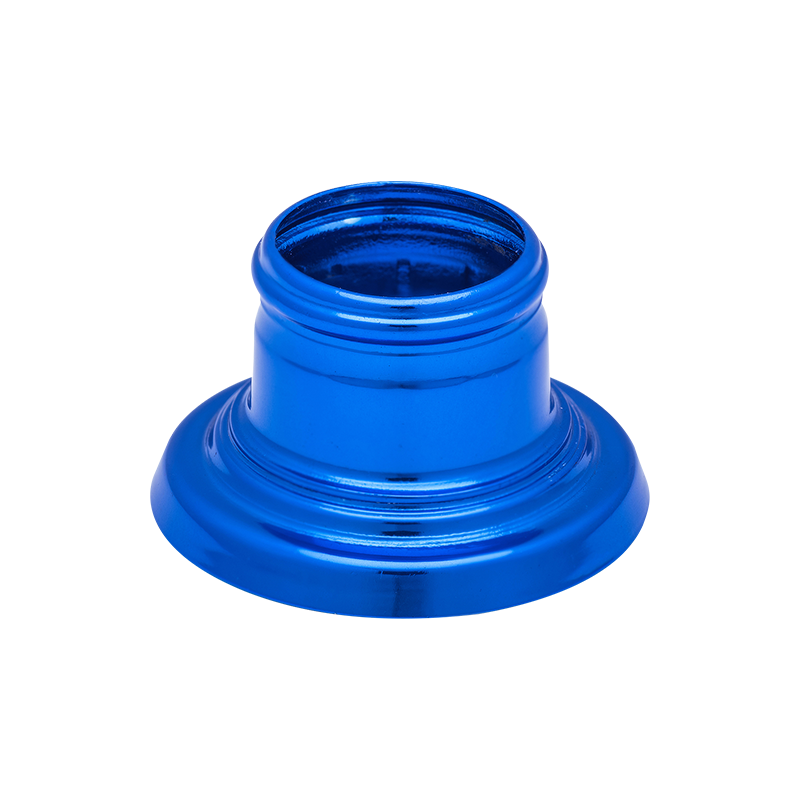 XY-ZT-DADB Custom Perfume Bottle Stepped Collar With Groove
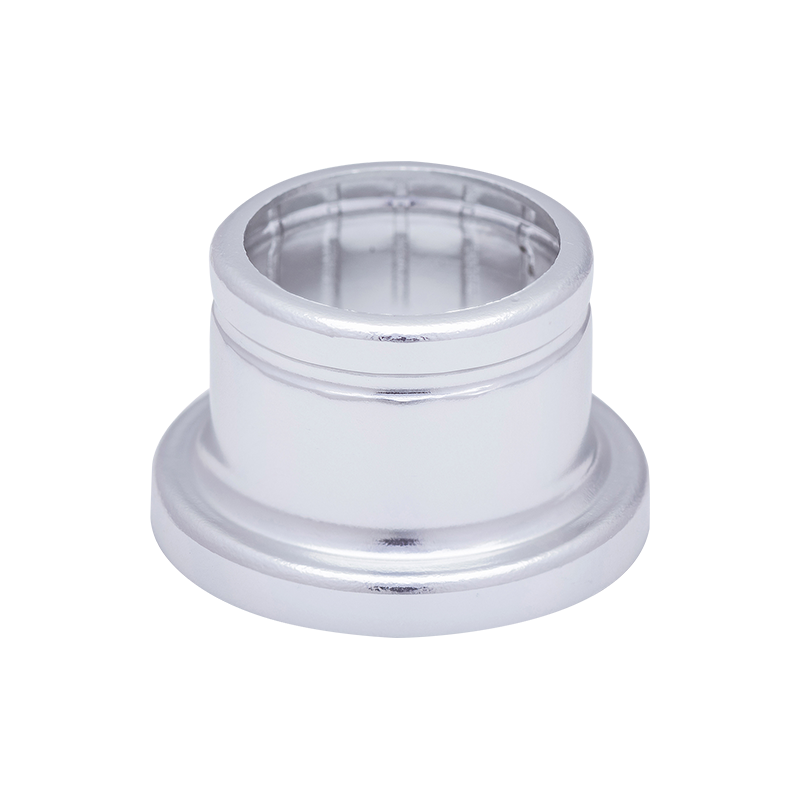 XY-ZT-17.3*14DBSNG Gold/Silver Perfume Cap Collar Aluminum Stepped Collar
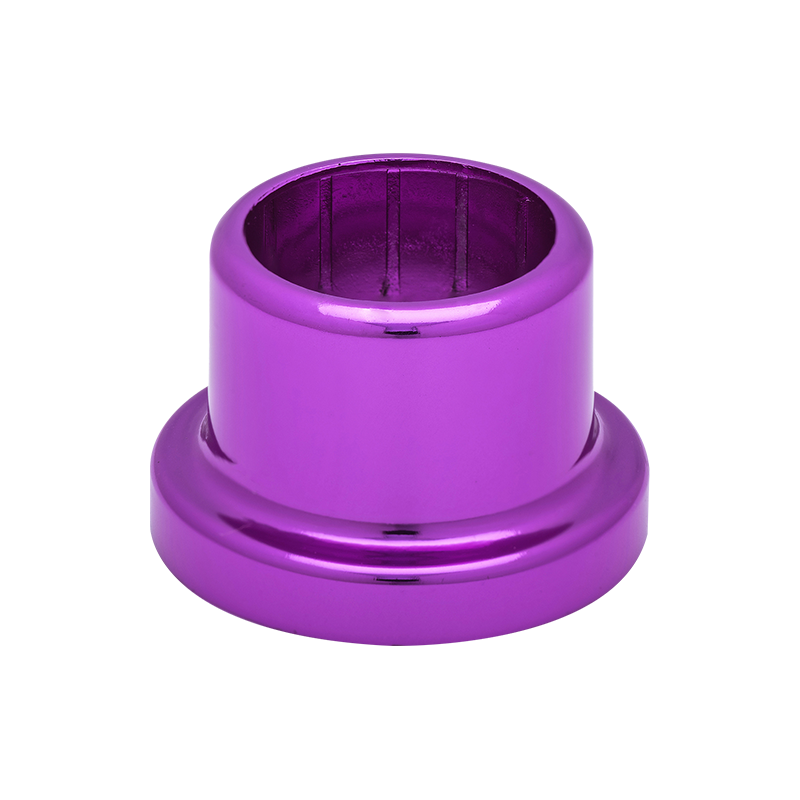 XY-ZT-17.05*15.6 22.8*4 Aluminum Cosmetic Perfume Collar With Step
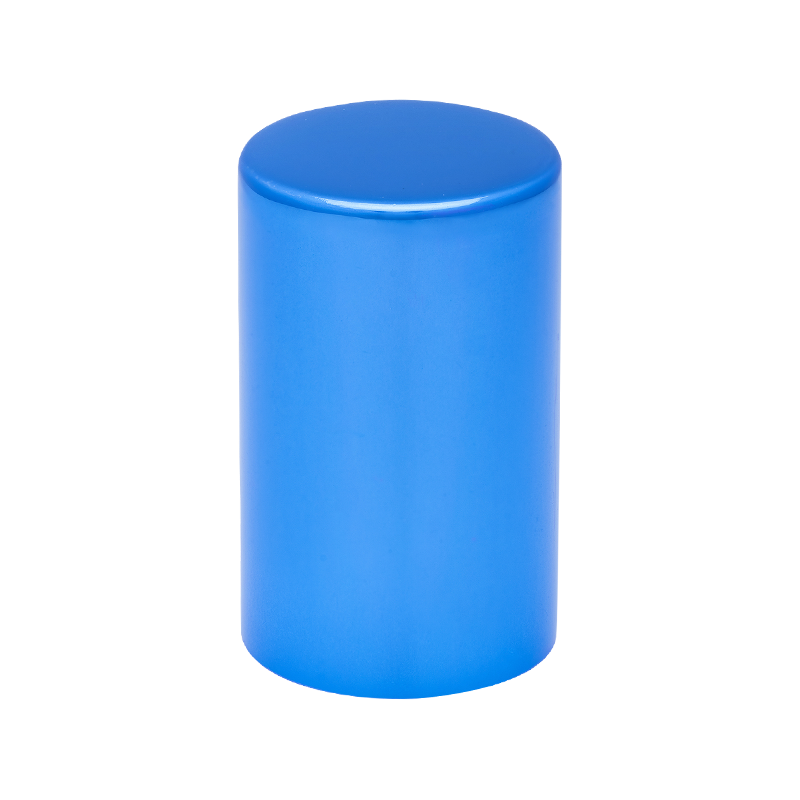 XY-LZ-20.6*34 Multiple Colors Straight Perfume Aluminum Cap/Lid For Fragrance, Essential Oil Bottle
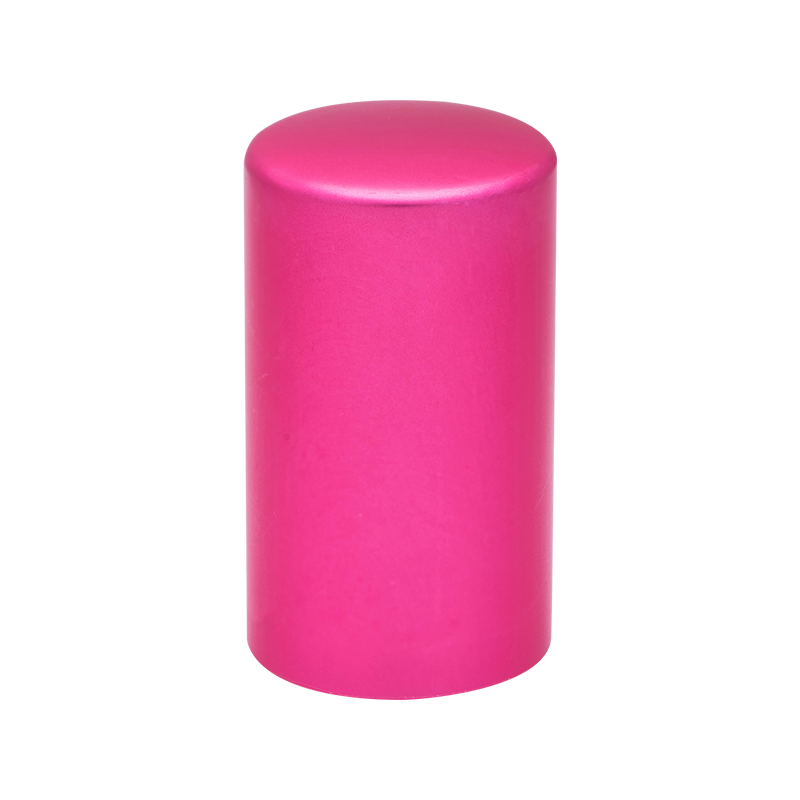 XY-LZ-18.6*32 Straight Perfume Bottle Aluminum Cap For Luxury Glass Fragrance Bottles, Minimalist Design
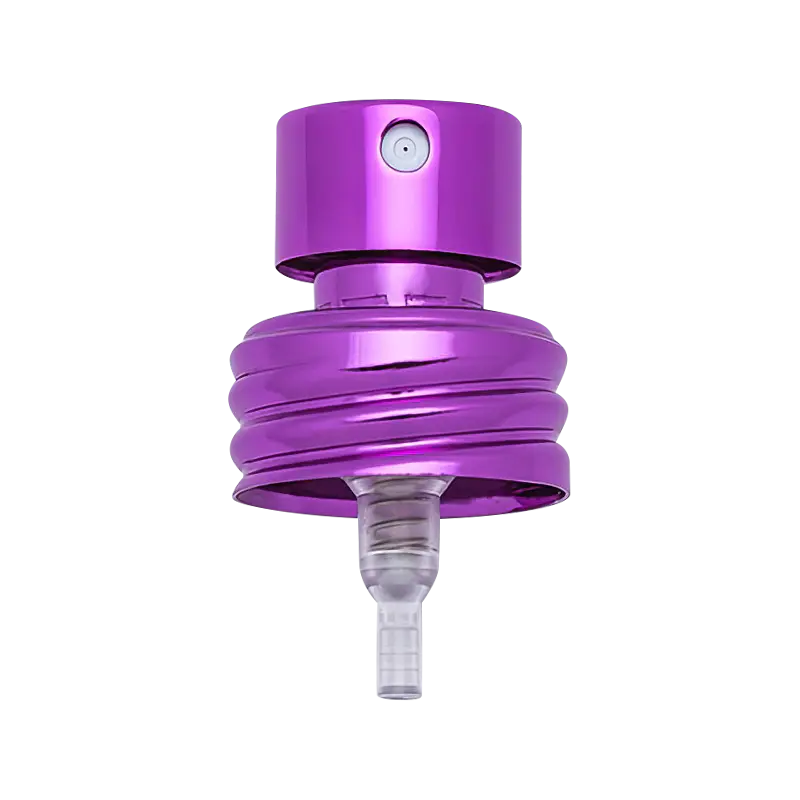 XY-LK-20.8CK 20mm Aluminum screw perfume fine mist pump sprayer OD20.8mm
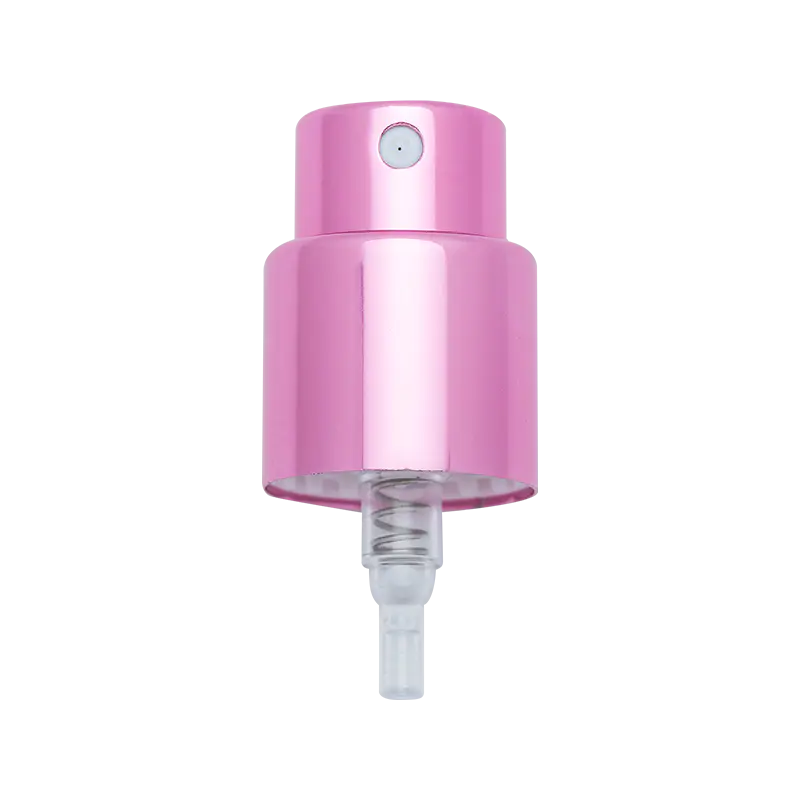 XY-LK-17/415 15mm Screw perfume fine mist pump sprayer OD17.2mm
Tel: +86-13812990918
Phone: +86-512-58962260
Address: No.3, Xiangqun Road, Leyu, Zhangjiagang.


 English
 русский
 Español
 عربى
عربى Português