Article Directory
In the competitive world of prestige and mass-market cosmetic packaging, dispensing consistency is non-negotiable. The FEA20 crimp pump has established itself as the benchmark for fine fragrance and skincare dispensing — a 20mm crimp-neck format engineered to deliver repeatable output, zero-leak sealing, and broad compatibility with glass and aluminum bottle necks used across global cosmetic supply chains.
Dispensing accuracy in a crimp pump is determined by piston geometry, spring tension calibration, and stem bore diameter — three variables that FEA20 format pumps control within a tolerance of plus or minus 2% across a production lifetime exceeding 30,000 actuations. For fine fragrance, where a single mis-dose wastes premium formulation, this precision is commercially essential.
Independent laboratory testing published by the European Aerosol Federation confirms that FEA20-format pumps maintain output volume consistency within specification through temperature cycling from 5°C to 40°C — the full ambient range a product encounters from warehouse to consumer bathroom. Viscosity variations between 1 and 200 cP have minimal effect on dose volume, making the FEA20 format suitable for aqueous colognes and heavier emulsion-based serums in equal measure.
Dispensing accuracy in FEA20 crimp pumps is defined as the coefficient of variation (CV%) of measured dose weight across 200 consecutive actuations after a 5-actuation priming sequence — industry standard CV below 2% qualifies as precision grade.
Leak resistance in crimp-neck pump systems derives from a mechanical compression seal formed at the point of crimping rather than a threaded engagement. When a FEA20 crimp pump is applied with calibrated crimping force — typically 180 to 220 N on production-line equipment — the aluminum ferrule deforms uniformly against the bottle neck gasket, creating a hermetic seal that thread-based systems cannot replicate at equivalent torque force.
FEA20 crimp pump compatibility spans three axes: bottle neck geometry, formulation chemistry, and production-line filling equipment. All three must be aligned before specifying a pump grade for a new product launch.
| Compatibility Axis | FEA20 Specification | Notes |
| Bottle Neck (glass) | FEA20 finish: 20.0 mm OD, 2.5 mm wall | Compatible with all ISO 12775 FEA20 bottle finishes |
| Bottle Neck (aluminum) | Same FEA20 crimp finish — direct swap | Confirm wall hardness for crimping force specification |
| Formulation Viscosity | 1 – 200 cP standard; up to 500 cP with enlarged bore | High-viscosity grades available on request |
| Alcohol Content | Up to 96% ethanol with PTFE gasket liner | Standard LDPE gasket rated to 70% ethanol |
| Filling Equipment | Compatible with all major rotary and inline crimpers | Bertoli, Coster, Bonfiglioli, Pamasol tooling supported |
For brands managing multi-SKU fragrance portfolios across glass and aluminum substrates, the FEA20 crimp pump's universal bottle finish compatibility eliminates the need for separate pump specifications per substrate — a significant simplification in procurement and quality management.
Output volume is the most product-specific variable in crimp pump selection. FEA20 format pumps are available across a dosing range from 0.05 ml to 0.20 ml per actuation, with the following grade allocations across cosmetic categories:
Eau de Parfum and Extrait formats where formulation cost per ml is highest — minimal dose reduces per-use cost to consumer
Standard fragrance dose — balances coverage area with bottle longevity for mass-market positioning
Higher viscosity formulations require larger bore and increased spring force — confirm pump grade matches formulation rheology
Correct installation of the FEA20 crimp pump on a filling line requires four sequential process controls. Skipping any step introduces variability in seal integrity or output volume that downstream quality audits will flag.
Cut the dip tube to bottle-specific length — tube end should sit 2 to 3 mm above the bottle base to prevent air ingestion at low fill levels. Pre-cut tubes are available for standard bottle heights; custom cuts are required for non-standard forms.
Verify gasket seating is centered and undeformed before placing the pump on the filled bottle. A displaced gasket is the single most common cause of post-crimp leak failures and is not detectable after crimping without destructive testing.
Set crimping head to 195 N center-point for standard glass FEA20 bottles — validate with a force gauge at the start of each production shift and after any tooling changeover. Over-crimping above 230 N risks bottle neck fracture; under-crimping below 160 N produces an incomplete seal.
Invert 100% of units for 30 seconds immediately after crimping as an inline check — statistical sampling at 1-in-50 for extended 24-hour inversion test at production speed. Any failure triggers crimp head recalibration before the line continues.
To receive an accurate pump grade recommendation and lead-time quote, provide the following parameters to your FEA20 pump supplier at the outset of a new project:
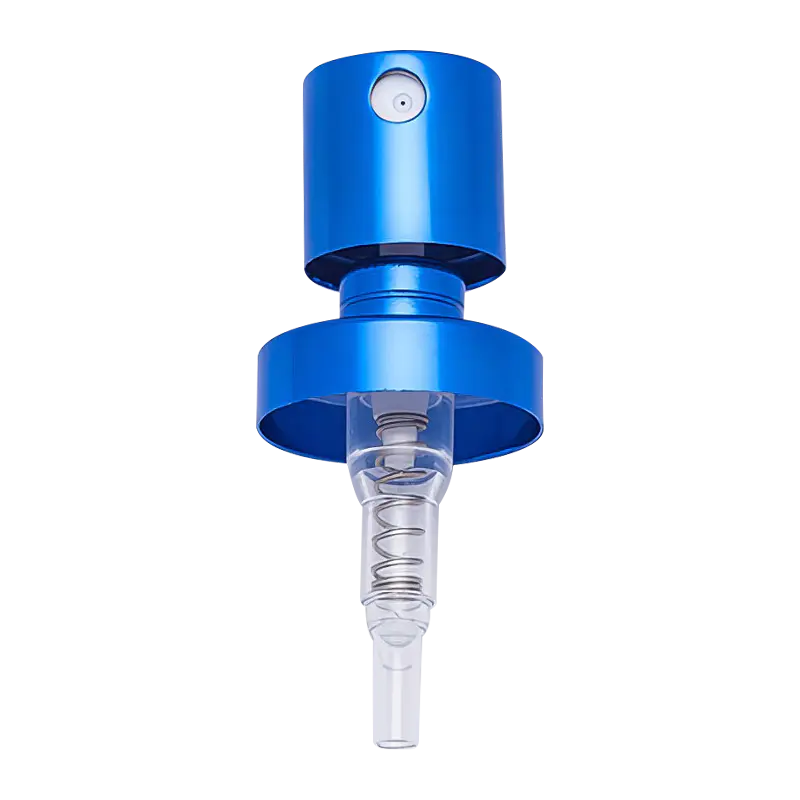 XY-PT-⊘20MGBMG 20mm Crimp perfume fine mist pump sprayer higher type with bigger discharge
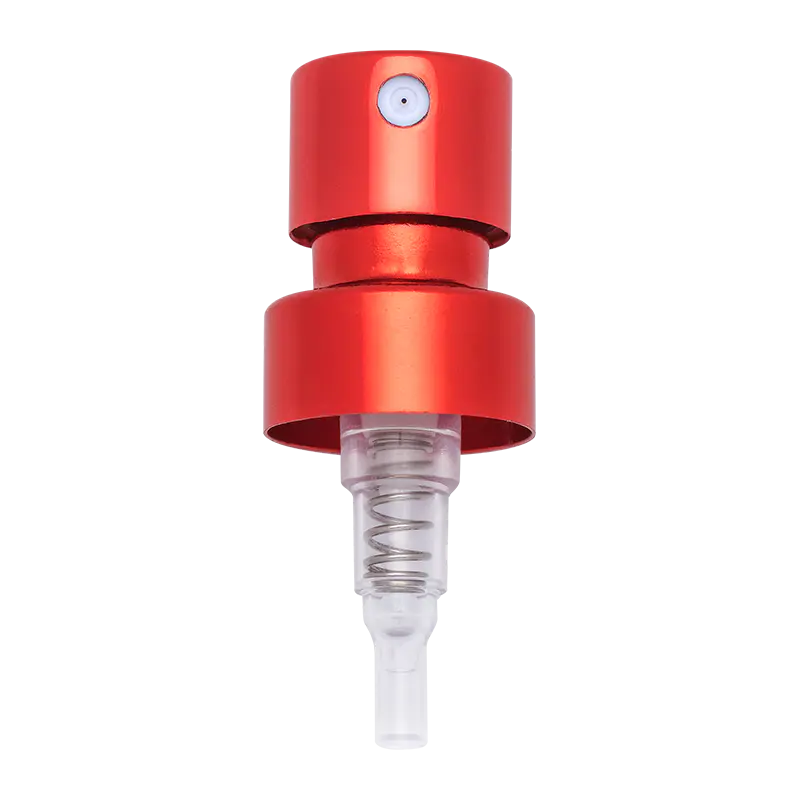 XY-PT-⊘13AB 13mm Crimp perfume fine mist pump sprayer short type
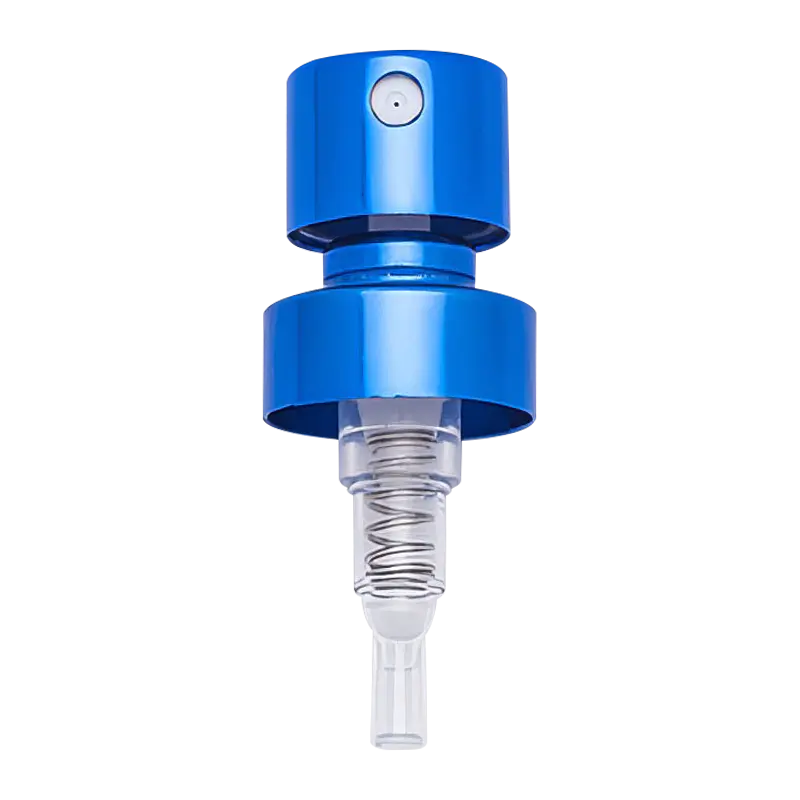 XY-PT-⊘13CAMG 13mm Crimp perfume fine mist pump sprayer shorter type
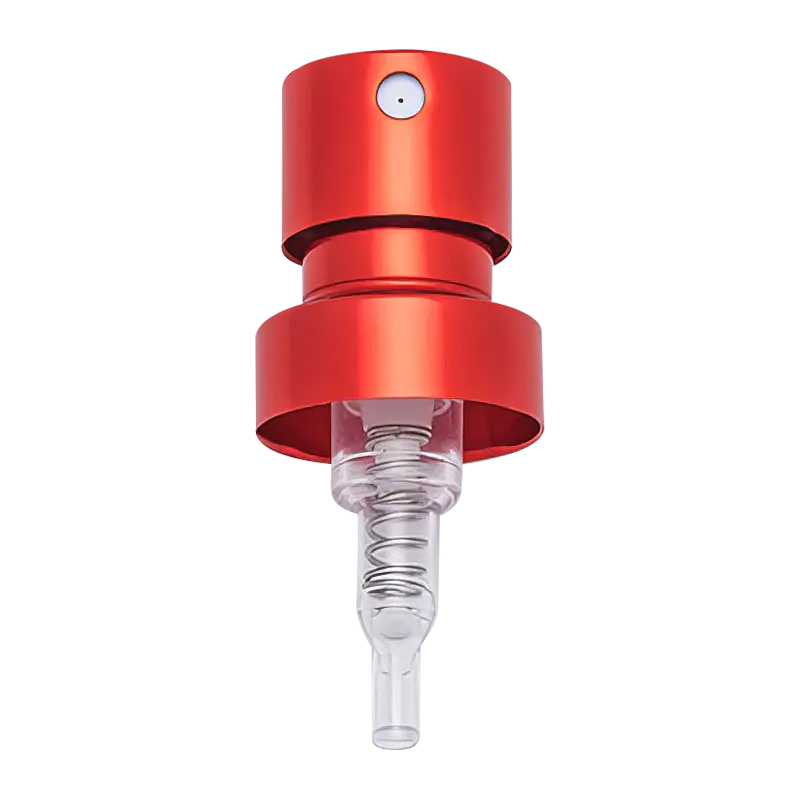 XY-PT-⊘15JDGB 15mm Crimp perfume fine mist pump sprayer high type
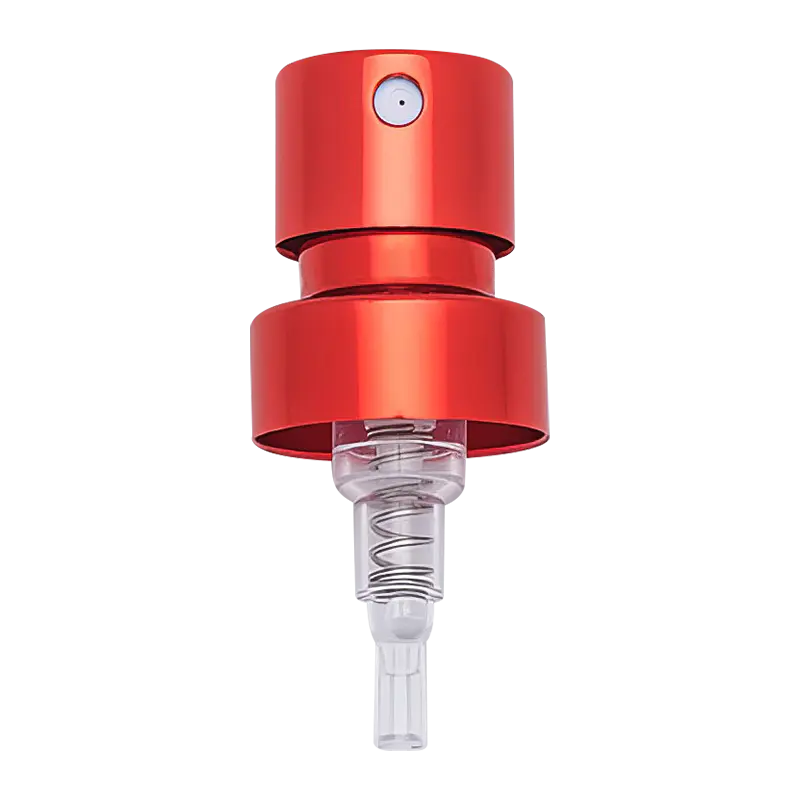 XY-PT-⊘15JDAB 15mm Crimp perfume fine mist pump sprayer short type
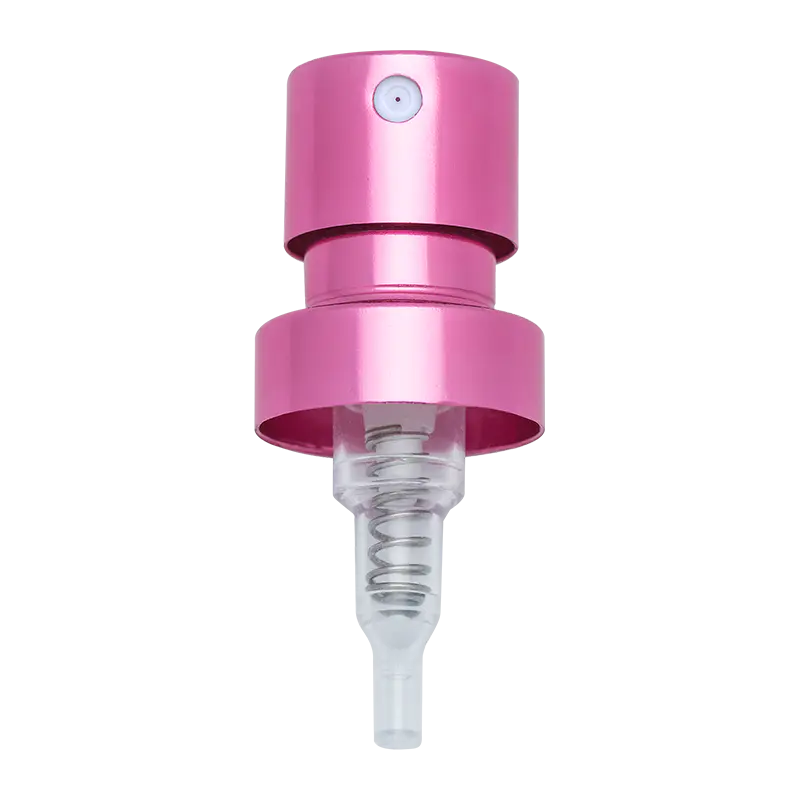 XY-PT-⊘15ABMG 15mm Crimp perfume fine mist pump sprayer short type
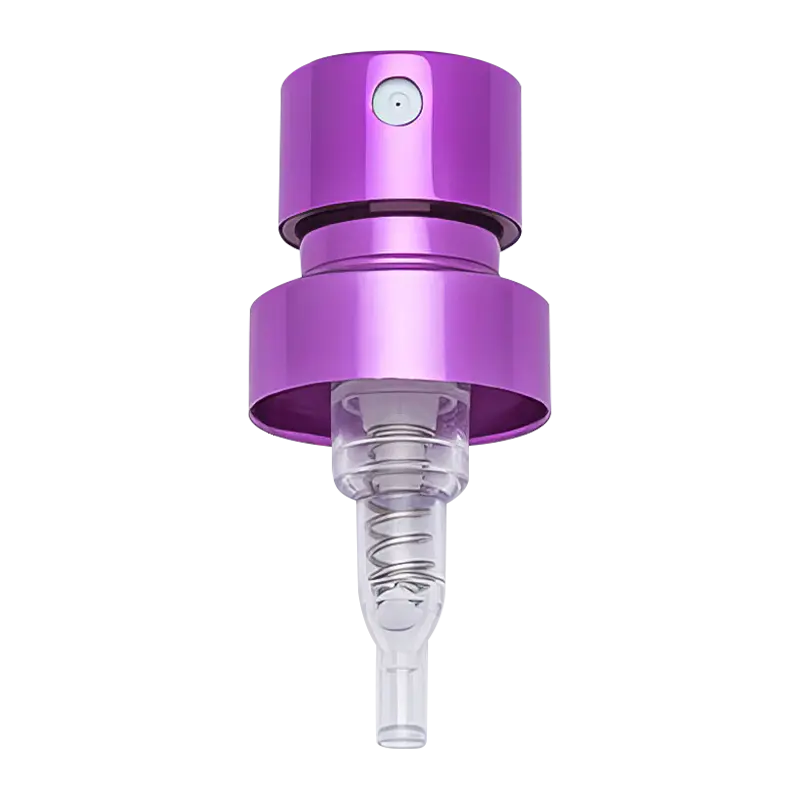 XY-PT-⊘15CAMG 15mm Crimp perfume fine mist pump sprayer shorter type
Tel: +86-13812990918
Phone: +86-512-58962260
Address: No.3, Xiangqun Road, Leyu, Zhangjiagang.


 English
 русский
 Español
 عربى
عربى Português