Article Directory
In industrial fluid dispensing, micron-level precision is not optional — it is the difference between a functional product and a costly defect. The FEA18 crimp pump delivers that precision across a broad range of liquid types, operating conditions, and throughput demands, making it one of the most versatile metering solutions available for high-volume manufacturing environments.
The FEA18 crimp pump is engineered for precision volumetric dispensing in industrial filling, metering, and dosing lines. Its primary application domains include pharmaceutical and nutraceutical liquid filling, cosmetic and personal care product manufacturing, chemical and laboratory reagent dispensing, and food-grade flavoring or additive injection systems.
Unlike peristaltic or gear pumps, the crimp-seal mechanism eliminates dead volume between cycles. This makes the FEA18 crimp pump particularly suited to applications where cross-contamination between batches is unacceptable, or where volatile compounds must be contained between dispenses. Automotive adhesive lines and electronic component potting systems also rely on this architecture for bubble-free, consistent bead placement.
A crimp pump operates by mechanically compressing a sealed flexible tube segment — producing a discrete, repeatable fluid stroke with no valve wear and no contact between fluid and pump mechanics.
The operating principle centers on a crimped tube cartridge that is cyclically compressed by a cam-driven mechanism. Each compression stroke displaces a fixed volume of fluid, independent of upstream pressure fluctuations. Because the pump stroke geometry is mechanically fixed, volumetric output remains stable even as fluid viscosity changes within a defined operating range.
The cam rotates, crimping the flexible tube at a precisely controlled pinch point. Fluid ahead of the crimp is pushed toward the outlet nozzle.
Each full cam revolution delivers one calibrated dose. Output volume is adjusted by modifying cam profile or stroke frequency — not throttle position.
Elastic rebound of the tube creates a partial vacuum that retracts the fluid column, producing a sharp cutoff without drip or satellite droplets.
The sealed cartridge resets to the same start position every cycle, ensuring the next dose begins from a known fluid state with no residual carryover.
Fluid compatibility is primarily governed by the tube cartridge material rather than the pump body itself, because the fluid never contacts metal pump components. Standard cartridges are offered in silicone, Viton, PTFE-lined, and Tygon formulations, covering the majority of industrial fluid classes.
The FEA18 crimp pump achieves dosing repeatability of plus or minus 0.5% coefficient of variation under standard operating conditions — a specification validated across water, glycerin solutions up to 5,000 cP, and pharmaceutical-grade ethanol at fill rates from 10 to 600 dispenses per minute. Independent laboratory benchmarks for crimp-type pump architectures consistently place dose-to-dose variability below 1% CV, outperforming peristaltic pumps by a factor of two to three in high-speed applications.
Accuracy is maintained through encoder feedback on the drive shaft, which compensates for motor load variation in real time. At fill volumes below 0.1 mL, the system switches to micro-dose mode, reducing cam speed and increasing encoder resolution to sustain sub-percent precision at the nanoliter boundary.
Because corrosive fluids contact only the tube cartridge interior and the wetted nozzle tip — both of which are user-replaceable consumables — the FEA18 crimp pump handles aggressive chemistries without risk of pump body degradation. PTFE-lined cartridges provide resistance to concentrated organic solvents, halogenated compounds, and dilute mineral acids routinely encountered in chemical manufacturing.
High viscosity handling is supported up to approximately 50,000 centipoise with heated tube jacket options for thermoplastic materials. A back-pressure compensation algorithm in the integrated controller adjusts stroke timing when supply reservoir pressure varies, preventing under-fill at high viscosity without user recalibration.
The FEA18 crimp pump is designed around a two-tier maintenance model: consumable tube cartridge replacement and periodic drive mechanism inspection. Tube service intervals depend on fluid chemistry and cycle volume, but typical silicone cartridges in aqueous service last 500,000 to 1,000,000 dispense cycles before elastic fatigue affects accuracy.
| Task | Interval | Downtime Required |
| Tube cartridge replacement | Every 500K–1M cycles | Under 5 minutes |
| Nozzle tip cleaning or swap | Per batch or daily | Under 2 minutes |
| Drive cam lubrication | Every 6 months | 15 minutes |
| Encoder calibration check | Annually or after crash | 30 minutes |
| Full preventive service | Every 12–18 months | 2–4 hours |
The tool-free cartridge swap system means line technicians can restore the pump to calibrated condition without engineering support, minimizing unplanned downtime on 24-hour production shifts.
Yes. The FEA18 crimp pump ships with RS-232, RS-485, and optional EtherNet/IP or Profibus interfaces. Trigger input accepts 24V digital signals, making integration with Siemens, Allen-Bradley, and Omron PLC platforms straightforward without custom signal conditioning.
Gear pumps offer higher maximum viscosity ceilings but introduce shear stress that can degrade shear-sensitive fluids. The FEA18 crimp pump uses a low-shear compression mechanism that preserves emulsion stability, cellular integrity in biotech fluids, and particle suspension in pigmented coatings — areas where gear pumps underperform.
The wetted path — tube cartridge and nozzle — is available in USP Class VI silicone and FDA-compliant PTFE. The pump body is constructed from 316L stainless steel with electropolished surfaces meeting ASME BPE surface finish standards, making it compliant with 21 CFR Part 211 pharmaceutical manufacturing requirements when paired with appropriate documentation.
In micro-dose mode, the FEA18 crimp pump accurately dispenses volumes as low as 0.01 mL (10 microliters) with the 1.6 mm bore cartridge. Repeatability at this volume is maintained at plus or minus 1% CV, suitable for ophthalmic and diagnostics reagent filling where sub-drop accuracy is critical.
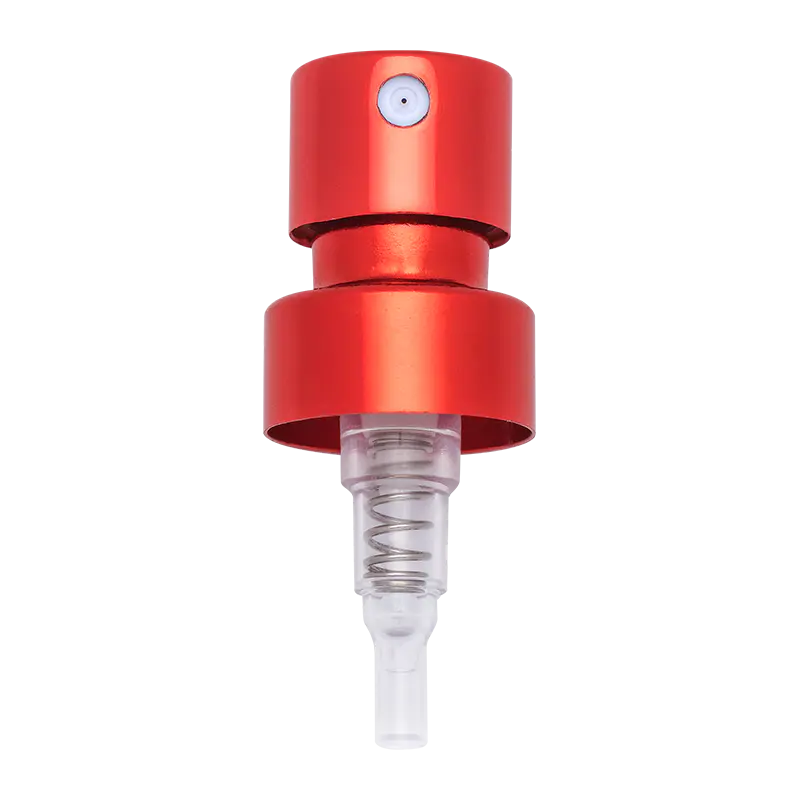 XY-PT-⊘13AB 13mm Crimp perfume fine mist pump sprayer short type
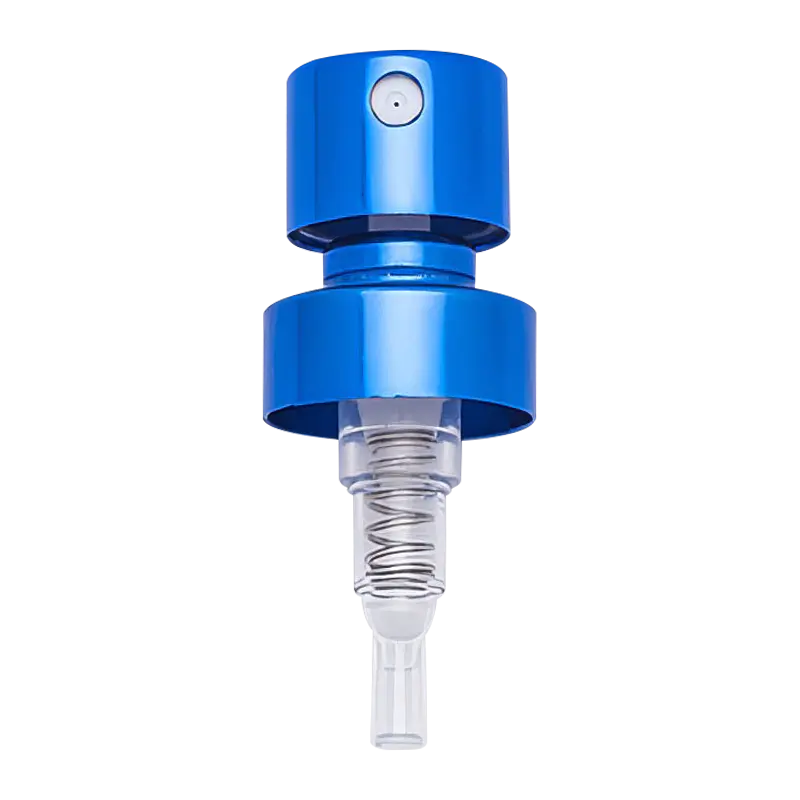 XY-PT-⊘13CAMG 13mm Crimp perfume fine mist pump sprayer shorter type
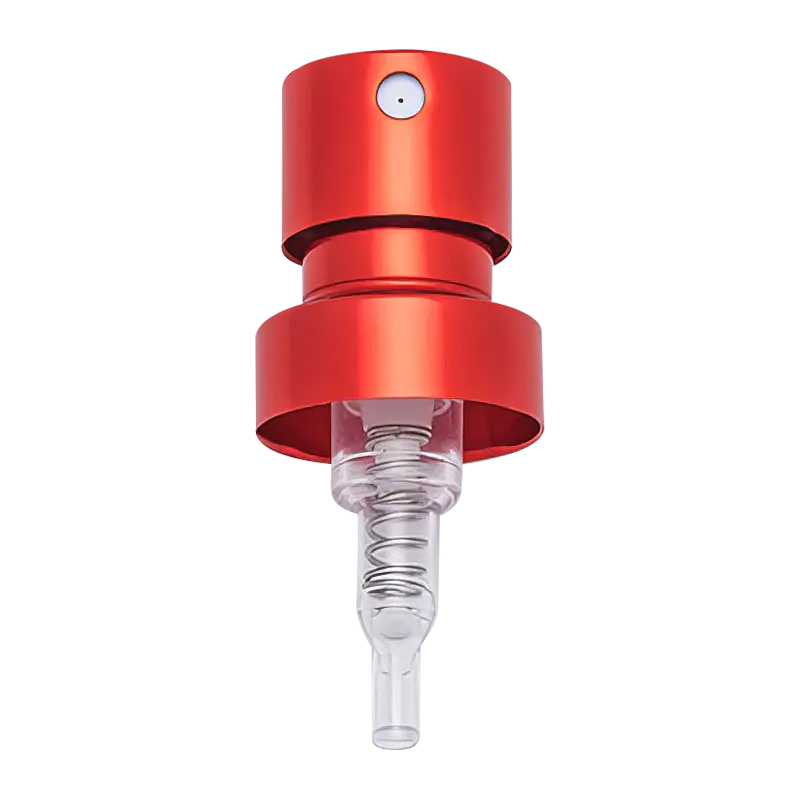 XY-PT-⊘15JDGB 15mm Crimp perfume fine mist pump sprayer high type
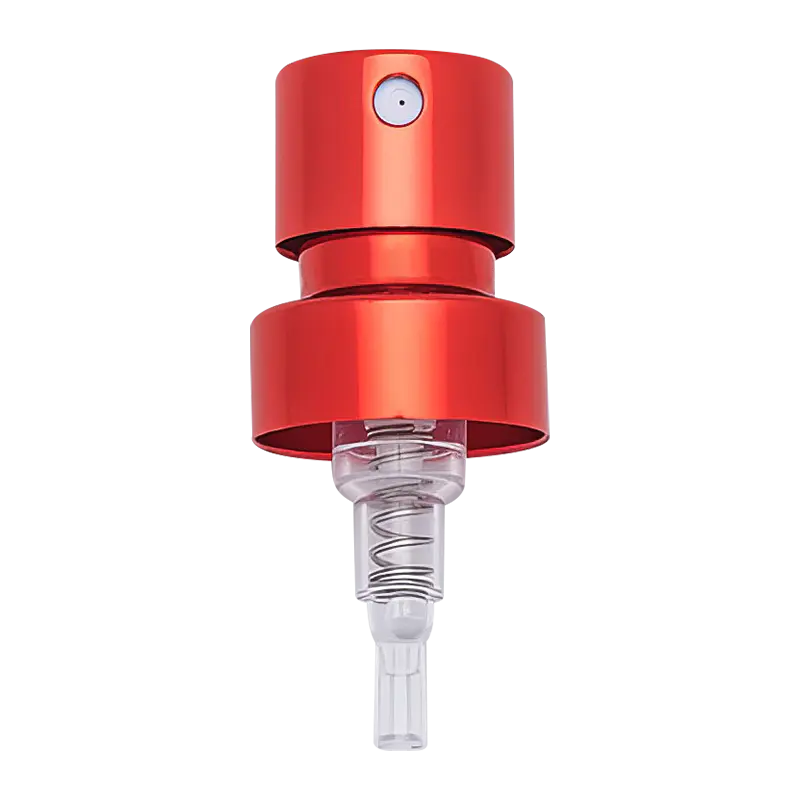 XY-PT-⊘15JDAB 15mm Crimp perfume fine mist pump sprayer short type
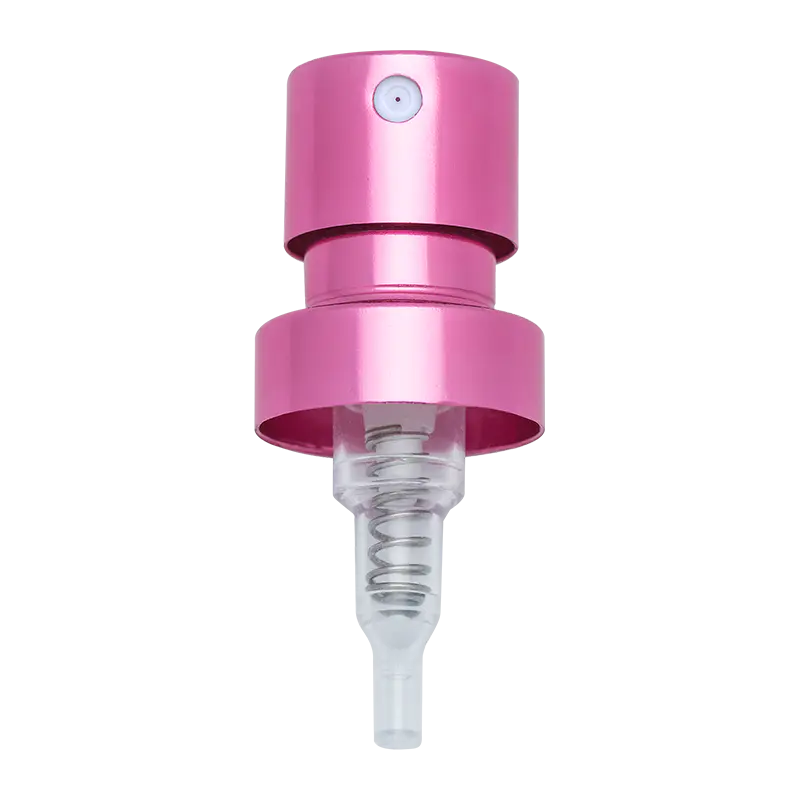 XY-PT-⊘15ABMG 15mm Crimp perfume fine mist pump sprayer short type
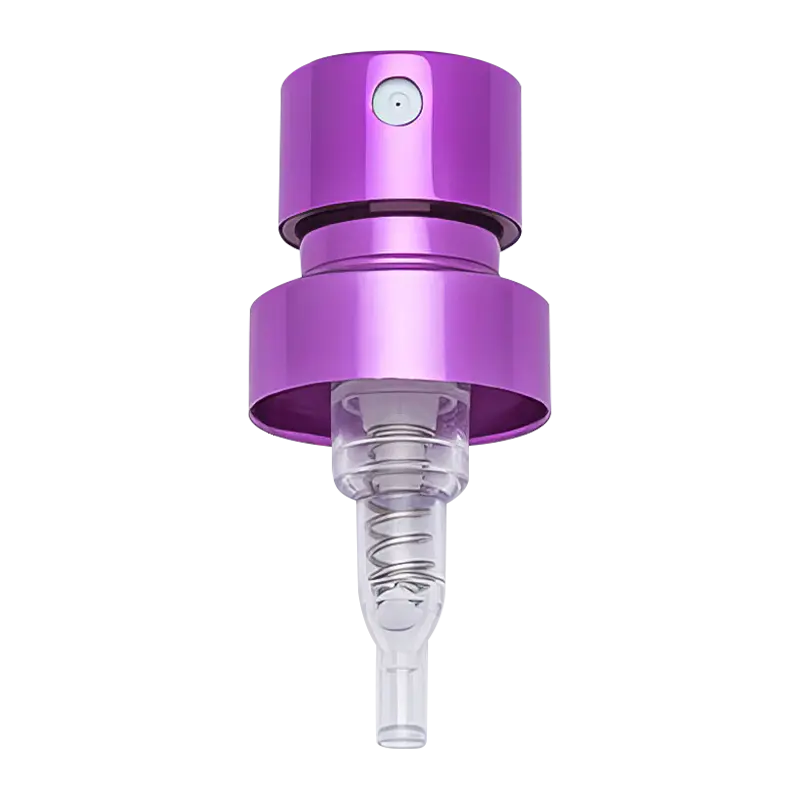 XY-PT-⊘15CAMG 15mm Crimp perfume fine mist pump sprayer shorter type
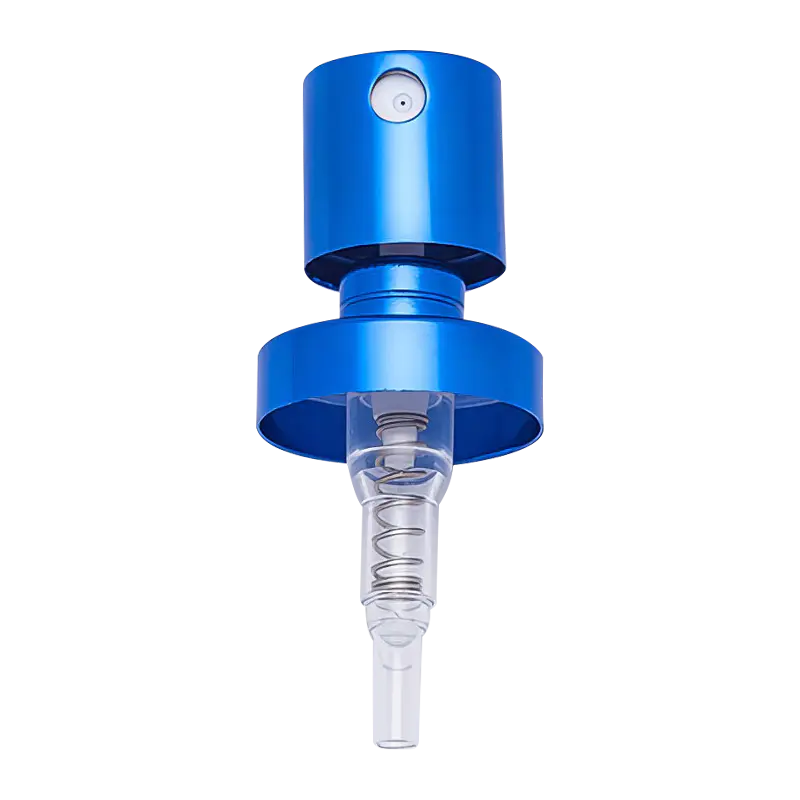 XY-PT-⊘20MGBMG 20mm Crimp perfume fine mist pump sprayer higher type with bigger discharge
Tel: +86-13812990918
Phone: +86-512-58962260
Address: No.3, Xiangqun Road, Leyu, Zhangjiagang.


 English
 русский
 Español
 عربى
عربى Português