Article Directory
The FEA15 crimp pump is the packaging industry's preferred dispensing solution for fine fragrance, premium skincare, and pharmaceutical sprays. Its 15mm ferrule diameter and crimp-fastened collar deliver a hermetically sealed, tamper-evident closure that screw-on alternatives simply cannot match. This guide covers bottle compatibility, internal mechanics, leak causes, and a structured framework for selecting the correct crimp pump for your formulation and container.
FEA15 crimp pumps are engineered for bottles with a 15mm neck finish — a standard widely adopted across European and global perfumery. Compatibility depends on three parameters: neck inner diameter, collar seat geometry, and glass wall thickness at the crimp zone.
Most fragrance bottles from major glass manufacturers — including Pochet, Saverglass, and Bormioli Luigi — are available in FEA15 finish as a catalogue standard. Bespoke bottle designs should specify the FEA15 collar profile explicitly in the technical drawing. Do not assume that a 15mm opening is FEA15 compliant without verifying the bead geometry; non-standard profiles cause inconsistent crimping and are the leading cause of field leakage in new bottle launches.
A crimp pump operates on a spring-loaded piston principle. When the actuator is depressed, it compresses the piston against a calibrated spring and forces product through a ball-and-seat inlet valve, up through the dip tube, and out via the orifice nozzle as a metered spray or lotion dose.
Depressing the actuator closes the inlet ball valve and opens the outlet path. The piston compresses the pump chamber, building pressure that expels the previously drawn product through the nozzle orifice at controlled velocity and droplet size.
The nozzle insert geometry — orifice diameter and swirl chamber design — determines spray angle, droplet size (typically 30–120 microns for fine fragrance), and output pattern. FEA15 pumps with mechanical breakup actuators achieve Dv50 values below 50 microns.
When pressure is released, the return spring drives the piston back up. This creates negative pressure inside the pump chamber, pulling the inlet ball valve open and drawing fresh product up the dip tube to refill the chamber for the next actuation.
Unlike screw-on pumps, the FEA15 crimp collar is permanently deformed around the bottle bead during capping. This mechanical lock eliminates thread-based loosening and ensures the pump-to-bottle seal remains constant across temperature cycling, shipping vibration, and shelf life.
Leakage in FEA15 crimp pump assemblies originates from four distinct failure points. Identifying which zone is leaking determines the corrective action — reformulation, re-tooling, or supplier qualification.
| Failure Zone | Root Cause | Corrective Action |
| Ferrule-to-bottle seal | Incorrect crimp force; non-FEA15 bottle bead; glass wall too thin | Calibrate crimping head torque; verify bottle neck drawing |
| Inlet ball valve | Particulate contamination holding valve open; oversized ball seat clearance | Filter formulation to below 50 microns; tighten valve tolerance spec |
| Piston gasket | Chemical incompatibility swelling EPDM or nitrile seal; inadequate lubricant | Switch to PTFE or silicone gasket; perform 30-day soak test |
| Dip tube joint | Loose press-fit between tube and pump body; tube cracking from solvent exposure | Verify press-fit depth; switch to solvent-resistant PE or PP tube |
Alcohol-based formulations above 70% ethanol content are the most common trigger for gasket swell failures. Submitting pump components to a 30-day immersion test in the final formulation — measuring weight gain and dimensional change — catches compatibility failures before production. A weight gain above 3% in any elastomeric component signals an incompatibility requiring material substitution.
Selecting a crimp pump involves five decisions that must be made in sequence. Getting the dose volume right before finalising actuator geometry saves costly retooling in validation.
Match actuation output to application: fine fragrance at 0.08–0.12ml per stroke, body mist at 0.15–0.20ml, and topical lotions at 0.3–0.5ml. Dose volume is set by pump chamber diameter and piston stroke length — it cannot be adjusted post-production.
Standard FEA15 pumps handle viscosities up to 500 cP. Products above this threshold — serums, gel lotions, or high-solids suspensions — require high-viscosity pump variants with enlarged inlet valve seats and reinforced return springs.
Run a full soak test on all wetted components — piston gasket, ball valve, dip tube, and pump body — using the final formulation at maximum use temperature. Alcohol, essential oils, and silicone-based products each target different failure points.
Select nozzle orifice diameter based on the desired spray angle (typically 15–30 degrees for fine mist) and particle size requirement. Lotion pumps use a straight-bore nozzle; spray pumps use a swirl-insert nozzle. Confirm with spray pattern and Dv50 testing.
Cut the dip tube so its bottom sits 3–5mm from the bottle base at a 3-degree angle toward the bottle shoulder. A tube that is too short leaves 8–12% of product undeliverable; too long causes the tube to kink and block flow on the return stroke.
For fragrance brands sourcing at scale, specifying the FEA15 crimp pump with pre-validated bottle compatibility data reduces qualification timelines by 4–6 weeks versus testing pump-and-bottle pairings from scratch. Request crimp pull-off force data (minimum 80N for FEA15) and actuation cycle reports from your pump supplier before approving any new component into production.
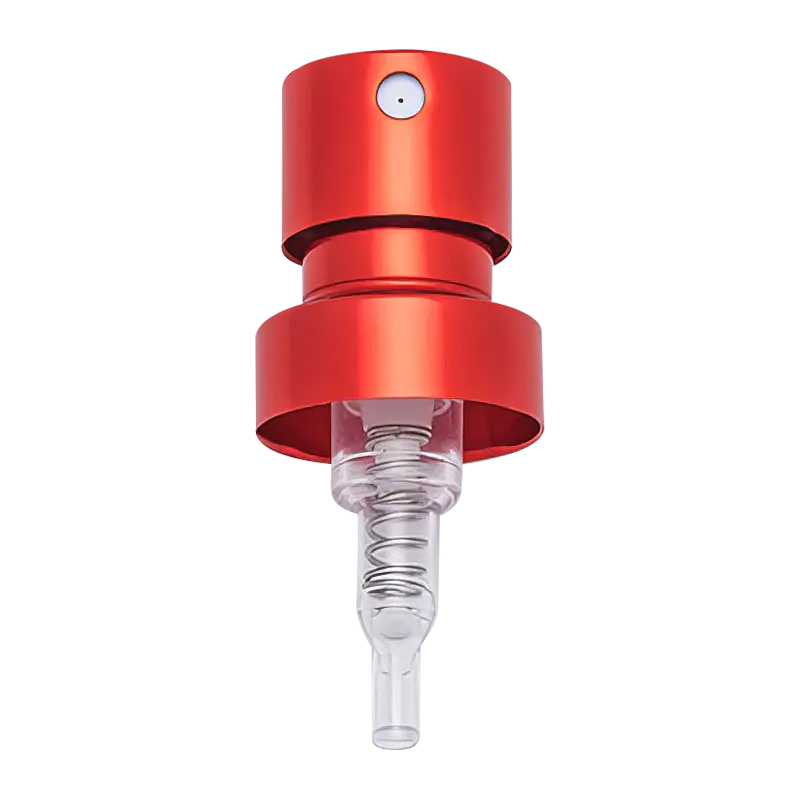 XY-PT-⊘15JDGB 15mm Crimp perfume fine mist pump sprayer high type
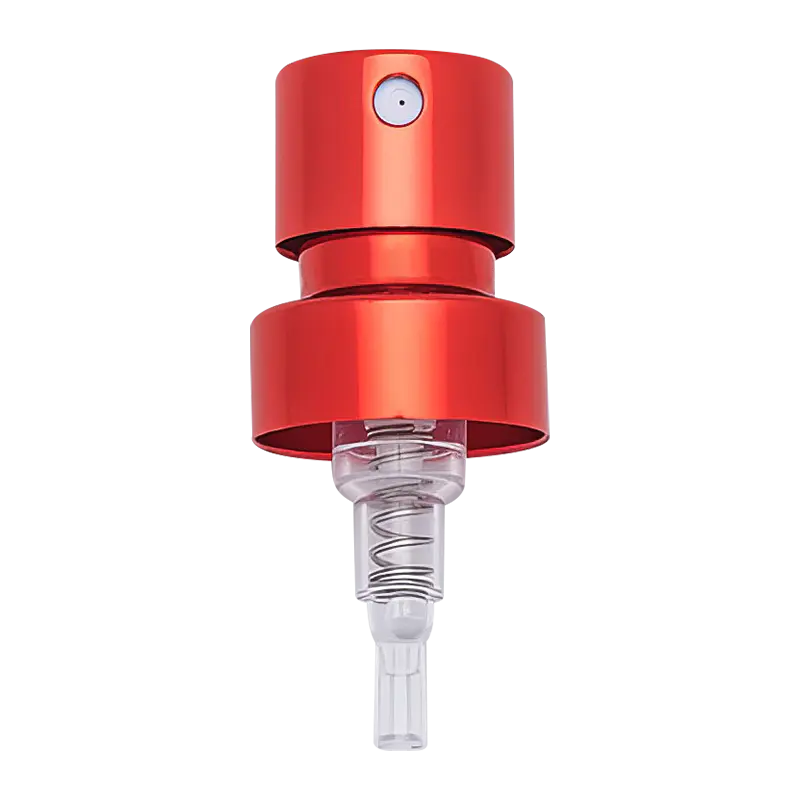 XY-PT-⊘15JDAB 15mm Crimp perfume fine mist pump sprayer short type
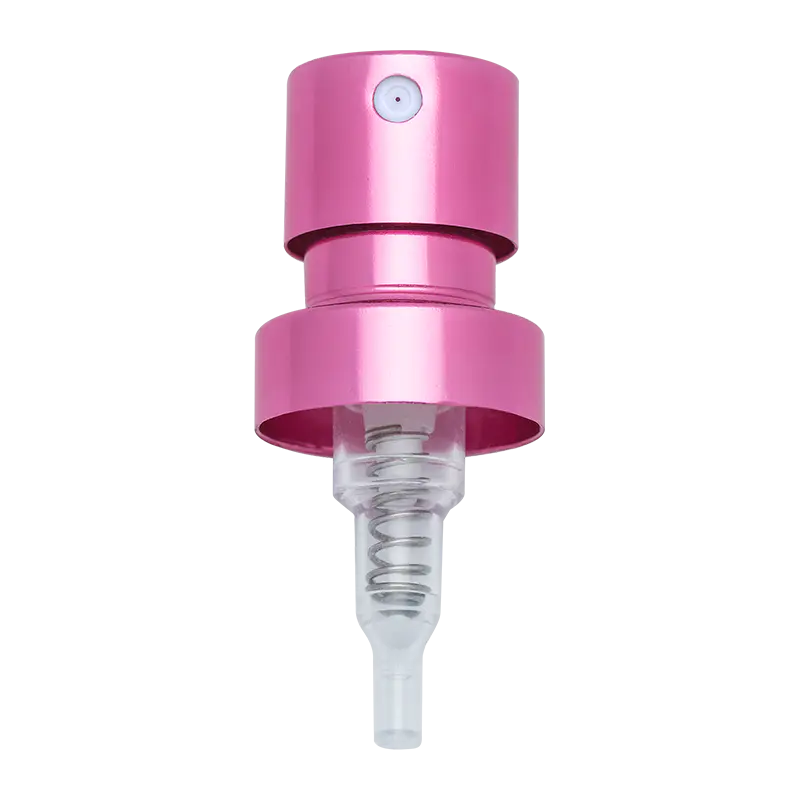 XY-PT-⊘15ABMG 15mm Crimp perfume fine mist pump sprayer short type
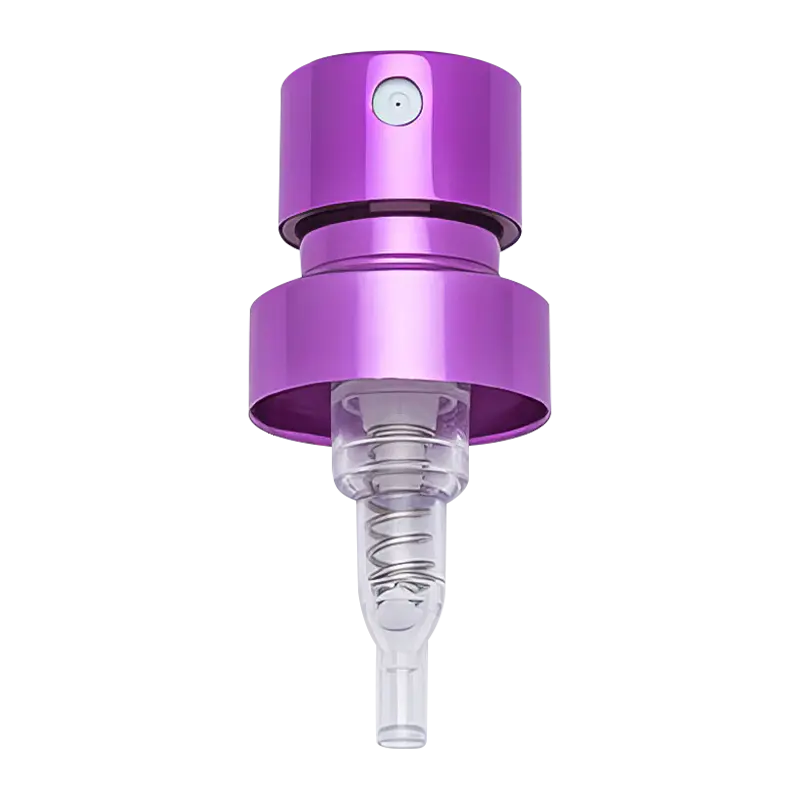 XY-PT-⊘15CAMG 15mm Crimp perfume fine mist pump sprayer shorter type
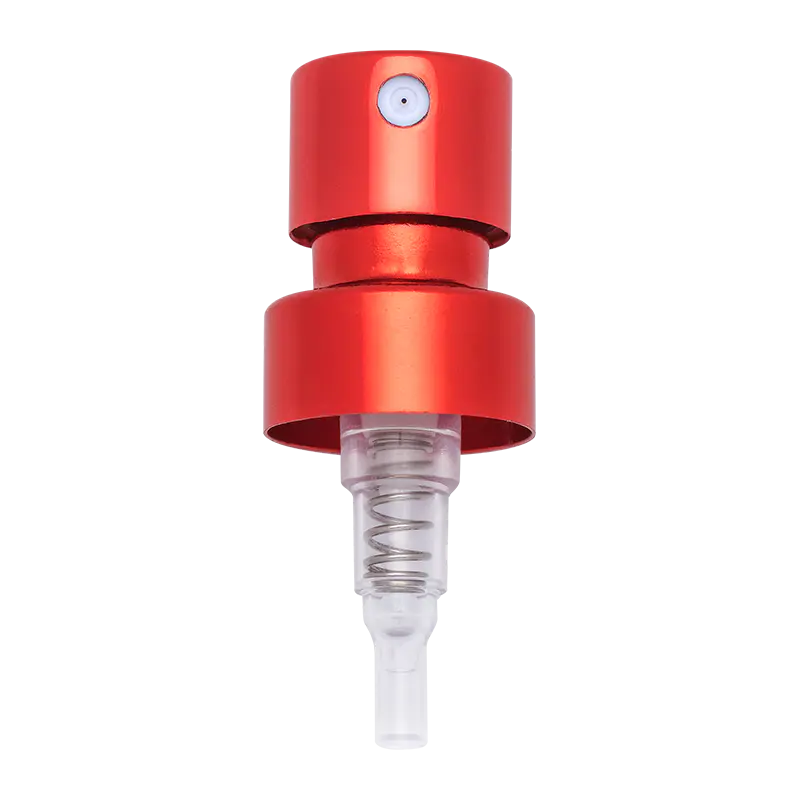 XY-PT-⊘13AB 13mm Crimp perfume fine mist pump sprayer short type
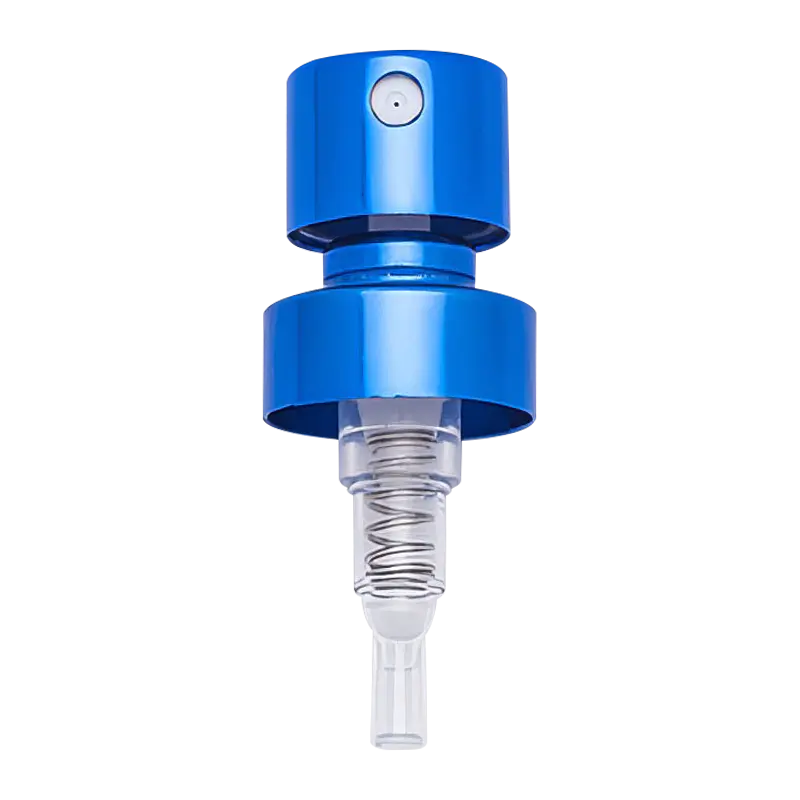 XY-PT-⊘13CAMG 13mm Crimp perfume fine mist pump sprayer shorter type
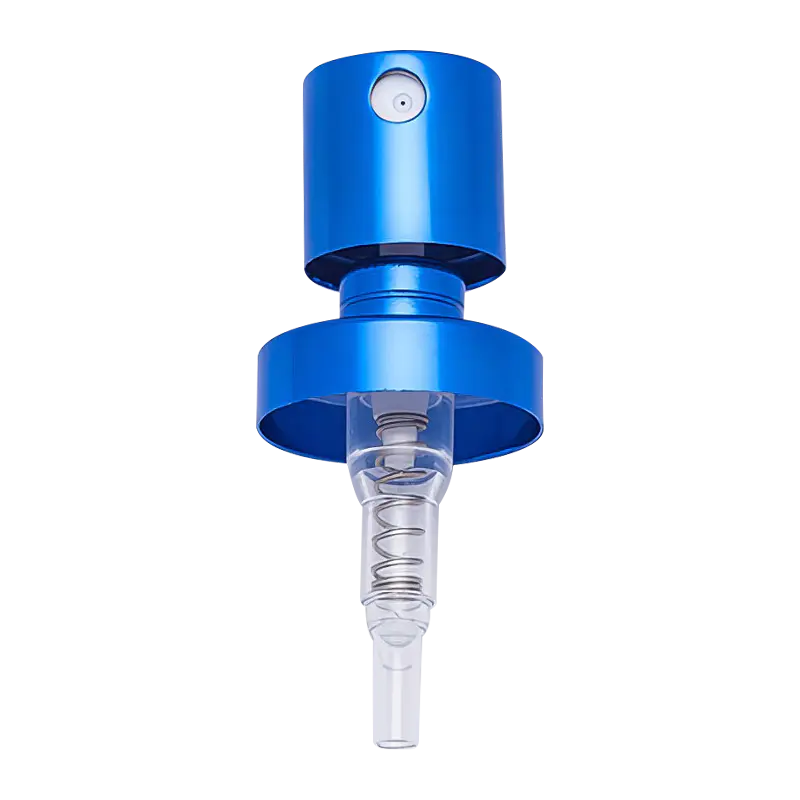 XY-PT-⊘20MGBMG 20mm Crimp perfume fine mist pump sprayer higher type with bigger discharge
Tel: +86-13812990918
Phone: +86-512-58962260
Address: No.3, Xiangqun Road, Leyu, Zhangjiagang.


 English
 русский
 Español
 عربى
عربى Português