Article Directory
The FEA13 crimp pump is the industry-standard dispensing solution for fine fragrance, prestige skincare, and premium personal care products. Its 13 mm ferrule diameter, permanent crimp-fit closure, and tamper-evident seal make it the reference choice wherever dispensing precision and luxury presentation are non-negotiable. This guide answers every technical and compatibility question buyers ask before specifying or switching to an FEA13 platform.
An FEA13 pump is a crimped-ferrule actuator assembly designed to seat permanently on any bottle neck conforming to the FEA 13 international fragrance neck standard, as defined by the Fragrance Foundation Europe Association. The 13 in the designation specifies the internal diameter of the metal ferrule in millimetres — the measurement that governs interchangeability across bottles and pumps from different manufacturers.
An FEA13 crimp pump is a permanent, tamper-evident dispensing mechanism assembled from a metal ferrule, glass or polymer bead valve, spring, dip tube, and actuator head — crimped onto an FEA 13 neck finish bottle during filling and not intended for removal or reuse after installation.
The permanent crimp distinguishes FEA13 pumps from screw-collar pumps used in commodity personal care categories. Once crimped, the ferrule deforms around the bottle neck bead, creating a hermetic seal that prevents evaporation of volatile fragrance compounds — a critical requirement for fine fragrance products with alcohol concentrations above 70%.
A crimp pump operates on a spring-loaded positive-displacement principle. Each actuation compresses a defined internal chamber volume, expelling a precise dose of product through the actuator orifice. The mechanism cycles through four distinct phases with every press.
Dose repeatability in premium FEA13 crimp pumps is typically plus or minus 3% across 3,000 actuation cycles — the standard test condition used by fragrance filling lines to validate pump performance before commercial release.
Any glass or polymer bottle manufactured to the FEA 13 neck standard accepts an FEA13 pump without modification. The standard specifies the outer diameter of the neck bead, bead height, and neck finish geometry — not the bottle body shape, height, or capacity.
| Bottle Capacity | Typical Dip Tube Length | Recommended Dose | Priming Strokes |
| 10 ml to 30 ml | 25 mm to 45 mm | 0.05 ml to 0.08 ml | 3 strokes |
| 30 ml to 75 ml | 45 mm to 75 mm | 0.08 ml to 0.12 ml | 3 to 5 strokes |
| 75 ml to 150 ml | 75 mm to 110 mm | 0.10 ml to 0.15 ml | 4 to 5 strokes |
| 150 ml to 300 ml | 110 mm to 160 mm | 0.15 ml to 0.20 ml | 5 strokes |
Leakage in FEA13 crimp pump assemblies has four primary root causes, each requiring a different corrective action. Correctly diagnosing the failure mode before changing components prevents repeated leakage after rework.
No. FEA 13 and FEA 15 are separate neck standards defined by the Fragrance Foundation Europe Association. The numbers refer to different ferrule internal diameters — 13 mm and 15 mm respectively. The two systems are not interchangeable. Attempting to crimp an FEA13 pump onto an FEA 15 bottle neck will result in an under-size crimp that fails to seal, and vice versa. Always confirm the neck standard marked on bottle specification drawings before ordering pumps.
Yes, with the correct internal materials specification. Oil-based and waterless fragrance formulas require pumps with PTFE or stainless steel ball valves and oil-resistant gaskets. Standard aqueous or alcohol-based pump configurations may experience valve seat swelling and increased actuation force within 3 to 6 months of contact with pure oil formulas. Specify the formula type to your pump supplier at the qualification stage.
Standard FEA13 pumps require 15 to 30 Newtons of actuation force at the head, depending on spring weight and dose volume. Low-actuation variants designed for elderly users or accessibility compliance are available with forces below 15 N. Actuation force is a specifiable parameter — confirm the target range with your pump supplier and validate on the final filled bottle, as viscosity and fill level affect perceived effort.
Store in original sealed polybags or bulk containers at 15 to 25 degrees Celsius with relative humidity below 60%. Avoid direct sunlight exposure, which degrades PE gaskets and causes spring oxidation in non-stainless assemblies. Use within 24 months of manufacture date for standard configurations, or 18 months for assemblies with natural rubber components. Rotate stock on a first-in-first-out basis to maintain seal integrity at the time of filling.
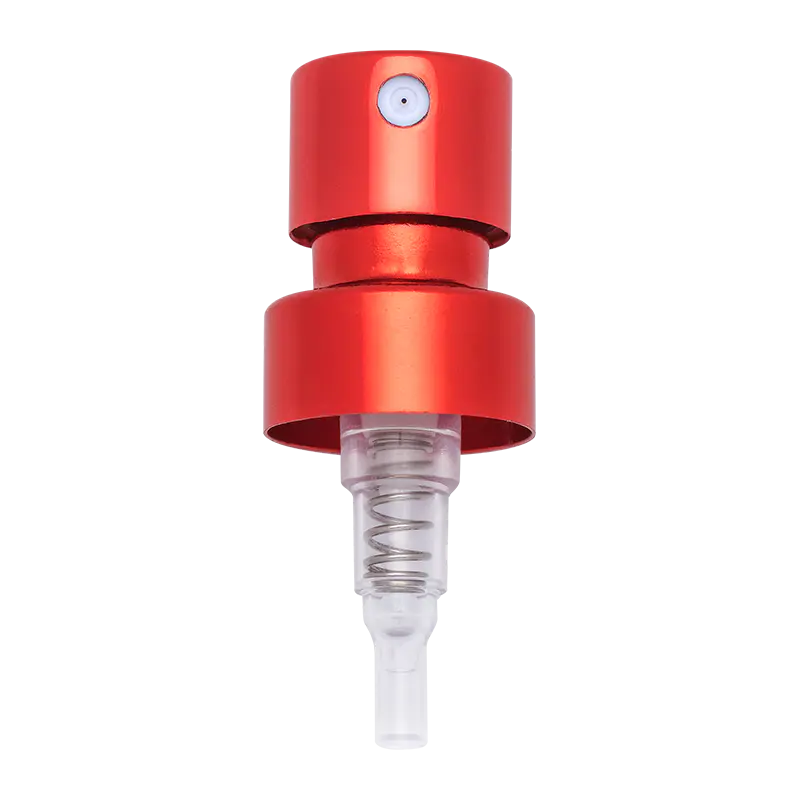 XY-PT-⊘13AB 13mm Crimp perfume fine mist pump sprayer short type
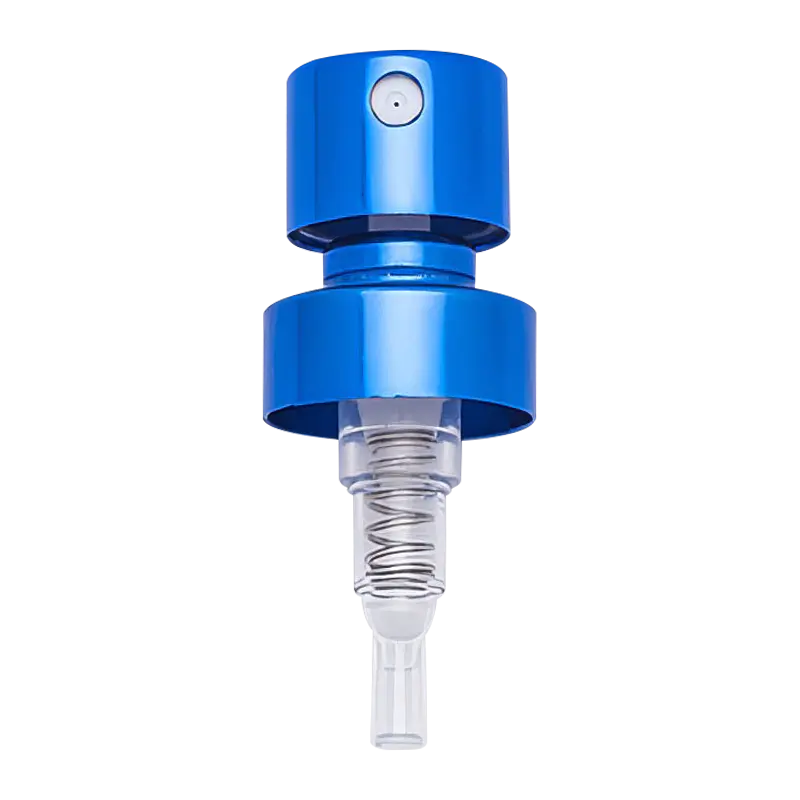 XY-PT-⊘13CAMG 13mm Crimp perfume fine mist pump sprayer shorter type
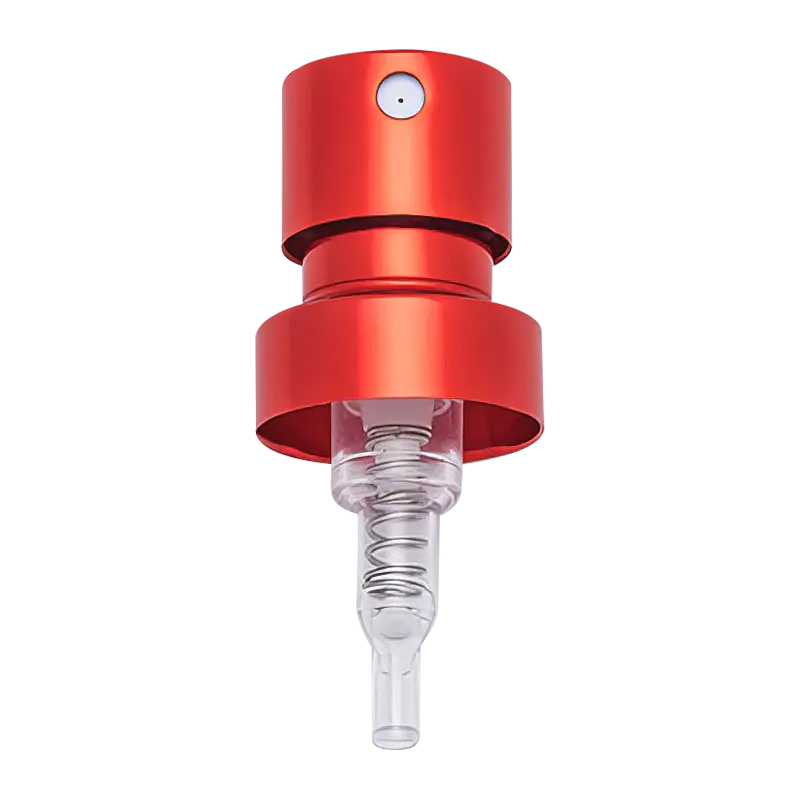 XY-PT-⊘15JDGB 15mm Crimp perfume fine mist pump sprayer high type
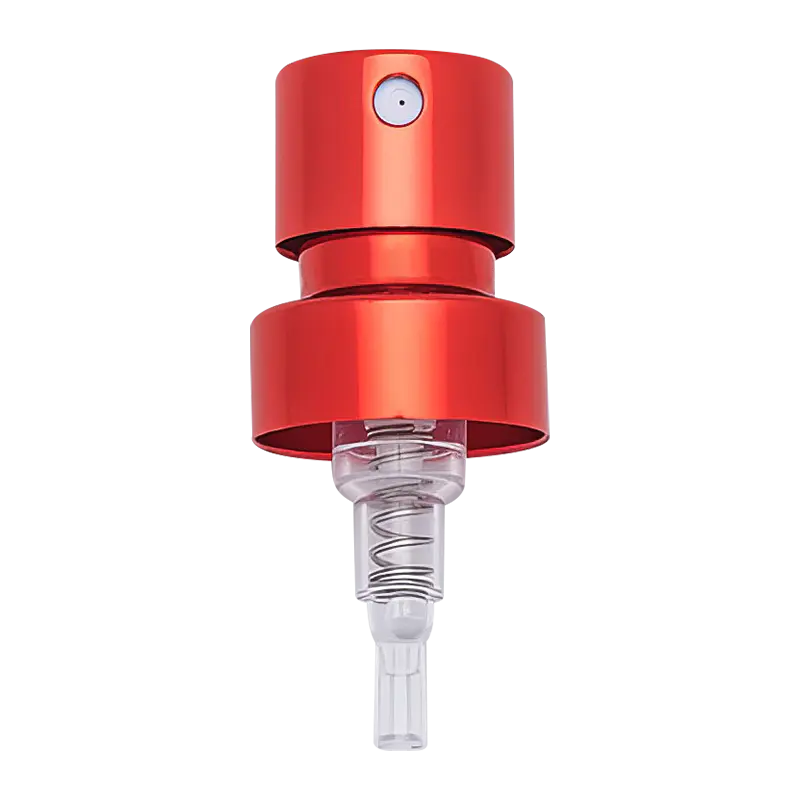 XY-PT-⊘15JDAB 15mm Crimp perfume fine mist pump sprayer short type
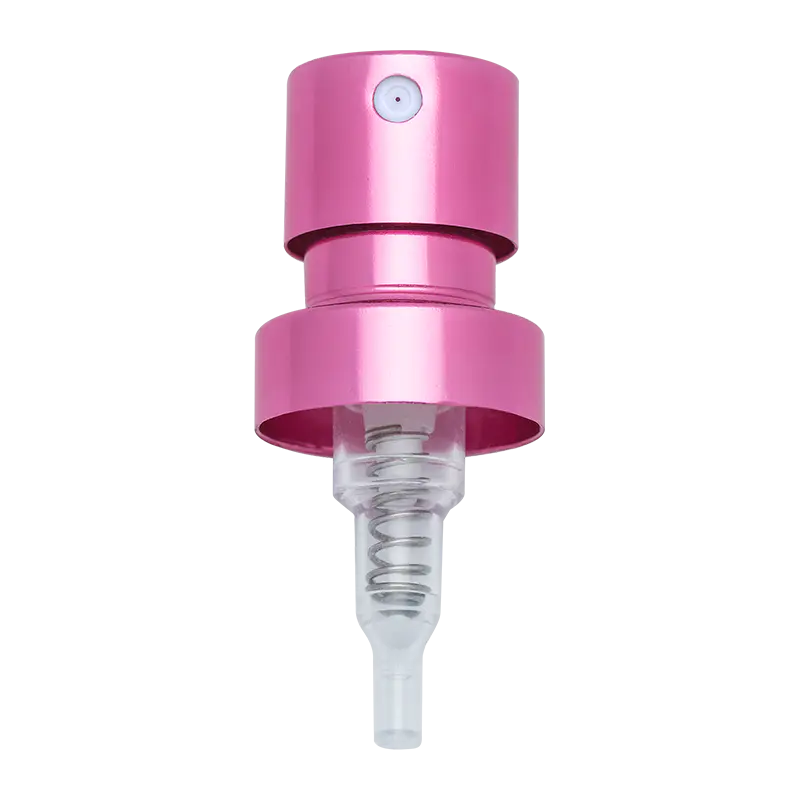 XY-PT-⊘15ABMG 15mm Crimp perfume fine mist pump sprayer short type
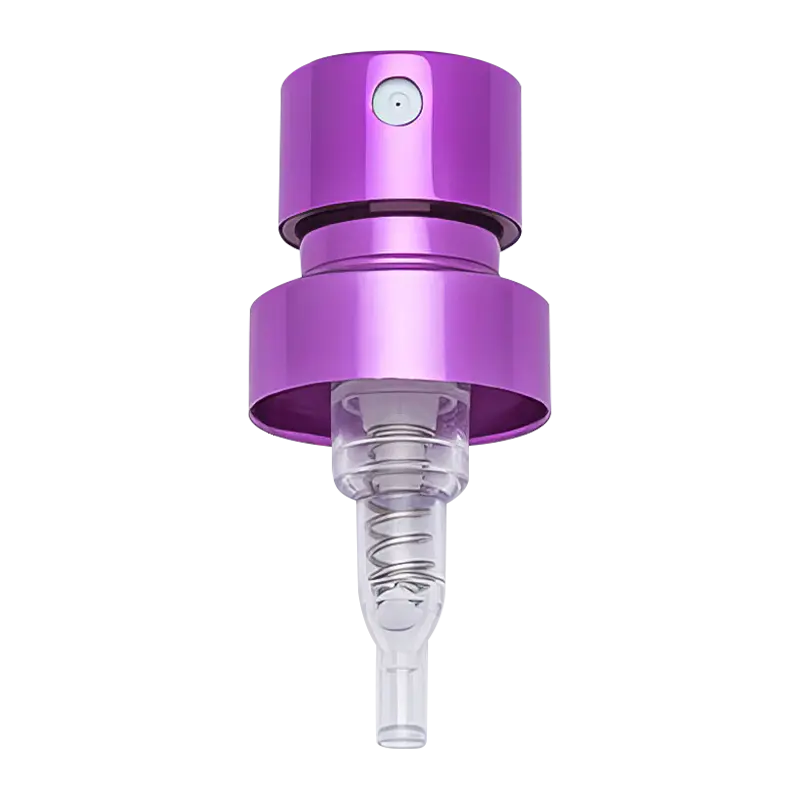 XY-PT-⊘15CAMG 15mm Crimp perfume fine mist pump sprayer shorter type
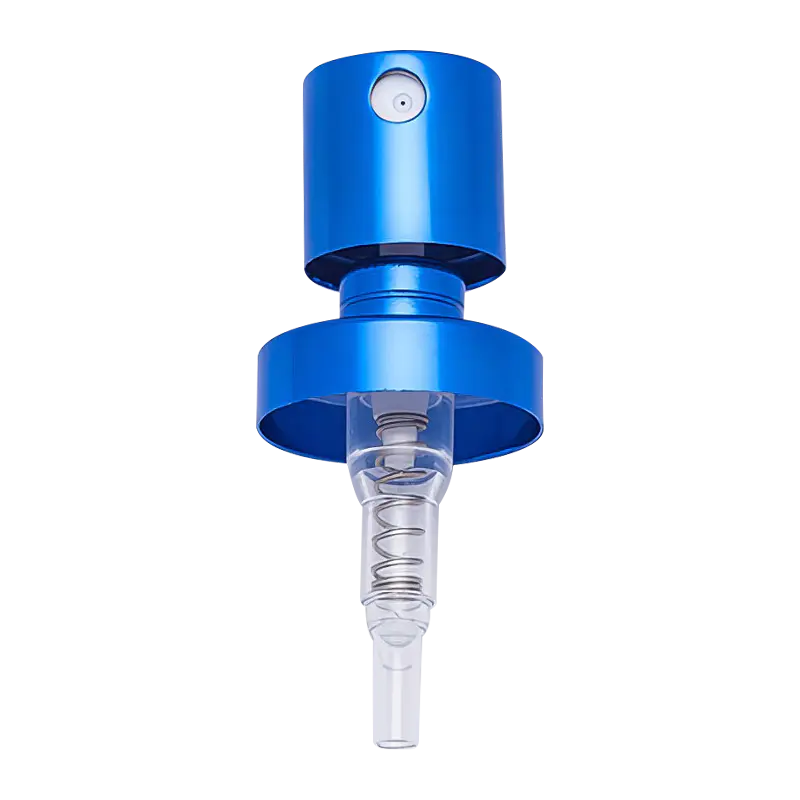 XY-PT-⊘20MGBMG 20mm Crimp perfume fine mist pump sprayer higher type with bigger discharge
Tel: +86-13812990918
Phone: +86-512-58962260
Address: No.3, Xiangqun Road, Leyu, Zhangjiagang.


 English
 русский
 Español
 عربى
عربى Português