Article Directory
Two fragrance bottles reach the filling line on the same morning. Both were ordered against a 415 neck specification, both take the same anodised aluminium collar, and only one of them seals. The difference is a single dimension: a 13 mm bore or a 15 mm bore. Force a 15/415 screw pump onto a 13/415 bottle and the collar sits low on the shoulder, the thread never reaches full engagement, and the unit fails an inverted leak test long before it reaches a shelf.
The short answer: match the pump to the neck bore first, lock the dose per actuation second, then confirm collar outer diameter and dip tube length. A 13/415 screw pump normally serves 10 mL to 30 mL bottles at 0.05 mL to 0.07 mL per spray. A 15/415 screw pump normally serves 30 mL to 100 mL bottles at 0.07 mL to 0.10 mL per spray.
Working rule: a 13 mm bore takes a 13/415 pump, a 15 mm bore takes a 15/415 pump, and no gasket or adaptor makes the wrong pairing leak-proof.
In a code such as 13/415, the leading number is the nominal neck bore in millimetres and 415 is the continuous-thread finish designation shared across the fragrance packaging industry. Both sizes sit in the same thread family, but the collar built for a 13 mm bore carries a smaller inner sealing diameter than the collar built for a 15 mm bore, so the two parts cannot be exchanged.
Neck finish: the moulded opening at the top of a fragrance bottle, defined by bore diameter, thread profile, thread count and sealing land. It is the first dimension that decides which pump family fits, ahead of dose, colour and cap style.
A 13/415 bottle carries a 13 mm nominal opening and a 15/415 bottle carries a 15 mm nominal opening. Glass moulding always moves inside a tolerance band, and ISO 9058 defines the dimensional tolerances for glass containers. No tolerance permitted by that standard closes a 2 mm design gap, which is why a mismatched pair fails at the leak test rather than at the drawing review.
Search for a 415 pump in any fragrance packaging catalogue and 13/415, 15/415 and 18/415 appear on the same page under the same thread code. The physical difference is just as quiet: a 13/415 collar commonly measures 16.0 mm outer diameter while a 15/415 collar measures 17.2 mm. That 1.2 mm gap is invisible in a render and decisive on a filling line.
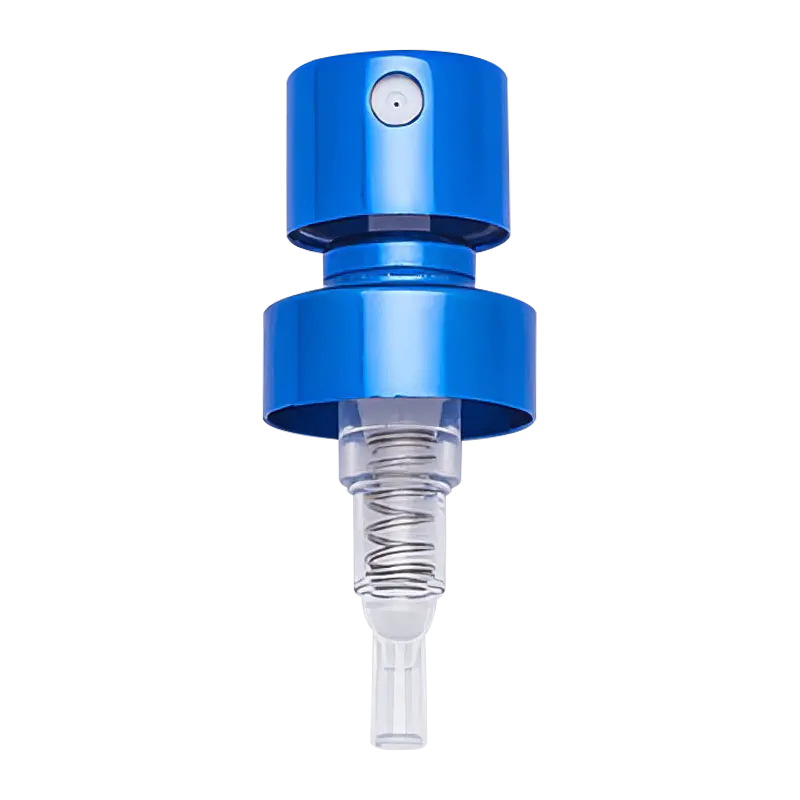
A reference part on the smaller side of the family is the 13 mm screw perfume fine mist pump sprayer shown below.
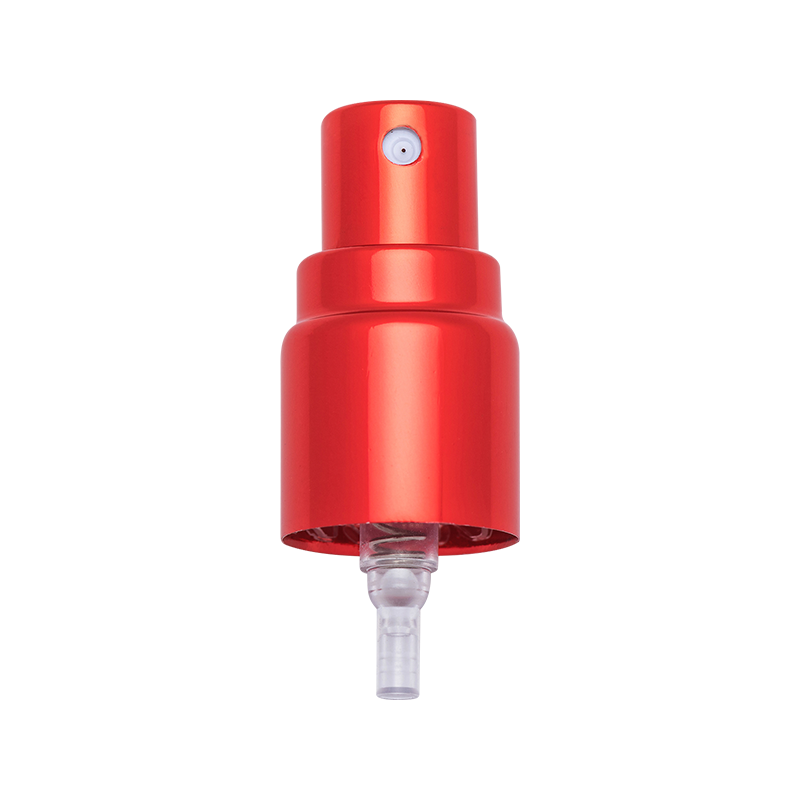 XY-LK-13/415 13mm Screw perfume fine mist pump sprayerThe 13mm Screw perfume fine mist pump sprayer is a precision-engineered dispensing component designed for high-end fragrance and personal care packaging. Featuring a 1...View Product →
Direct answer: 13/415 is the compact, low-dose option for 10 mL to 30 mL formats, and 15/415 is the higher-output option for 30 mL to 100 mL formats. The parameters that decide fit, feel and yield are listed below.
| Parameter | 13/415 screw pump | 15/415 screw pump |
| Nominal neck bore | 13 mm | 15 mm |
| Thread finish family | 415 continuous thread | 415 continuous thread |
| Typical collar outer diameter | 16.0 mm | 17.2 mm |
| Usable dose per actuation | 0.05 mL to 0.07 mL | 0.07 mL to 0.10 mL |
| Recommended bottle fill | 10 mL to 30 mL | 30 mL to 100 mL |
| Spray character on a 50 mm dip tube | Tight, fine cone | Wider cone, longer stroke |
| Typical formats | Purse spray, travel size, sample | Eau de parfum, hair mist, room spray |
| Interchangeable with the other size | No | No |
Two points rarely appear on a specification sheet but decide the outcome: usable dose depends on actuator stroke as much as on the pump chamber, and the collar outer diameter sets the minimum inner diameter of the bottle shoulder recess. Both are examined in a wider comparison of 13/415, 15/415 and 18/415 screw spray pumps.
Direct answer: neck bore decides which pump family fits, dose decides how the fragrance performs, collar outer diameter decides whether it assembles, and dip tube geometry decides whether it drains. Work through them in that order and the specification writes itself.
The full screw pump range covers 12/415, 13/415, 15/415 and 18/415 finishes in plastic and aluminium bodies.
Direct answer: a 13/415 pump delivers about 0.06 mL per actuation and a 15/415 pump about 0.09 mL, a 50 percent jump in output per stroke that changes how quickly a consumer works through a 30 mL bottle.
Typical fine mist output per actuation
Dose is set by chamber volume and actuator stroke, not by the collar. A 15/415 body tested with a short actuator can be tuned down to 0.07 mL, while a 13/415 body cannot be tuned up to 0.12 mL without changing the spring and piston. Ask for a dosage certificate that states the mean and standard deviation across a defined sample rather than a single nominal figure.
Direct answer: keep at least 0.4 mm of radial clearance between the collar and the bottle shoulder recess, and re-qualify capping torque whenever the collar changes from plastic to aluminium.
Aluminium collars are drawn thinner than moulded plastic collars, and anodised or lacquered finishes add 0.02 mm to 0.05 mm of surface build. The result is a tighter fit on the same neck and a narrower capping window. A plastic collar on a 13/415 neck is commonly capped between 0.4 N·m and 0.7 N·m; an aluminium collar should be qualified again on the customer's capping head, because metal does not compress the way plastic does.
Where the bottle shoulder leaves less than 0.4 mm of clearance, a stepped aluminium collar moves the contact area upward instead of widening the collar, so the 13/415 or 15/415 neck finish does not have to change.
For shoulder limited designs, the perfume collar with step shown below is the usual starting point.
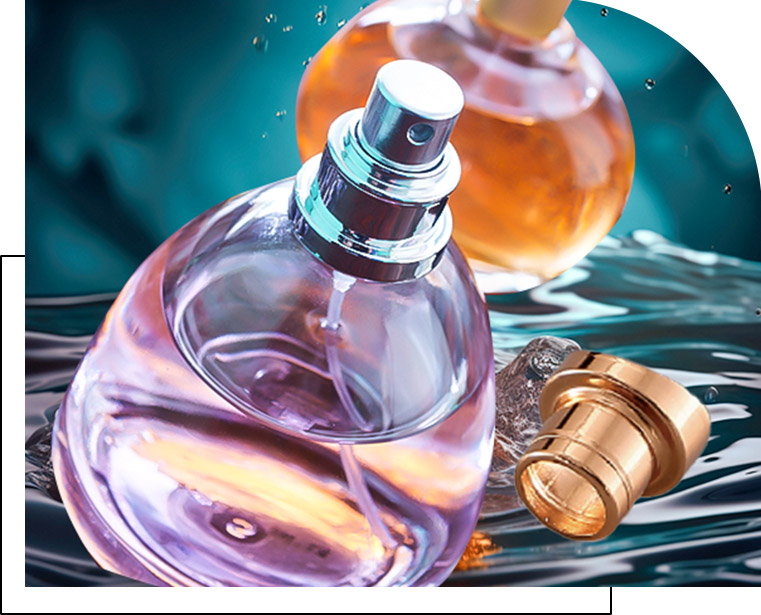 Perfume Collar with Step SuppliersPerfume Collar With Step can fit tightly to bottles and pump heads of different sizes, ensuring the tightness and aesthetics of the perfume. This design enhances the o...View Product →
Direct answer: neck fit is the largest single contributor to fragrance loss, and a common acceptance criterion in fragrance packaging is weight loss below 0.5 percent after 30 days at 40 degrees Celsius.
Three tests separate a reliable pairing from a risky one:
Gasket choice belongs to the same decision. LDPE and EVA gaskets suit standard ethanol based fragrances, while nitrile is specified when the concentrate carries a high terpene load from essential oils. A gasket that swells by 0.1 mm changes sealing force on a 13 mm neck more than on a 15 mm neck, because the same absolute swell takes up a larger share of the sealing land.
Direct answer: the neck bore fixes which pump family fits, while the fill volume tells you which dose to specify, and the two track together across most fragrance ranges.
Moving a fragrance from a 30 mL bottle to a 50 mL bottle with the same neck finish keeps the same pump and changes only the dip tube length. Moving from a 13/415 to a 15/415 neck means requalifying the bottle, the collar, the cap and the capping torque at the same time.
No. The sealing land diameter differs by 2 mm and the collar rests on a smaller seat than it was designed for. No gasket thickness restores the compression needed for a reliable seal, so the unit will fail both the inverted leak test and the 30 day weight loss check.
No. Above 0.15 mL per actuation the fine mist collapses into a wet stream on a small actuator and the spray pattern becomes uneven. For a 15 mL or 30 mL bottle the target stays between 0.05 mL and 0.07 mL per stroke.
Measure at least 30 bottles taken from three different mould cavities. Record neck bore, thread outer diameter and neck height, then confirm that every reading falls inside the pump supplier's stated tolerance band. A single cavity sample has never been enough.
Wall thickness and friction coefficient change, so the capping window narrows. A plastic collar on a 13/415 or 15/415 neck is commonly capped between 0.4 N·m and 0.7 N·m; an aluminium collar should be re-qualified on the customer's capping head before the first production run.
Selecting between a 13/415 and a 15/415 screw pump comes down to three measurements and one dose. Measure the neck bore, measure the collar clearance against the bottle shoulder, measure the dip tube against the bottle height, then confirm the dose with a dosage certificate. Get the bore right and the rest of the specification follows in a predictable order.
Zhangjiagang XinYe Chemical Sprayer Co., Ltd., founded in 2006, produces perfume fine mist pumps, aluminium collars and aluminium caps across three production bases covering 100,000 square metres of land and 250,000 square metres of floor area, with more than 600 employees, including close to 100 quality management and technical development staff. The production chain covers aluminium stamping, injection moulding, aluminium surface oxidation and automated assembly, and the company operates under ISO9001 certified quality management.
Confirm the neck bore, the collar clearance and the dose before tooling is cut. Those three numbers decide whether a fragrance bottle ships or leaks.
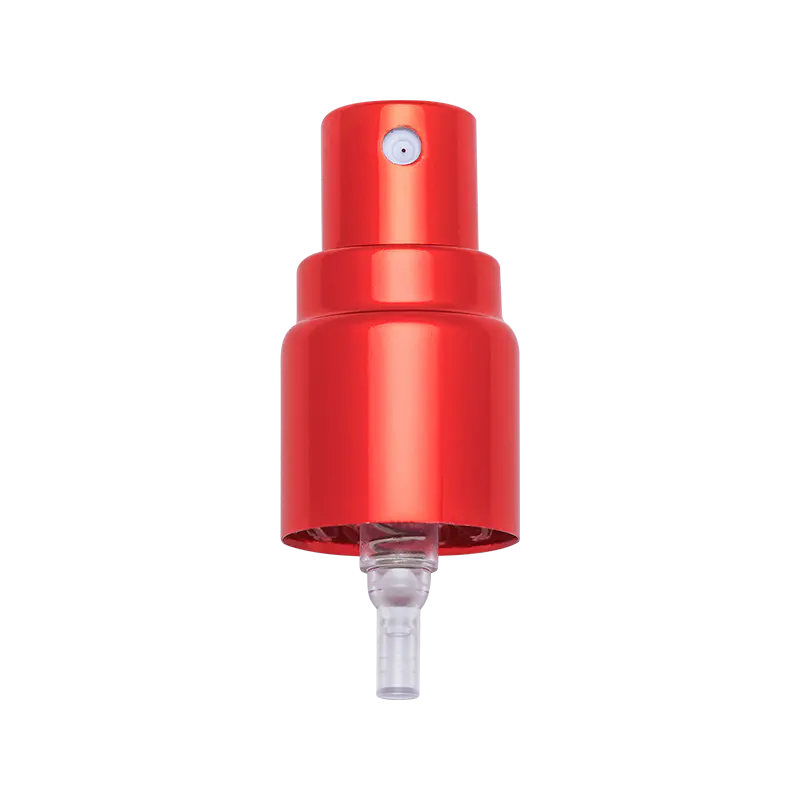 XY-LK-13/415 13mm Screw perfume fine mist pump sprayer
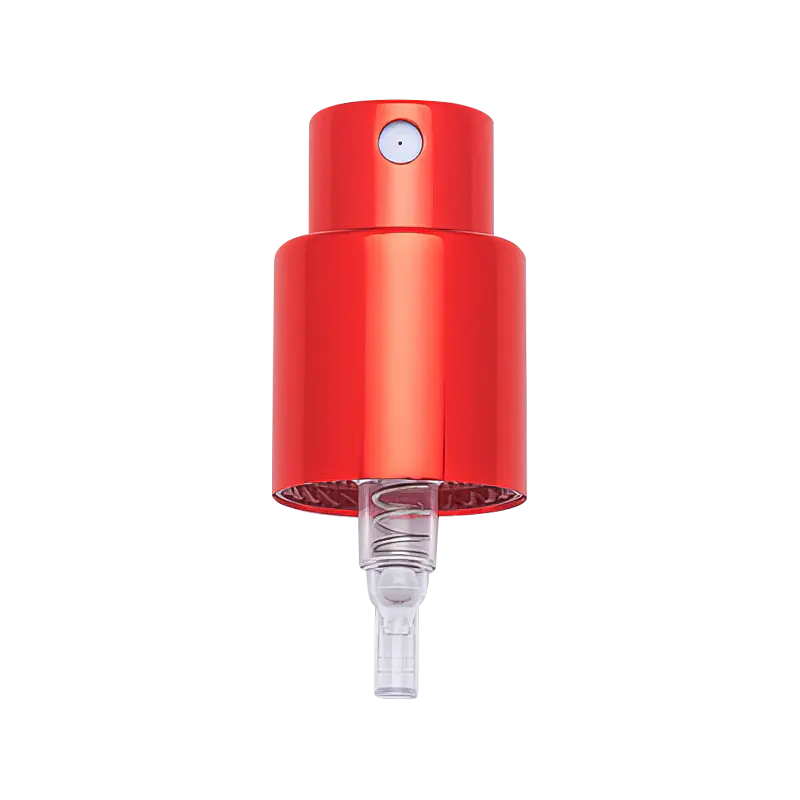 XY-LK-16/415 13mm Screw perfume fine mist pump sprayer OD16mm
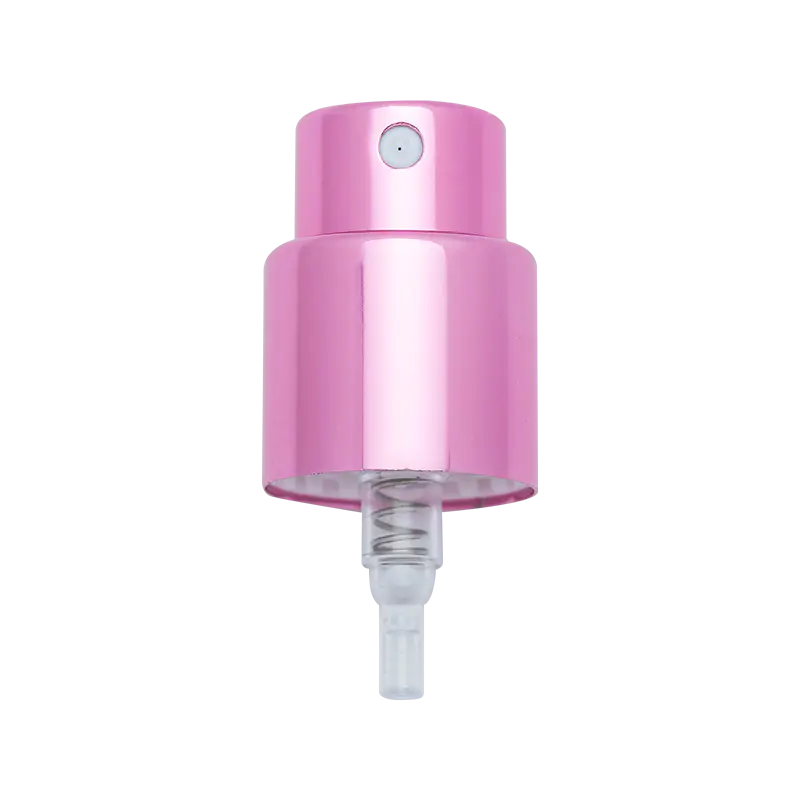 XY-LK-17/415 15mm Screw perfume fine mist pump sprayer OD17.2mm
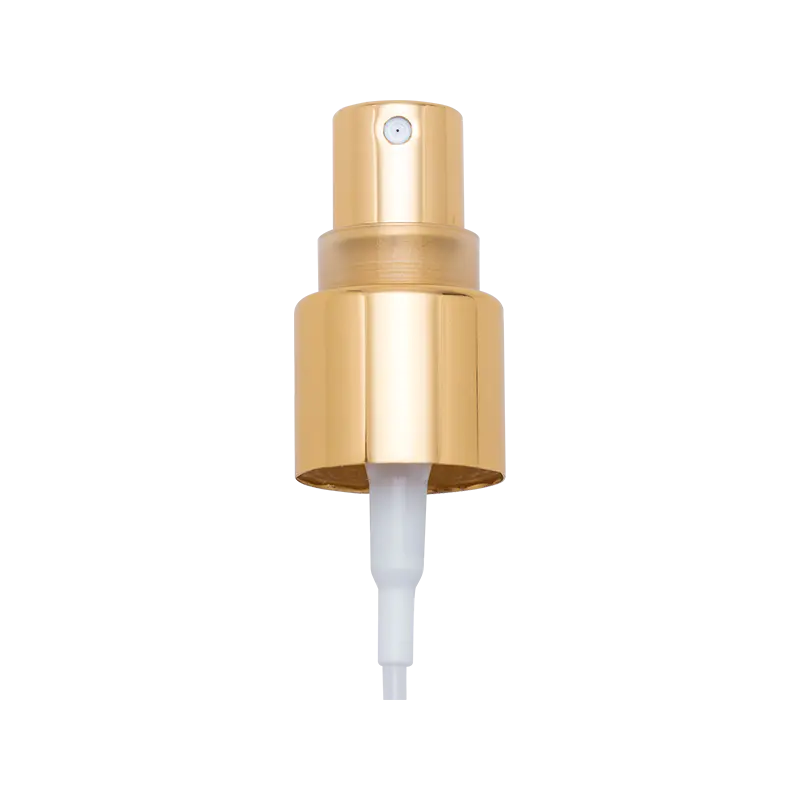 XY-LK-18/415 18mm Screw perfume fine mist pump sprayer
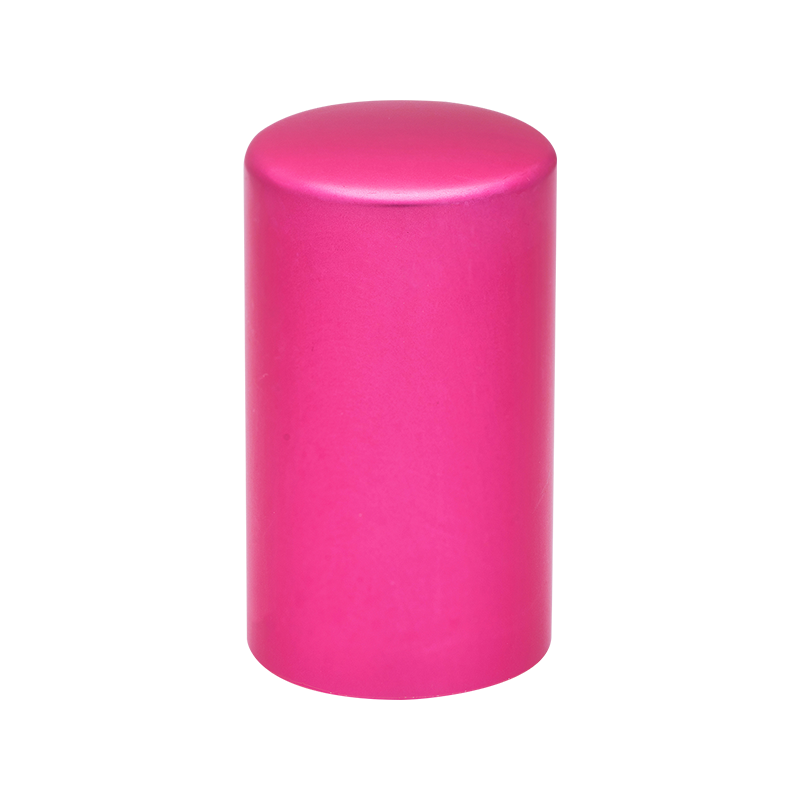 XY-LZ-18.6*32 Straight Perfume Bottle Aluminum Cap For Luxury Glass Fragrance Bottles, Minimalist Design
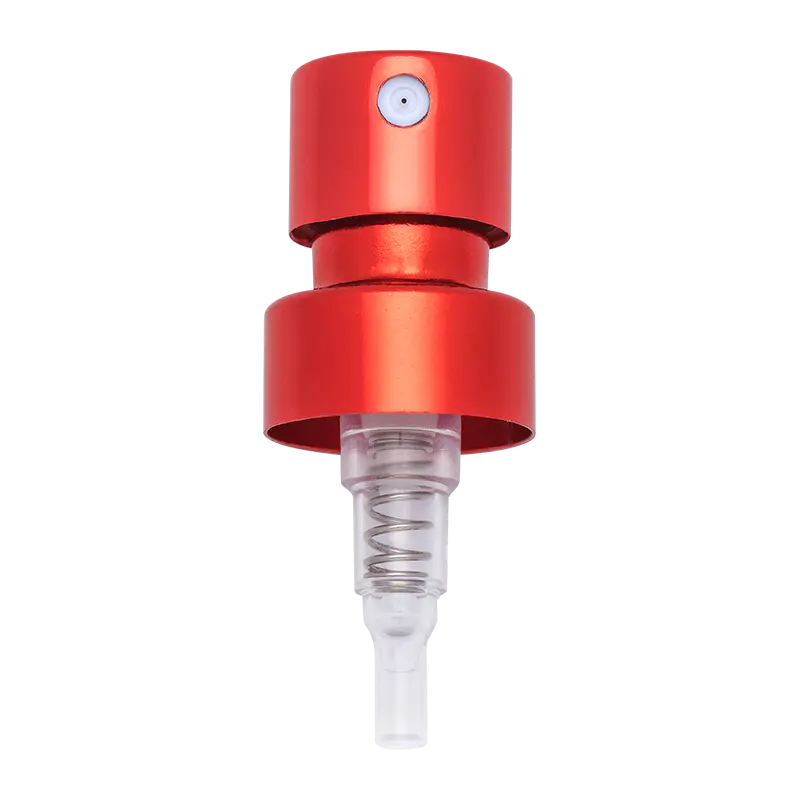 XY-PT-⊘13AB 13mm Crimp perfume fine mist pump sprayer short type
 XY-PT-⊘13CAMG 13mm Crimp perfume fine mist pump sprayer shorter type
Tel: +86-13812990918
Phone: +86-512-58962260
Address: No.3, Xiangqun Road, Leyu, Zhangjiagang.


 English
 русский
 Español
 عربى
 Português
