Article Directory
When a fragrance brand selects an aluminum spray pump, the conversation usually starts with neck size and dosage. Then the samples arrive, and a different problem appears: the collar looks dull under warehouse lighting, the cap develops white oxidation spots after a week, or the gold batch does not match the approved sample. Surface finishing on aluminum pumps is not decoration. It decides how the metal reacts to alcohol, how the parts survive automated assembly, and how the package feels in the customer's hand.
For most perfume, essential oil, and cosmetic applications, anodizing is the most reliable finishing route for aluminum spray pumps. It combines stable color, good alcohol resistance, and a premium metallic touch at a reasonable cost. This guide covers each finishing option, how it behaves under real filling and shipping conditions, and what to check before approving production.
An aluminum spray pump is made of several components: the pump body, the collar, and the cap. Only the collar and cap are fully exposed, but the pump body can also be visible on crimpless and screw-pump designs. The finish controls four practical issues:
Natural aluminum forms a thin oxide film by itself, but that film is too soft and too thin to protect the part over months. A controlled anodizing process replaces it with a dense, uniform oxide layer that tolerates alcohol, detergents, and normal handling. Because the same factory handles aluminum stamping, anodizing, and assembly, finish quality is easier to trace when a defect appears.
Anodizing grows the natural oxide layer electrochemically to a typical thickness of 8 to 15 micrometers in cosmetic packaging. The anodized layer is porous immediately after the bath, so it can absorb dyes before the pores are sealed. This is how silver-gray, gold, black, champagne, rose gold, and Pantone-matched brand colors are produced on the same metal. For a metal collar that has to match the gold or silver accents of a perfume bottle, dyed anodizing is the standard solution. A typical example is the gold or silver anodized stepped collar, which keeps a metallic look while offering color consistency across batches.
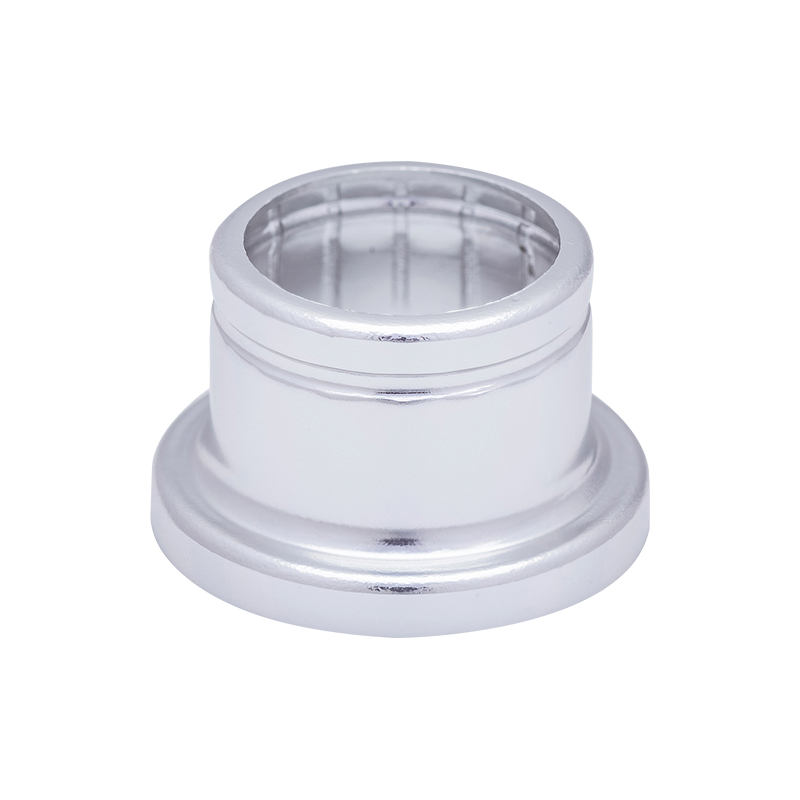 Custom XY-ZT-17.3*14DBSNG Gold/Silver Perfume Cap Collar Aluminum Stepped CollarZhangjiagang XinYe Chemical Sprayer Co., Ltd. specialize in custom and wholesale XY-ZT-17.3*14DBSNG Gold/Silver Perfume Cap Collar Alumin...View Product →
Sandblasting directs fine abrasive particles at the aluminum surface to create a uniform matte texture. This removes surface defects and makes fingerprints and light handling marks far less visible. Brushing produces a directional, low-gloss satin grain that is often used on minimalist fragrance packaging. Both textures are almost always combined with anodizing: the texture is created first, then the oxide layer is applied and dyed or sealed.
Mechanical polishing creates a mirror-like surface that projects a high-end image. It is attractive on decorative collars and caps, but a mirror finish shows every micro-scratch, so it needs a clear top coat and careful handling during assembly. Electroplating deposits a thin layer of another metal, such as real gold or chrome, over the aluminum. The effect is brighter and warmer than anodizing can achieve, but plating adds process steps, cost, and waste management requirements, so it is normally reserved for special editions and prestige lines.
Powder coating applies a polymer layer of 60 to 120 micrometers with a smooth or textured surface. It provides excellent coverage of surface imperfections, wide color availability, and strong mechanical protection. The trade-off is a non-metallic, opaque appearance. Powder coating is useful for caps and collars that need a thick, durable color layer in shades that anodizing cannot produce.
The table below summarizes typical performance and cost behavior. Actual results depend on the aluminum alloy, the pre-treatment, and the anodizing parameters chosen by the factory.
| Finish | Typical thickness | Appearance | Alcohol resistance | Scratch behavior | Cost level |
|---|---|---|---|---|---|
| Natural anodizing | 8-15 microns | Silver-gray metallic | Good | Hard layer; marks show as lighter lines | Low |
| Dyed anodizing | 8-15 microns | Gold, black, champagne, custom colors | Good; dye may fade under direct UV | Same as natural anodizing | Low-medium |
| Sandblasted anodizing | 8-15 microns | Matte, soft reflection | Good | Scratches are less visible | Medium |
| Brushed anodizing | 8-15 microns | Linear satin grain | Good | Marks follow the grain direction | Medium |
| Polished + clear coat | 3-8 microns | Mirror reflection | Moderate | Every micro-scratch is visible | Medium-high |
| Electroplated gold/chrome | 3-10 microns metal layer | Bright, warm metallic | Moderate to good | Plating can wear where unprotected | High |
| Powder coating | 60-120 microns | Opaque, smooth or textured | Good | Tough, thick coating | Medium |
Thickness alone does not guarantee performance. Pre-treatment, including degreasing, etching, and desmutting, determines how even the anodized layer grows. A ten-micrometer layer on a properly prepared surface will outperform a fifteen-micrometer layer on a poorly cleaned one. Buyers should request cross-section or weight-loss data instead of relying on thickness numbers alone.
Finish samples should be treated like critical components, not aesthetic extras. Four checks cover the majority of real-world failures.
Submerge sample parts in 95 percent ethanol at room temperature for 24 hours, then check for white spots, color distortion, and weight loss. This test is directly relevant to perfume collars because the collar wipes repeatedly against the pump mechanism. Practical guidance on preventing oxidation and friction marks on anodized collars explains what to look for during this check.
Collars and caps rub against the pump housing and thread during automated assembly and transport. Ask for a friction test and inspect the edge of the embossing, where the finish is thinnest. On a matte surface, light marks disappear quickly; on a mirror finish, even a single bad stroke becomes a quality complaint.
Dyed anodizing is sensitive to bath temperature, dye concentration, and alloy variation. Agree on a Delta E tolerance and a master sample signed by both parties before production. Gold and silver are especially difficult to hold because they reflect light from the surrounding environment.
If the product will be sold in transparent boxes or displayed in sunlight, request a UV stability test. Red and gold dyes fade faster than black or natural finishes. A quick four-week exposure test is cheaper than a field complaint.
The pump type determines how much aluminum is visible. On crimp pumps, the metal collar sits under the cap, and most of the pump body is hidden by the actuator and bottle neck. On screw pumps, the visible metal area increases dramatically: the collar, the threaded housing, and often the whole pump body are exposed. A good example is the 20 mm aluminum screw spray pump, where the body can be anodized in the same tone as the cap to create a continuous color block from shoulder to spray actuator.
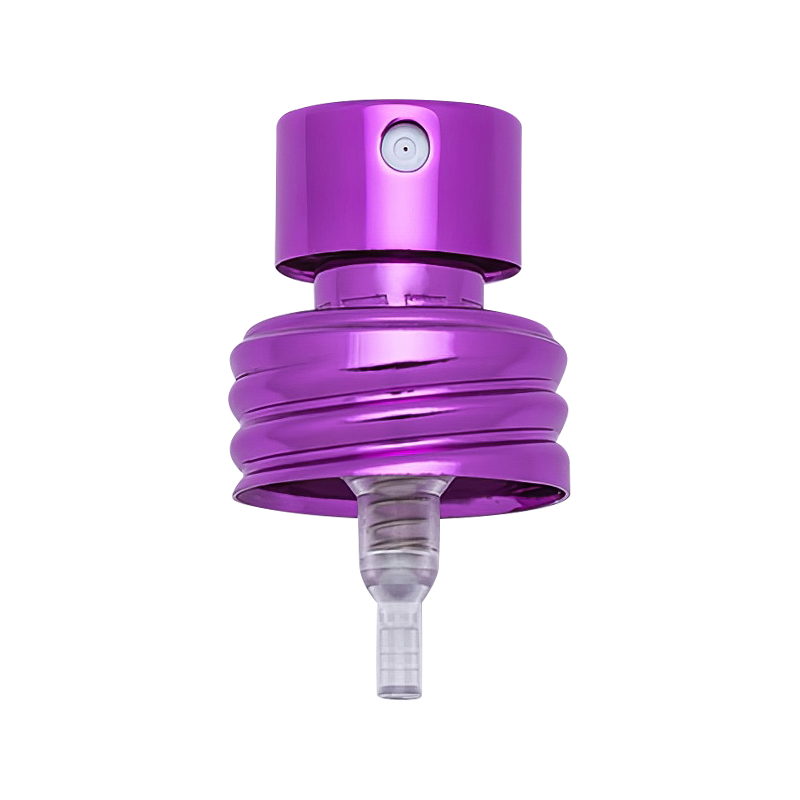 Custom XY-LK-20.8CK 20mm Aluminum screw perfume fine mist pump sprayer OD20.8mm Zhangjiagang XinYe Chemical Sprayer Co., Ltd. specialize in custom and wholesale XY-LK-20.8CK 20mm Aluminum screw perfume fine mist pump ...View Product →
From a design perspective, the mechanical function of the pump is inseparable from its surface. A matte surface has a higher coefficient of friction, which changes the tactile sensation when the customer twists the pump; this matters more on screw pumps than on crimp pumps. The engineering details of how aluminum bodies are integrated into pump designs are covered in this overview of aluminum screw spray pump design, applications and benefits.
The finish should align with the brand strategy, not just the drawing in the brief.
For a prestige fragrance, a mirror-polished collar with gold electroplating and a black matte cap creates the classic luxury contrast. For a minimalist natural line, a sandblasted natural anodized finish with a discreet embossed logo communicates cleanliness and tactile quality. For a brand that wants a family of colors across several stock-keeping units, the cap is the easiest part to color-manage, as seen in the multi-color straight aluminum cap, which keeps one bottle geometry while changing the finish to define each SKU.
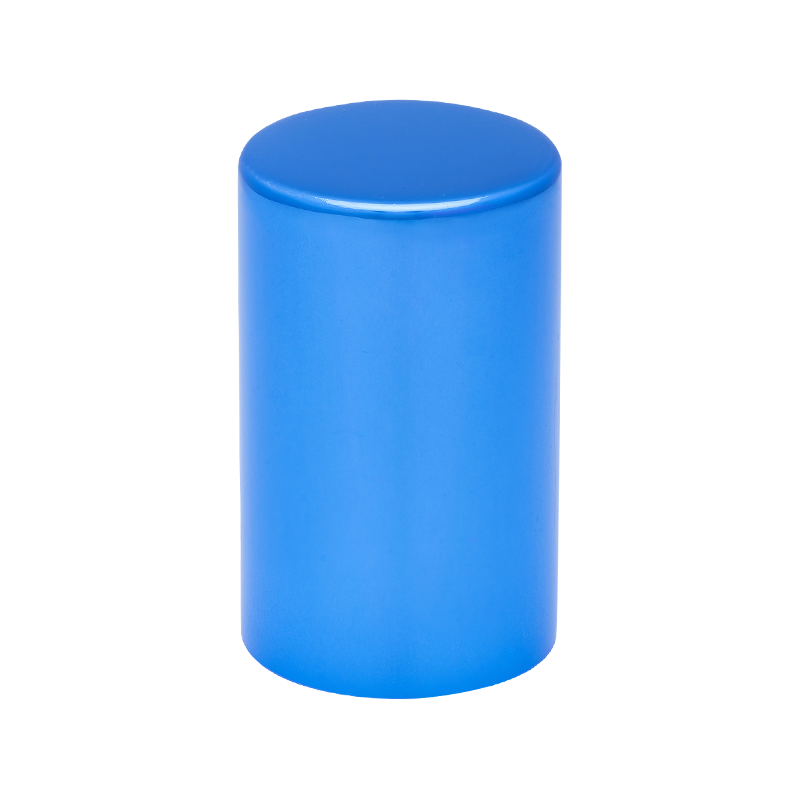 Custom XY-LZ-20.6*34 Multiple Colors Straight Perfume Aluminum Cap/Lid For FragrZhangjiagang XinYe Chemical Sprayer Co., Ltd. specialize in custom and wholesale XY-LZ-20.6*34 Multiple Colors Straight Perfume Aluminum ...View Product →
Embossing also changes the relationship between finish and defect. On matte surfaces, the embossed area hides tool marks and corrosion well. On mirror surfaces, any tooling mark becomes a visible defect, so the embossing step must follow polishing and be followed, if possible, by a final protective layer. Buyers who need to evaluate the whole pump decision, including the finish, neck size, dosage, and gasket material, will find a useful starting point in this guide to choosing a 13/415 perfume spray pump.
In short, start with the environment the pump will live in: high alcohol content, long warehouse storage, bright display lighting, and repeated handling. Select the finish that survives that environment first, then adjust the aesthetics. Anodizing with a matte or brushed texture is the safest baseline for most perfume lines, and it leaves room for gold, silver, and custom colors without moving to expensive plating. Ask for alcohol soak tests, friction checks, and signed color masters.
 XY-LZ-20.6*34 Multiple Colors Straight Perfume Aluminum Cap/Lid For Fragrance, Essential Oil Bottle
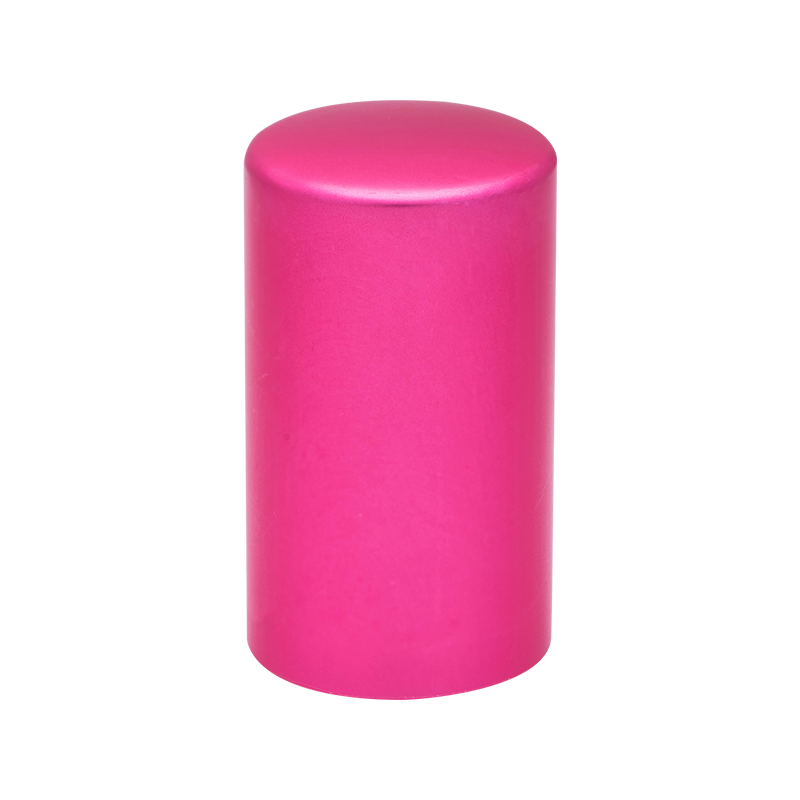 XY-LZ-18.6*32 Straight Perfume Bottle Aluminum Cap For Luxury Glass Fragrance Bottles, Minimalist Design
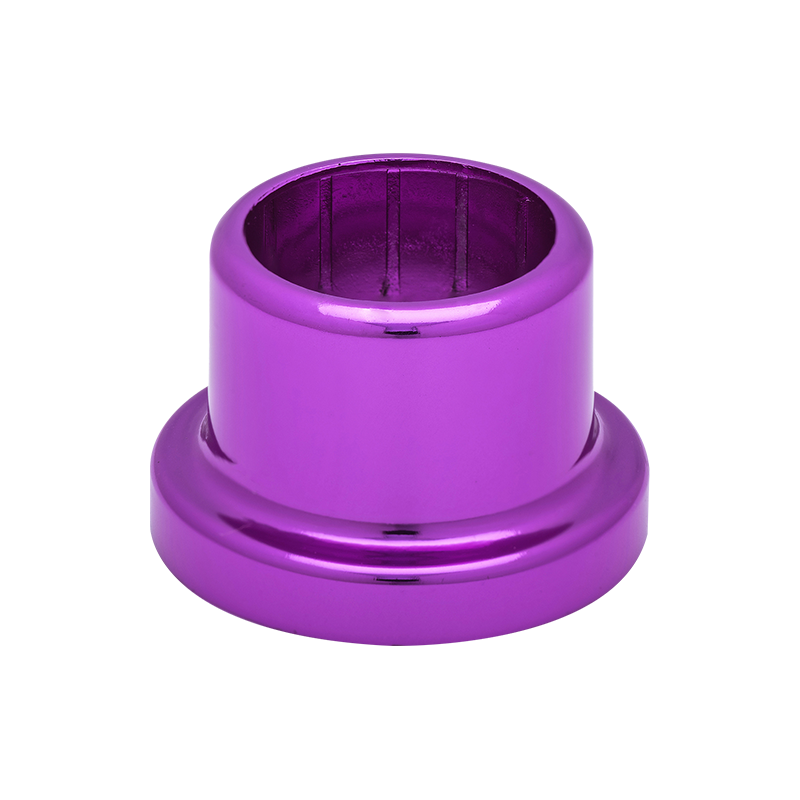 XY-ZT-17.05*15.6 22.8*4 Aluminum Cosmetic Perfume Collar With Step
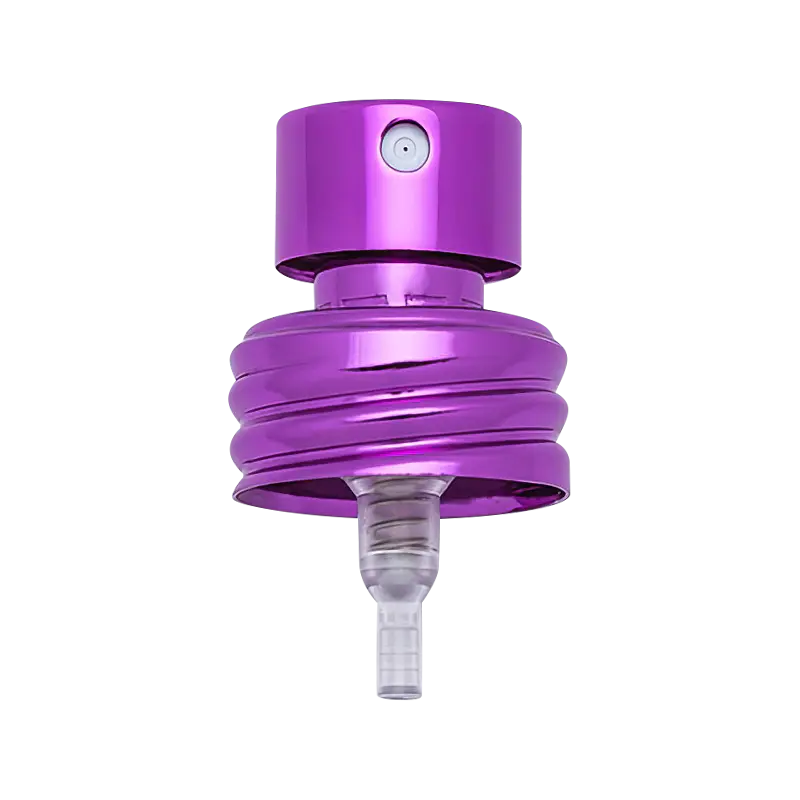 XY-LK-20.8CK 20mm Aluminum screw perfume fine mist pump sprayer OD20.8mm
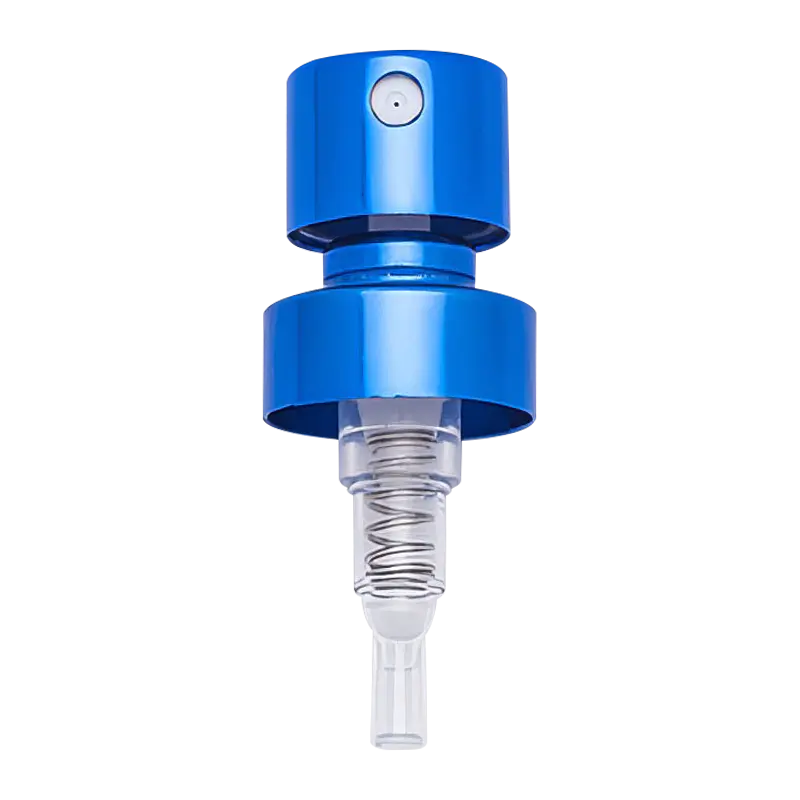 XY-PT-⊘13CAMG 13mm Crimp perfume fine mist pump sprayer shorter type
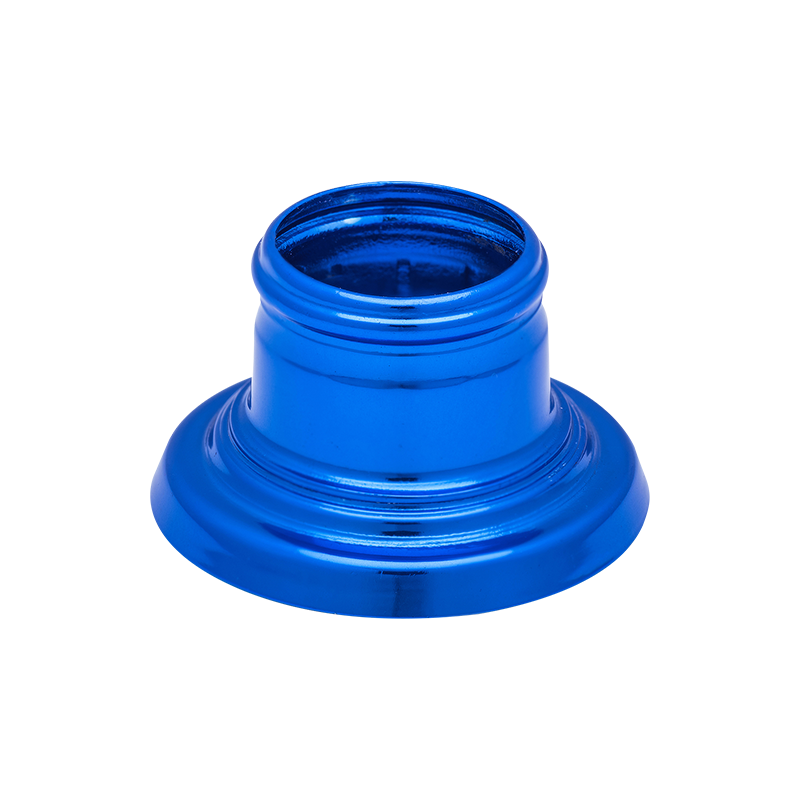 XY-ZT-DADB Custom Perfume Bottle Stepped Collar With Groove
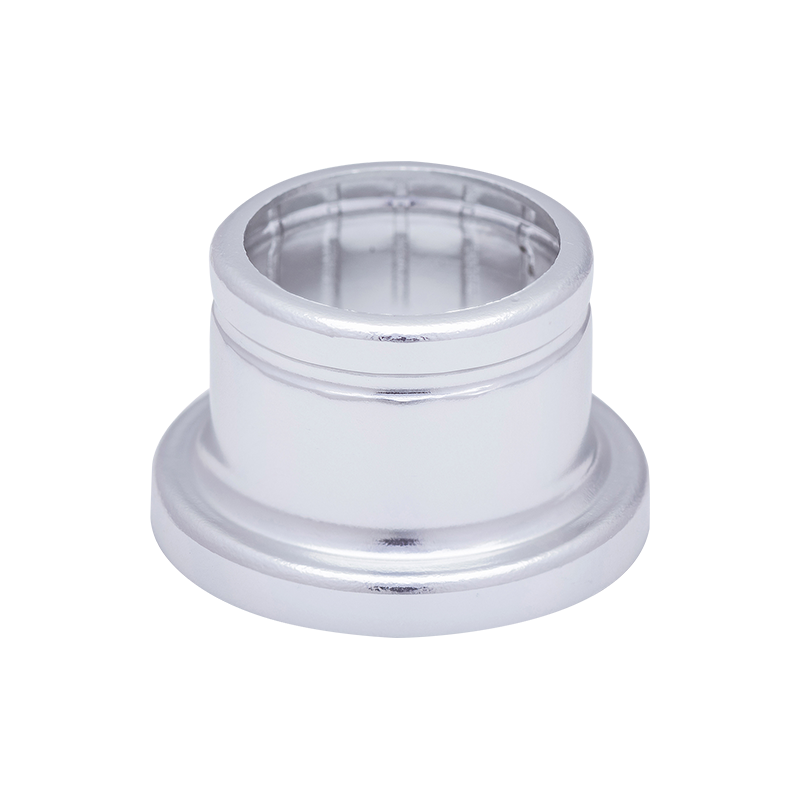 XY-ZT-17.3*14DBSNG Gold/Silver Perfume Cap Collar Aluminum Stepped Collar
Tel: +86-13812990918
Phone: +86-512-58962260
Address: No.3, Xiangqun Road, Leyu, Zhangjiagang.


 English
 русский
 Español
 عربى
عربى Português