Article Directory
A 50 ml glass flacon with a 15/415 neck can be closed by a crimp pump, a crimpless pump or a screw pump, and once the glass mold is cut that choice is no longer free. Perfume packaging development runs in the opposite direction to the way it is usually described: the pump specification, not the bottle silhouette, decides whether an OEM or ODM program can be tooled, filled and shipped on schedule. Zhangjiagang XinYe Chemical Sprayer Co., Ltd. (XinYe), a perfume spray pump manufacturer founded in 2006 in Zhangjiagang, China, builds its catalog around the four values that control that decision.
What follows covers how a custom spray pump behaves inside an OEM brief, where an ODM program saves tooling money, which tolerances cause leaks after filling, and how to sequence sampling so a fragrance launch does not stall at the pump.
A custom spray pump is specified by four numbers: neck finish, ferrule or thread diameter, dosage per actuation and dip tube length. Fix those four and the collar profile, cap finish, actuator color and bottle silhouette all stay open for design work.
Order matters. The neck finish comes first because it is cut into glass and into the aluminum collar; the other three follow from it.
Crimp ferrule diameter across the FEA series
The variable sitting underneath all four numbers is viscosity. An alcohol-based fragrance that is 70 percent ethanol by volume behaves nothing like a jojoba or argan oil blend. A pump that produces an even, clean mist on eau de parfum can deliver a coarse spray on a heavier oil, because the chamber fills more slowly and the return spring has less time to reset between strokes.
Crimp pumps fit OEM programs that fill and crimp on an automated line, while crimpless and screw pumps fit ODM programs where the brand or contract filler assembles the bottle without a crimping head.
XinYe's catalog splits along exactly that line. Crimp pumps cover the FEA13, FEA15, FEA18 and FEA20 series. Crimpless pumps cover FEA13, FEA15 and FEA20 plus a customized crimpless body. Screw pumps cover the 12/415, 13/415, 15/415 and 18/415 families, including an aluminum screw spray pump and a plastic version of the same interface.
| Pump family | Assembly on the bottle | Program fit | Reopening | Line equipment |
|---|---|---|---|---|
| Crimp pumps (FEA13 to FEA20) | Aluminum ferrule crimped over the glass neck | High-volume OEM filling | Not designed for reopening | Crimping head with controlled setting force |
| Crimpless pumps (FEA13, FEA15, FEA20) | Press or snap fit onto the same neck | ODM, short runs, sampling | Removable | Hand press or simple fixture |
| Screw pumps (12/415 to 18/415) | Threaded onto a 415 neck | ODM, travel and refill formats | Reusable | None |
| Aluminum screw pump, 20.8 mm outer diameter | Threaded, metal shell over the pump body | Premium ODM | Reusable | None |
The table is the first filter in a sourcing conversation, not the last. Two 18/415 screw pumps can share a neck finish and still differ in outer diameter, actuator height and dosage, so buyers should compare pump drawings rather than family names. The same logic drives the 15/415 screw pump versus crimp pump comparison, where the deciding factor is not the neck but who owns the assembly step.
In a crimped closure the ferrule is the seal. It compresses the gasket against the glass neck, so a crimp setting chosen for the middle of the glass tolerance band survives the ends of that band, while a setting chosen for the nominal diameter may not. That is a mechanical fact, not a supplier preference.
 Custom Crimpless Perfume Pump for ODM and Gift Set PackagingPress-fit pump without metal crimp, suited to ODM launches and gift sets where the neck interface stays open until bottle drawings are signed.View Product →
Crimpless pumps exist because a brand or filler sometimes owns no crimping head, no setting-force control and no wish to buy one. The retention geometry changes; the gasket and spray chamber do not. That makes the family a practical first choice for ODM launches, gift sets and projects filled in more than one country, and it keeps the neck interface open until the bottle drawing is signed off.
A supplier that owns aluminum stamping, injection molding, anodizing and automated assembly can shorten a pump sampling loop from weeks to days, because every interface in the closure stack is measured in the same building.
XinYe was founded in 2006 and runs three production bases: the Zhangjiagang headquarters, a Zhangjiagang branch plant and a Huai'an branch. The company reports a combined site area of 100,000 square meters and 250,000 square meters of building area, with more than 600 employees, 60 senior managers and close to 100 staff in quality management and technical development. Its stated production chain runs from aluminum stamping and injection molding through aluminum surface anodizing to automated assembly, and the company states that it holds ISO 9001 quality management certification.
Those figures matter for one practical reason: tolerance stack-up. When a ferrule comes from one vendor, a collar from a second and a cap from a third, each part arrives inside its own tolerance band, and the stack can consume the whole clearance between collar and bottle shoulder. A plant that stamps the collar, anodizes it, molds the pump body and assembles them can measure that stack on one bench and move a few hundredths of a millimeter on a single part before shipping a sample.
It also changes how a change request is handled. Moving a collar from a bright anodized finish to a matte one, or a pump from a 15 mm to a 20 mm ferrule with a larger discharge, is an internal rework note when one plant holds the tooling, and a fresh quotation round when three suppliers do.
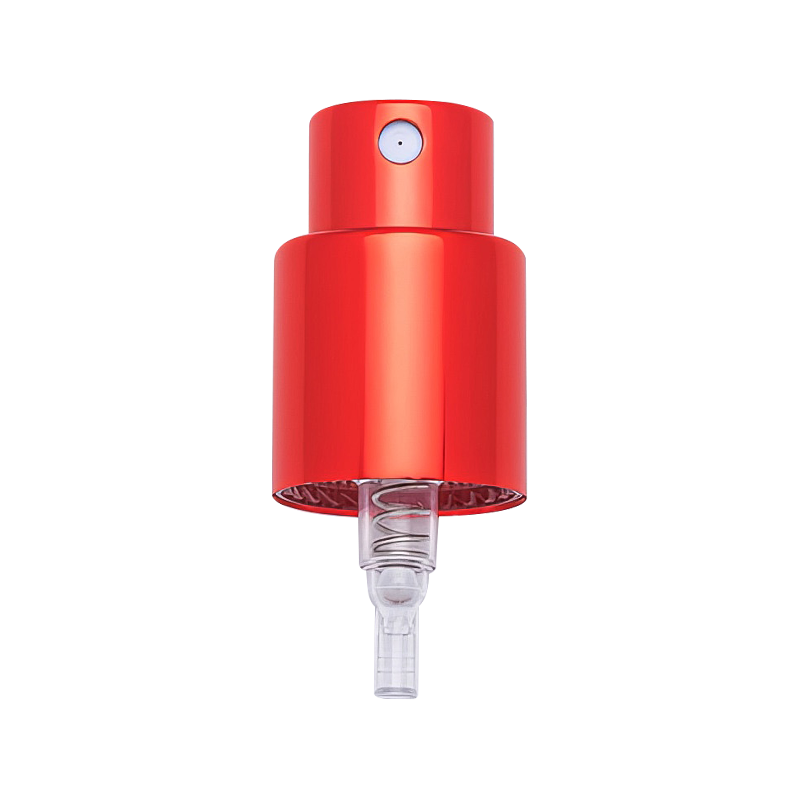 13/415 Screw Perfume Pump with 16mm Outer DiameterFine mist screw pump for fragrance and personal care bottles, with customizable dosage, dip tube length, and finishes for OEM/ODM programs.View Product →
Buyers who want the whole neck and ferrule range in one view can start from XinYe's perfume spray pump range, which lists crimp, crimpless and screw families side by side, including 13/415, 15/415 and 18/415 screw pumps with outer diameters of 16 mm, 17.2 mm and 18 mm.
A perfume closure is a three-part stack of pump, collar and cap, and all three must be dimensioned from the same neck finish drawing even when they are ordered from different suppliers.
The collar sits at the shoulder of the bottle and is the aluminum surface a customer touches first. XinYe's collar range covers a straight collar for pumps, a stepped collar, a grooved stepped collar, an embossing collar and a customized collar, with model numbers that encode the geometry: XYZT17-05-15-6-22-8-4 describes a stepped aluminum collar sized for a cosmetic perfume bottle, while XYZT17-3-14DBSNG is supplied in gold and silver anodized finishes.
Straight collars keep the closure low and let the bottle shoulder read as glass. Stepped and grooved collars add a visible ledge that hides the pump flange and gives the cap a defined resting line. Embossed collars carry a logo directly in the aluminum, which removes one printing step from the cap.
Anodizing sets both colour and texture. Bright silver and gold finishes reflect light at the counter, matte and brushed finishes reduce fingerprints, and a colour-matched collar and cap turn two parts into one visual unit across a fragrance line.
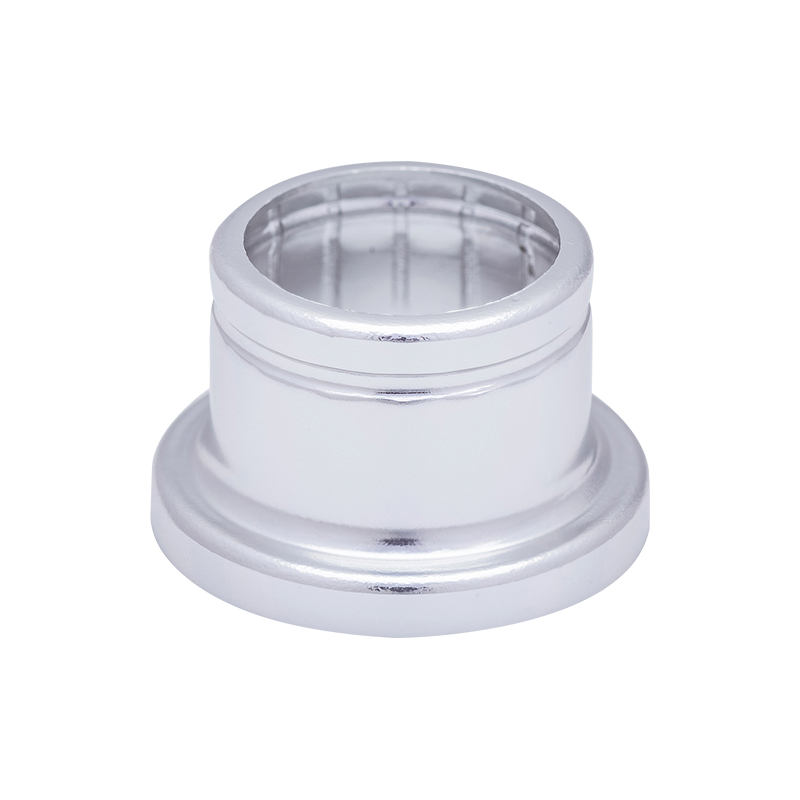 Gold/Silver Aluminum Stepped Perfume Collar for Crimp-Neck PumpsAnodized stepped collar for FEA15 crimp-neck pumps, offering decorative transition and custom color or LOGO options for fragrance packaging.View Product →
Caps are where ODM programs usually save the first round of tooling. A straight aluminum cap in a standard diameter, such as the minimalist XYLZ18-6-32 built for luxury glass fragrance bottles, can be reused across two or three references in the same line, while the XYLZ20-6-34 cap in multiple colours serves both fragrance and essential oil bottles. A bespoke cap with an embossed logo needs its own die and its own sampling cycle.
Five checks separate a pump that sprays correctly on a bench from a pump that still sprays correctly after a year in a retail box.
Where the filler works under ISO 22716 cosmetics GMP, the incoming inspection record for each pump batch becomes part of the batch file, which is one more reason to keep dosage and neck finish fixed across a production run.
Four questions come up in nearly every OEM or ODM pump conversation, and each has a short, technical answer.
Yes, when neck finish, dosage and dip tube length are identical. The 13/415 screw family shows how far that goes: the same thread accepts a pump with a 16 mm outer diameter or a slimmer 13 mm body, and only the dip tube and actuator change between bottle capacities.
Before the glass drawing is released for mold cutting. Neck finish changes after the mold is cut require a new mold, while pump-side changes such as ferrule diameter, dosage or actuator finish are rework inside one plant.
The seal is formed by the same gasket compressed against the same glass neck; only the retention method differs. Validate both on the same filled bottle, inverted for 24 hours, before choosing between them for a production run.
Tooling, not the pump. Standard FEA13 to FEA20 crimp bodies and 12/415 to 18/415 thread bodies already exist as molds, so cost concentrates in the parts that need new work: the collar profile, the cap die and any bespoke actuator.
The shortest route through an OEM or ODM pump program is to lock neck finish, dosage, dip tube length and ferrule diameter on one drawing, then keep pump, collar and cap in a single tolerance chain from sample to shipment.
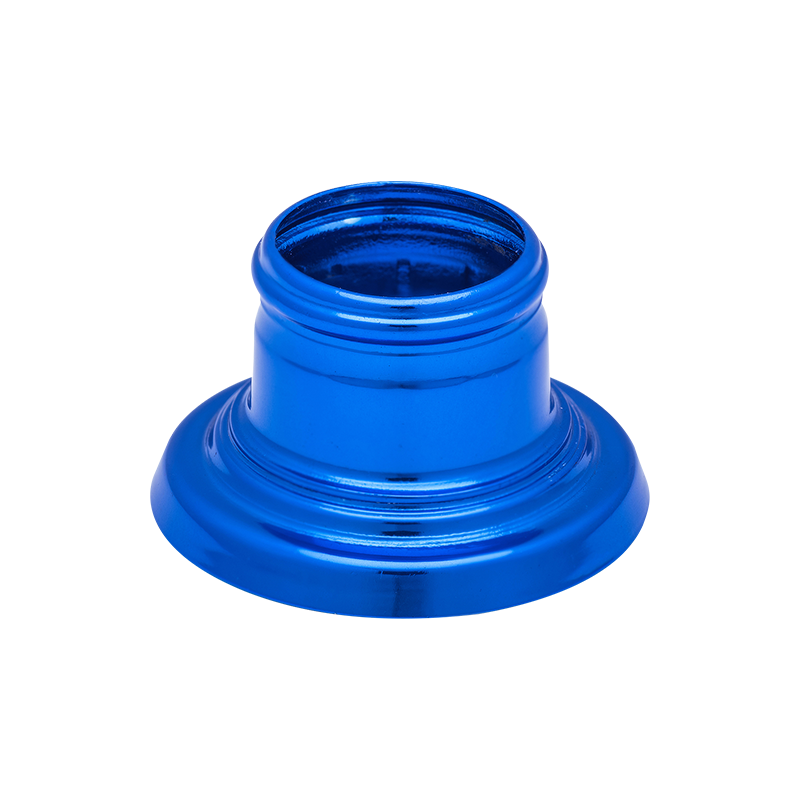 XY-ZT-DADB Custom Perfume Bottle Stepped Collar With Groove
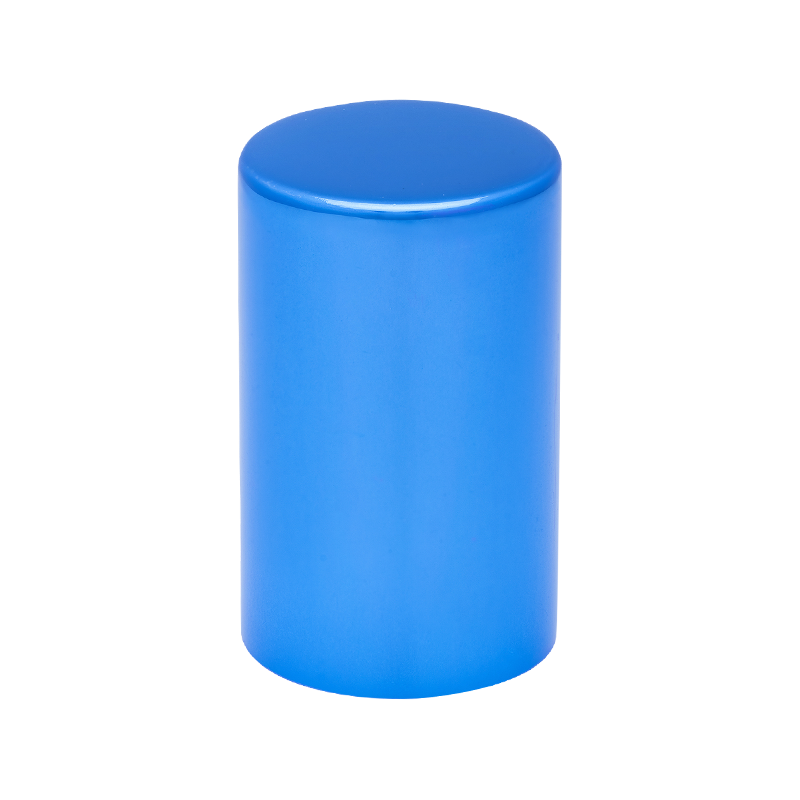 XY-LZ-20.6*34 Multiple Colors Straight Perfume Aluminum Cap/Lid For Fragrance, Essential Oil Bottle
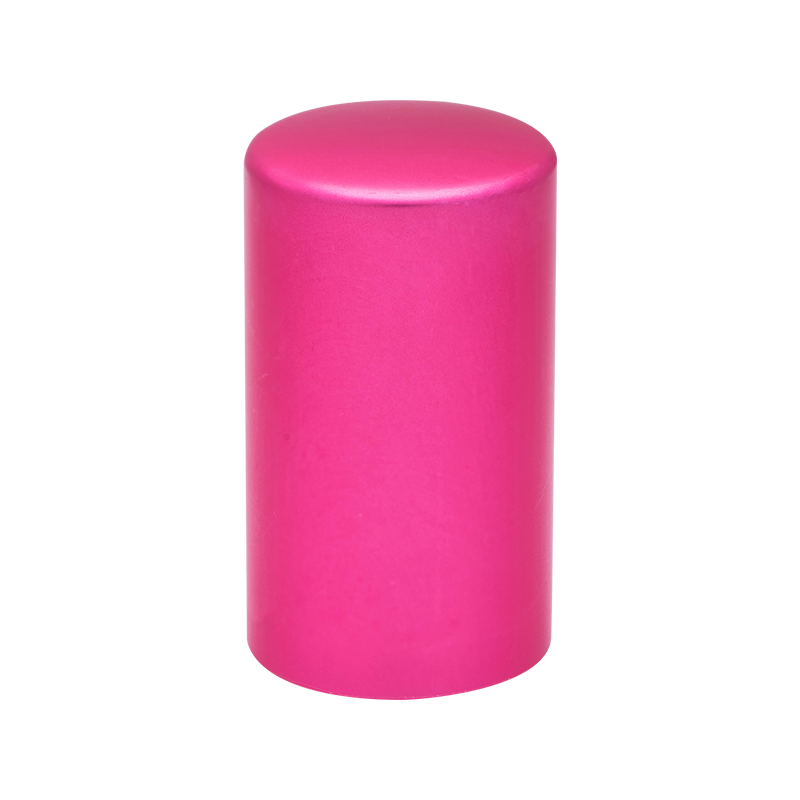 XY-LZ-18.6*32 Straight Perfume Bottle Aluminum Cap For Luxury Glass Fragrance Bottles, Minimalist Design
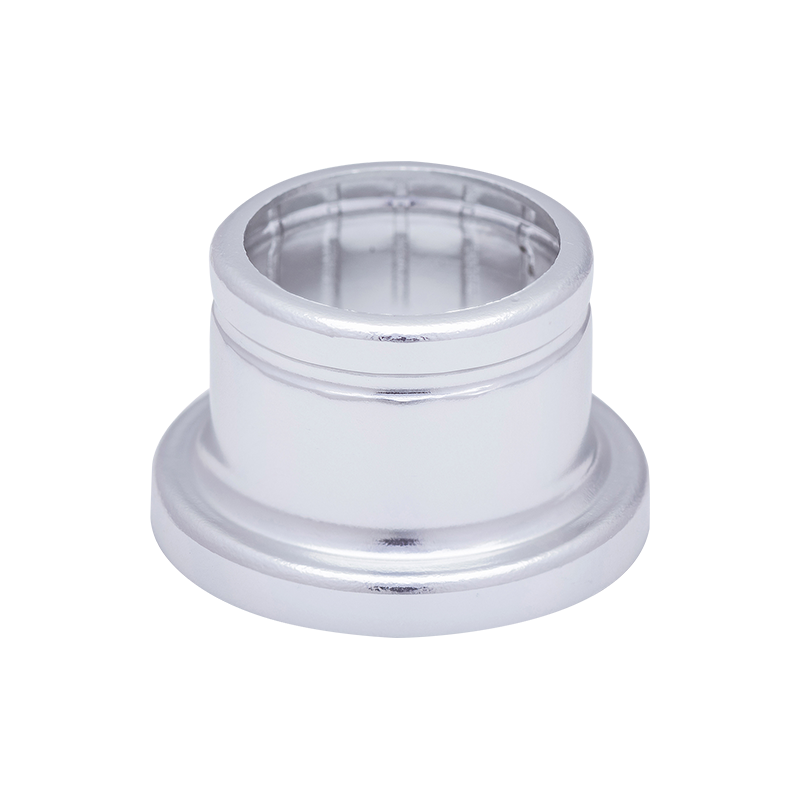 XY-ZT-17.3*14DBSNG Gold/Silver Perfume Cap Collar Aluminum Stepped Collar
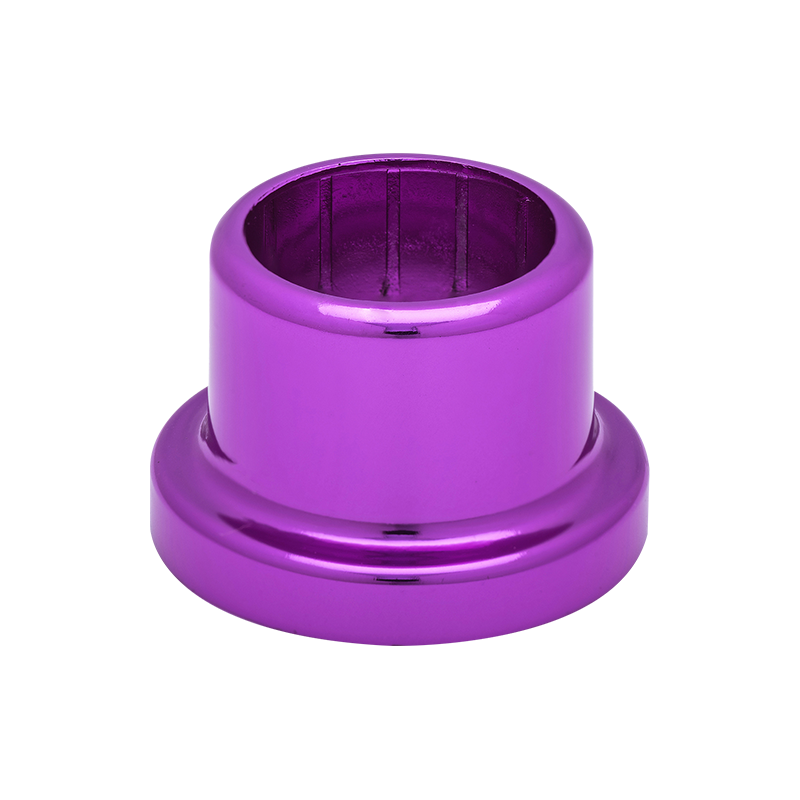 XY-ZT-17.05*15.6 22.8*4 Aluminum Cosmetic Perfume Collar With Step
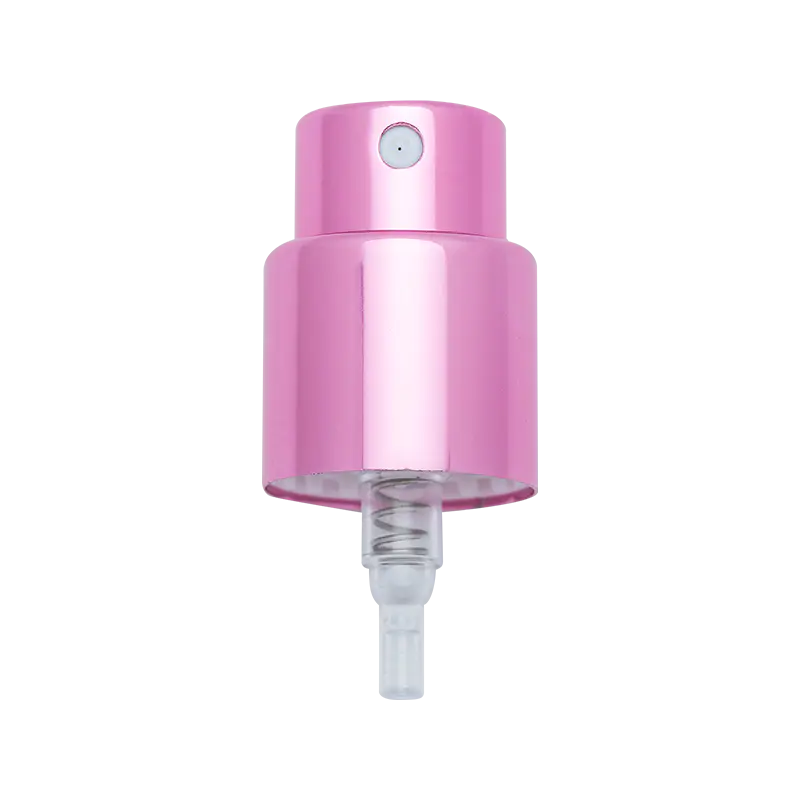 XY-LK-17/415 15mm Screw perfume fine mist pump sprayer OD17.2mm
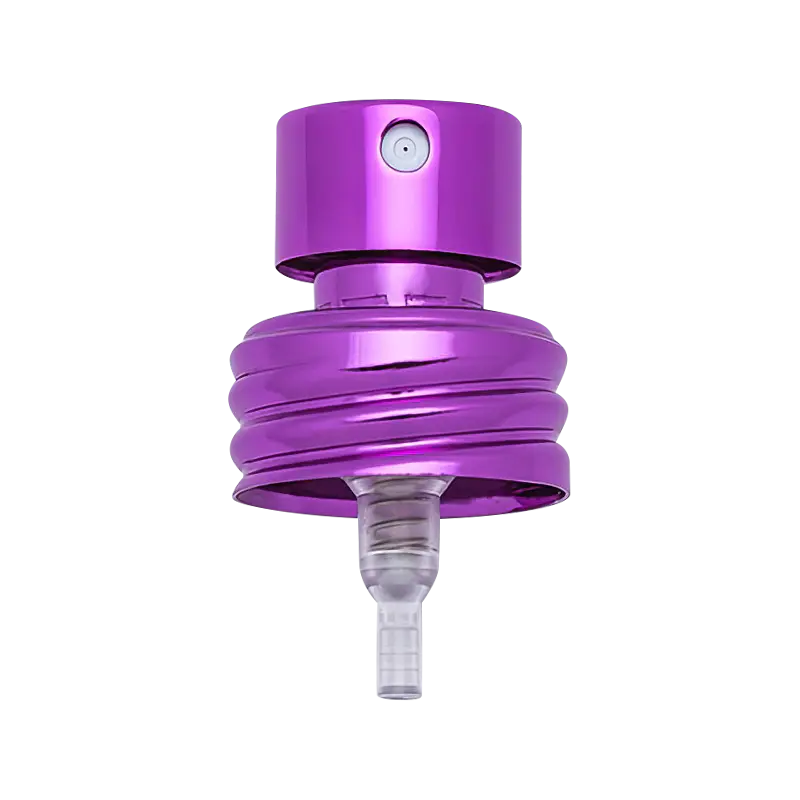 XY-LK-20.8CK 20mm Aluminum screw perfume fine mist pump sprayer OD20.8mm
Tel: +86-13812990918
Phone: +86-512-58962260
Address: No.3, Xiangqun Road, Leyu, Zhangjiagang.


 English
 русский
 Español
 عربى
عربى Português