Article Directory
A stepped aluminum collar measuring 17.2 mm across the outer diameter drops onto a 15/415 glass neck, clears the capping head and disappears under the cap. Machine the same collar 0.2 mm wider and the filling line stops: the cap jams, the collar picks up a bright scratch, and the bottle goes into the reject bin. That single contrast explains why this small part causes so much trouble. The aluminum collar is judged as decoration and specified as machinery.
Zhangjiagang XinYe Chemical Sprayer Co., Ltd. has manufactured perfume sprayers and aluminum components since 2006, with aluminum stamping, injection molding, aluminum anodizing and automated assembly running inside one production chain across three plants. Building pumps, collars and caps in the same process makes one relationship obvious: the finish and the fit of a collar come out of the same drawing, and neither can be corrected after the fact.
The sections below cover what the collar actually does, how finish choices change what a buyer sees on the shelf, which dimensions decide whether the part seats on 13/415, 15/415, 18/415 and 20/410 necks, and the checks that keep a collar order out of the rework queue.
An aluminum collar is the metal shoulder ring fitted between the glass neck and the pump or cap, and it performs three jobs at the same time: it conceals the crimp or thread that holds the pump, it sets the visible diameter of the bottle shoulder, and it shields the neck from mechanical damage during filling, capping and transit.
Aluminum collar: a stamped and anodized aluminum ring that presses, threads or clips onto a perfume bottle neck in order to cover the pump mounting, close the visual gap between glass and cap, and carry the decorative finish of the package.
The mounting method decides how much structural work the collar performs. On a crimp pump, a metal ferrule has already locked the pump onto the neck, so the collar is a cover sitting over a joint that no consumer should ever see. On a screw pump, the collar threads onto the neck itself and the pump body sits inside or above it. That version centers the pump, determines how far the actuator rises above the glass, and takes the torque applied when the cap is tightened.
Seat. Absorbs the vertical load when a cap is torqued down. Decorative walls of 0.5 mm to 0.8 mm are common, and the stepped section carries the load where the cap rim meets the metal.
Bridge. Closes the diameter gap between the glass shoulder and the cap. A collar on a 15/415 neck turns a narrow shoulder into a full silhouette that the cap can sit on without a shadow line.
Shield. Keeps the neck thread and the crimp flange clear of filling nozzles, capping chucks and transit vibration, which is where chipped glass and scratched metal originate.
A collar that fails on appearance is a commercial problem; a collar that fails on fit is a line stoppage. Both failures trace back to the same few millimetres, which is why the two subjects belong in one specification rather than two departments.
The collar occupies the band of metal visible between the glass shoulder and the cap, typically 6 mm to 12 mm in height, and on most flacons it is the largest uninterrupted metal surface in the entire package.
Finish selection is therefore a packaging decision with a measurable outcome, not a last-minute colour choice. Bright anodized aluminum reflects the glass tint and makes pale juice look deeper. Matte anodized aluminum suppresses glare and hides handling marks, which matters when a bottle is picked up and put down repeatedly in a store. Plated gold and silver read as luxury signals but mark earlier at the contact ring where the cap meets the collar.
| Finish | Visual read | Main wear risk | Pairs well with |
| Bright anodized, clear | Mirror gloss, picks up the glass tint | Fine scratches and fingerprints | Clear or lightly tinted glass |
| Matte anodized | Low glare, soft metallic surface | Handling scuffs polish to a lighter tone | Frosted or satin glass |
| Gold or silver plating | Warm or cool luxury signal | Abrasion at the cap contact ring | Heavy-wall flacons and gift sets |
| Brushed, linear grain | Directional sheen with an industrial edge | Grain direction mismatch between parts | Square and minimalist bottles |
| Embossed or stepped relief | Depth, shadow lines and tactile branding | Polishing residue lodged in recesses | Limited editions and travel formats |
Decorative anodizing on aluminum collars is specified against GB/T 8013 for the oxide layer, while corrosion resistance is verified with ISO 9227 neutral salt spray. Type II sulfuric anodizing for decorative parts typically runs between 5 and 18 micrometres, and high-gloss reads are usually written to a surface roughness below Ra 0.4 micrometre.
Where a brand wants warm reflections against amber glass, a stepped collar with gold or silver plating keeps the relief of the step underneath the plating, so the highlight follows a defined edge instead of a flat ring. That is the difference between a collar that looks machined and one that looks stamped.
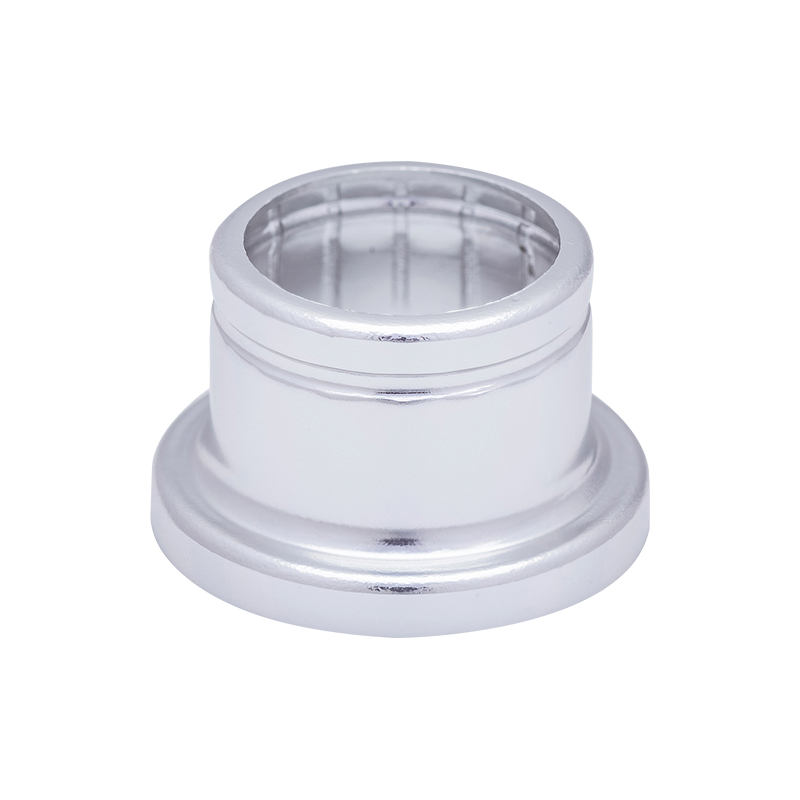 XY-ZT-17.3*14DBSNG Gold/Silver Perfume Cap Collar Aluminum Stepped CollarThis accessory is a stylish and practical perfume bottle accessory made of lightweight and durable aluminum. It features a stepped bottle mouth design to ensure that t...View Product →
An aluminum collar fits only when three dimensions agree: the bottle neck finish, the collar bore, and the seat depth that determines how much metal sits above the glass shoulder.
| Neck finish | Nominal neck diameter | Matching FEA pump family | Typical bottle format |
| 13/415 | 13 mm | FEA13 crimp, FEA13 crimpless, 13/415 screw | 5 ml to 15 ml travel and purse sprays |
| 15/415 | 15 mm | FEA15 crimp, FEA15 crimpless, 15/415 screw | 30 ml to 50 ml standard flacons |
| 18/415 | 18 mm | FEA18 crimp and 18/415 screw | 50 ml to 100 ml eau de parfum |
| 20/410 | 20 mm | FEA20 crimp and 20 mm aluminum screw pump | Large-format and refillable bottles |
The digit group after the slash is the thread specification, and the millimetre figure in front of it is the neck diameter. A collar bored for 15/415 will not seat on an 18/415 neck no matter how the step is shaped, and glass suppliers hold their own tolerances around the nominal figure, so the bore is normally measured against a physical gauge rather than the bottle drawing.
Collar bore and step height are usually drawn to roughly half the tolerance of the glass neck, so the glass absorbs the variation and the metal stays consistent from batch to batch. The arithmetic behind those bands is set out in this guide to collar-with-step tolerance standards, which is worth reading before a mould is ordered rather than after the first shipment is rejected.
Choose the mounting method before the collar geometry, because crimp, crimpless and screw assemblies need different metal: a crimp collar is a cover, a crimpless collar is a press fit, and a screw collar is a functional thread.
Crimp mounting
Screw mounting
Crimpless pumps sit between the two. The pump is pressed onto the neck without a crimping tool, so the collar takes over the alignment function and the press depth becomes a controlled dimension rather than an assembly afterthought. Across all three methods, the collar profiles available in production cover straight, stepped, grooved and embossed forms, which is why the aluminum collars for pumps range is organised by geometry rather than by colour.
For bottles where the collar has to sit around a raised glass shoulder and still meet the cap without a visible seam, a stepped profile does the work: the lower step follows the shoulder radius, the upper step presents a clean vertical wall, and the cap lands on a machined surface rather than on a cast edge.
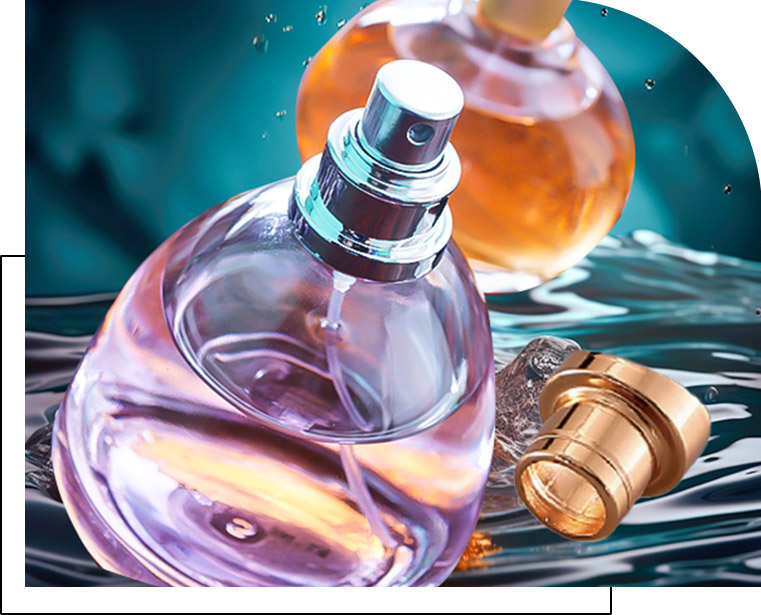 Perfume Collar with Step SuppliersPerfume Collar With Step can fit tightly to bottles and pump heads of different sizes, ensuring the tightness and aesthetics of the perfume. This design enhances the o...View Product →
Friction marks between the cap and the collar cause more collar rejections than dents, because the two metal surfaces move against each other continuously during truck vibration.
Anodized aluminum is hard, but hardness is not the same as scratch resistance. The oxide layer is porous until it is sealed, and an unsealed layer holds handling oils, which then show as dark patches after a few weeks in a gift box. The controls that matter are mechanical and chemical at the same time:
Running aluminum stamping and aluminum surface oxidation in the same plant shortens the loop between these controls. When the polishing stage and the anodizing line sit in one production chain, a residue problem is corrected on the polishing wheel instead of being discovered at final inspection.
Six checks catch nearly every collar defect before tooling is cut: neck finish, bore clearance, seat depth, outer diameter, finish specification and assembly torque.
Step four is where design ambition usually lands, because embossing is the fastest way to put a brand mark on metal without adding a printed part. An embossed collar carries the relief through the anodizing process, so the mark reads as a shadow rather than as ink that can wear away.
Perfume Embossing Collar SuppliersThe main feature of Perfume Embossing Collar is the formation of exquisite textures or patterns on the neck area of the bottle cap or bottle body through the embossi...View Product →Ask for the production chain behind the collar rather than a sample alone, because dimensional control and finish control come from different processes and can fail independently of each other.
A supplier that stamps, anodizes and assembles in one chain can trace a scratch back to the polishing stage. A supplier that buys finished collars from a third party can only replace them. The difference shows up in the first production run, when a dimensional correction has to travel through two or three companies instead of one workshop.
Dimensional control lives in the stamping press; appearance control lives in the anodizing line. A collar supplier who owns only one of the two can quote either, but rarely both.
On capacity, Zhangjiagang XinYe Chemical Sprayer Co., Ltd. states that its three production bases cover 100,000 square metres of site area and 250,000 square metres of building area, with more than 600 employees, including close to 100 in quality management and technical development. The company also states ISO9001 certification and a production chain covering aluminum stamping, injection molding, aluminum surface oxidation and automated assembly. Those figures describe scale; the audit that matters is the one a buyer runs against the anodizing line and the gauge room.
A collar bored for a 15 mm neck finish. In the aluminum screw pump line, the 15/415 build is documented at 17.2 mm outer diameter and pairs with FEA15 crimp, FEA15 crimpless and 15/415 screw pumps. Measure the glass neck first: a 15/415 collar will not seat on an 18/415 bottle, and forcing it damages the shoulder.
No. Dosage is set by the pump stroke volume and the nozzle insert, not by the collar. A standard fine mist perfume pump delivers roughly 0.05 ml to 0.10 ml per stroke, and the collar keeps the pump centered so actuator travel stays consistent. Off-centre mounting shows up as a weaker spray on one side of the nozzle, not as a different volume.
Screw. A crimp collar is pressed over a ferrule and cannot be reopened without damaging the seal, so it suits single-use 13/415 and 15/415 travel formats. Refillable 18/415 and 20/410 bottles need a screw collar with a thread tolerance tight enough that the cap does not wobble; 0.1 mm of pitch error is enough to feel in the hand.
Keep at least 0.2 mm of radial clearance between the collar and the cap inner wall, seal the anodized layer, and add a protective liner for gift packaging. Plated gold and silver collars mark at the contact ring first, so clearance and liner are the two controls that decide whether a shipment arrives clean.
Confirm the neck finish, then the collar bore, then the seat depth, then the outer diameter, then the finish, and only then the cap. Reversing that sequence is how a project ends up with a beautiful collar that will not sit on the bottle.
An aluminum collar is a low-cost part with an outsized effect on how a fragrance is perceived and whether a filling line runs at speed. The appearance variables, finish, roughness and relief, are settled in the anodizing line. The structural variables, bore, step height, outer diameter and clearance, are settled in the stamping press and the gauge room.
Treat the collar as one component with two specification halves, and the 0.2 mm that stops a capping head becomes a number on a drawing instead of a surprise on the production floor.
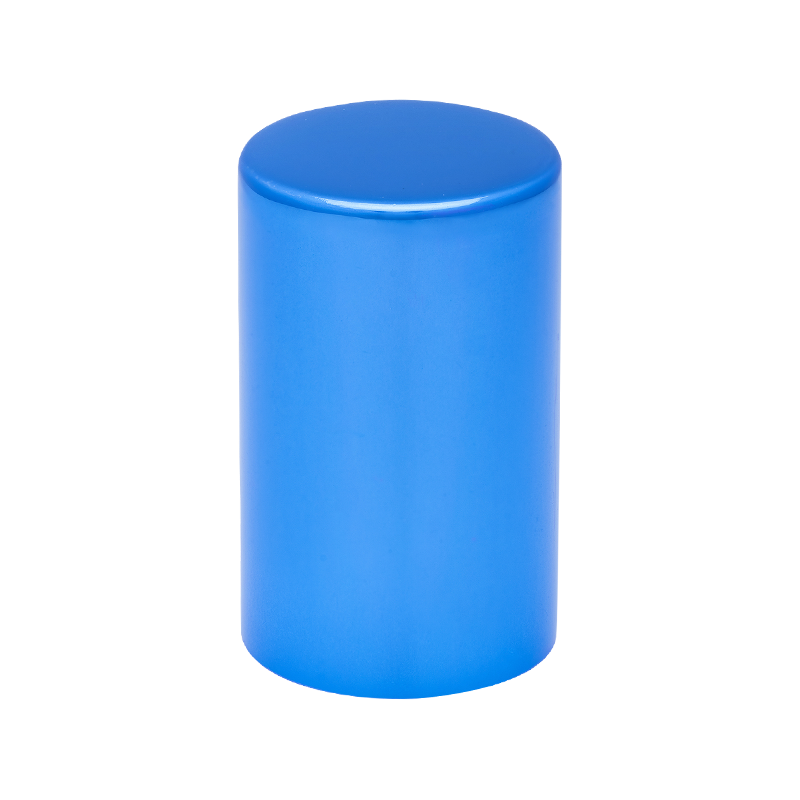 XY-LZ-20.6*34 Multiple Colors Straight Perfume Aluminum Cap/Lid For Fragrance, Essential Oil Bottle
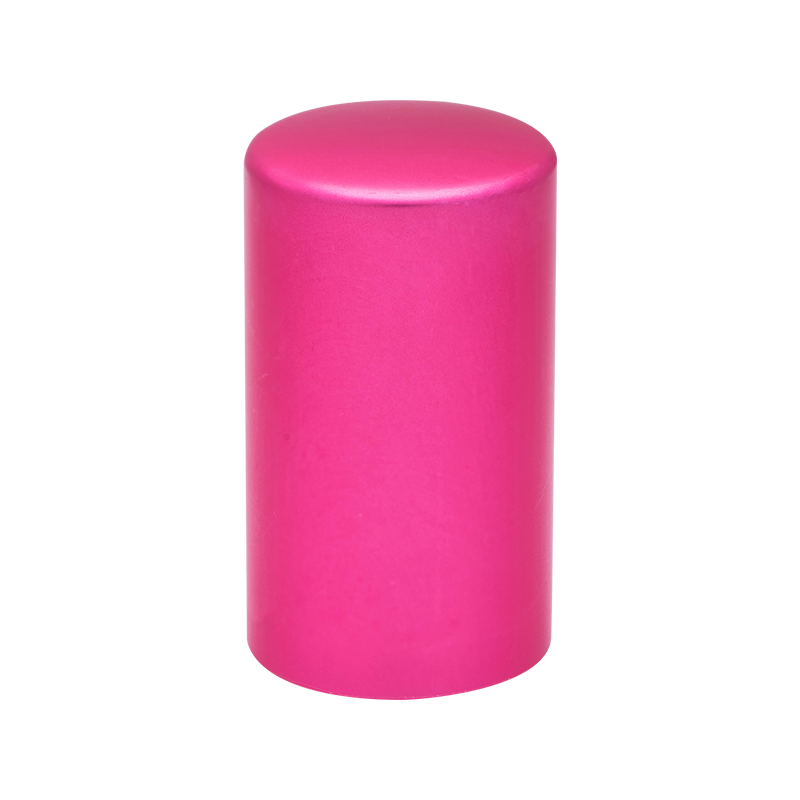 XY-LZ-18.6*32 Straight Perfume Bottle Aluminum Cap For Luxury Glass Fragrance Bottles, Minimalist Design
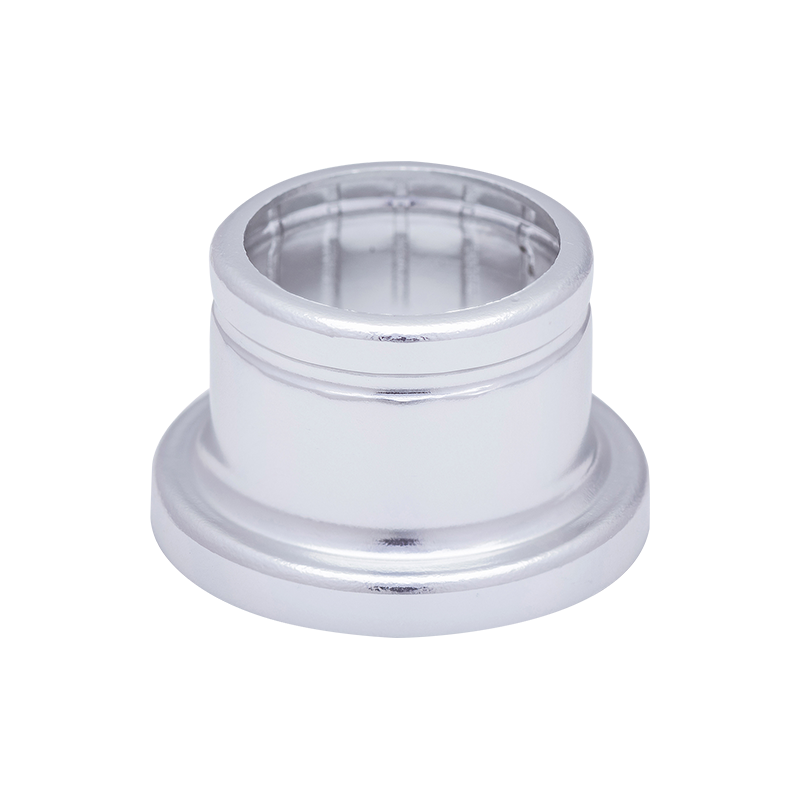 XY-ZT-17.3*14DBSNG Gold/Silver Perfume Cap Collar Aluminum Stepped Collar
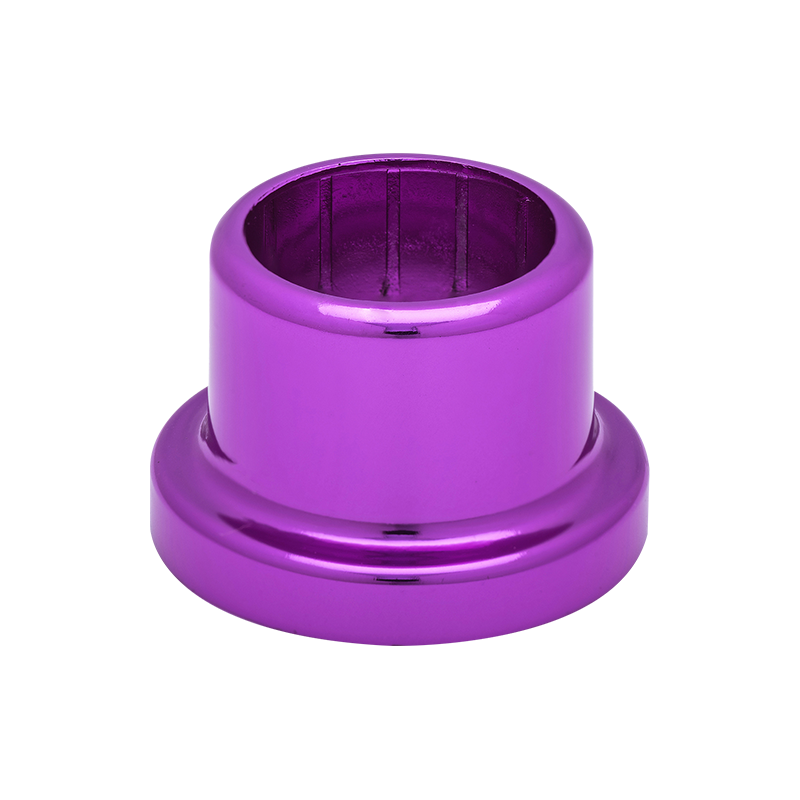 XY-ZT-17.05*15.6 22.8*4 Aluminum Cosmetic Perfume Collar With Step
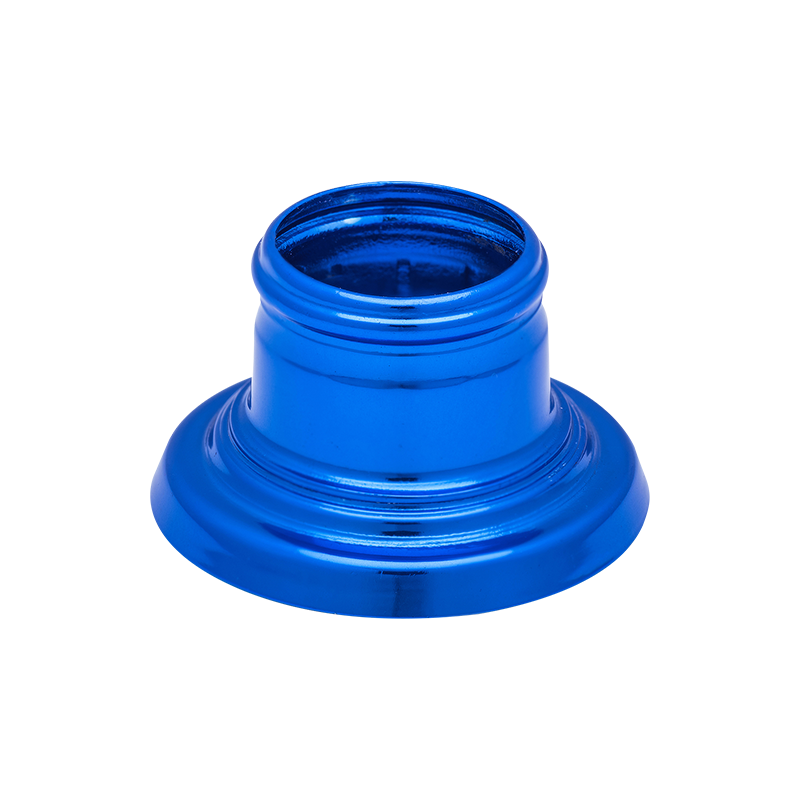 XY-ZT-DADB Custom Perfume Bottle Stepped Collar With Groove
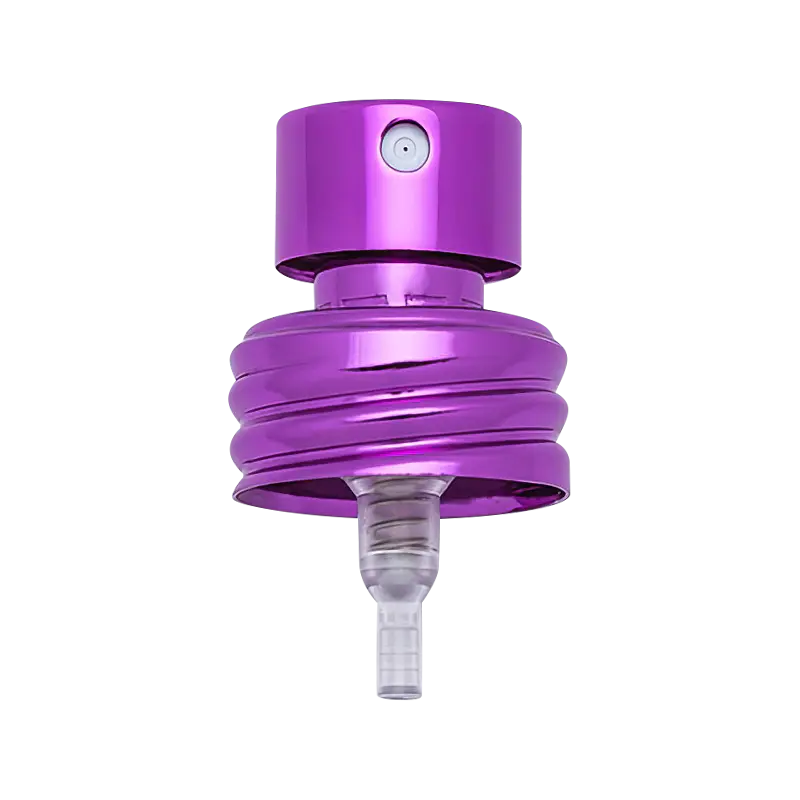 XY-LK-20.8CK 20mm Aluminum screw perfume fine mist pump sprayer OD20.8mm
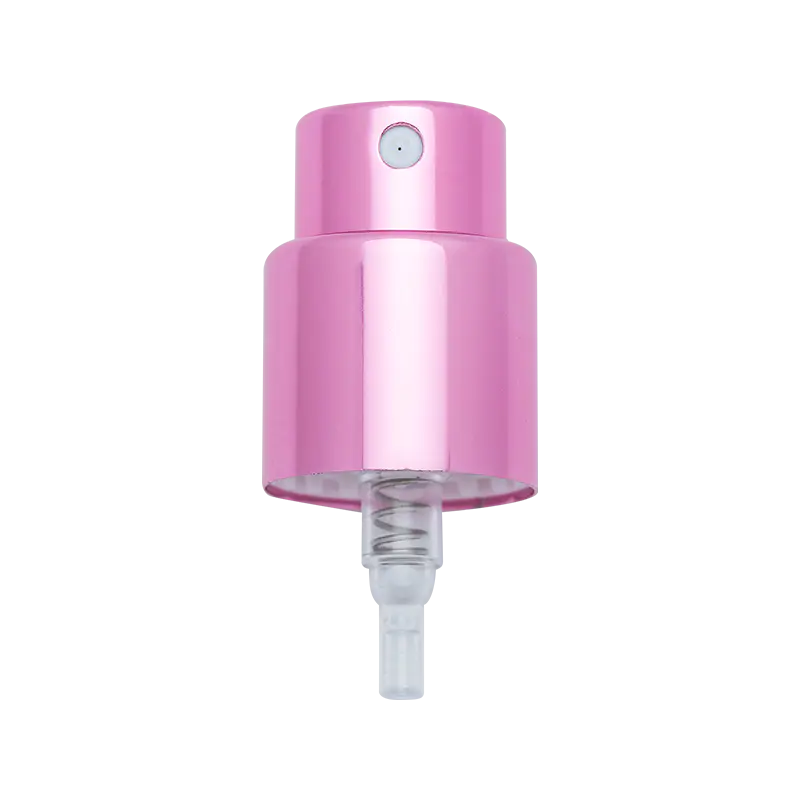 XY-LK-17/415 15mm Screw perfume fine mist pump sprayer OD17.2mm
Tel: +86-13812990918
Phone: +86-512-58962260
Address: No.3, Xiangqun Road, Leyu, Zhangjiagang.


 English
 русский
 Español
 عربى
عربى Português