Article Directory
A 100 ml flacon of eau de parfum holds roughly 1,400 sprays, and every one of them passes through an opening between 0.15 mm and 0.35 mm across. That single orifice, together with the pre-compression spring and valve that feed it, decides whether a fragrance opens as a soft cloud that covers the wrist or lands as a wet streak in one spot. Packaging teams that approve a bottle without checking the pump's droplet profile usually hear about the difference after launch, when the first consumer reviews use the words spitting and dripping.
This guide covers what a fine mist spray pump actually controls, how droplet size shapes perceived fragrance dispersion, and which figures belong in a purchase specification. The hardware behind those figures - crimp, crimpless and screw platforms, aluminum collars and aluminum caps - is produced at scale by Zhangjiagang XinYe Chemical Sprayer Co., Ltd., a perfume sprayer manufacturer established in 2006 with three production sites, 100,000 square metres of floor area and more than 600 employees.
A fine mist pump controls three measurable outputs: droplet size distribution, delivered volume per stroke, and the force required to release the stroke. Everything a consumer describes as a good or bad spray comes from those three numbers.
Inside the pump, a piston compresses the fill until the pre-compression valve opens, normally between 2.5 and 4 bar. The pressurised liquid is driven through tangential channels into a swirl chamber, leaves the nozzle as a thin conical sheet, and breaks into ligaments and then droplets. A 0.07 ml stroke released at a 40 micron mean diameter produces roughly 2,000 droplets; the same volume released as one 2 mm blob produces one.
Pumps without a pre-compression valve depend on finger speed instead of spring force. That is why low-cost sprayers dribble on a slow press and spit on a fast one, and why the valve is the first component worth checking on a sample.
For an ethanol-based fragrance, a mean droplet diameter between 30 and 60 microns gives the best balance between an even, dry application and a perceptible scent trail.
Below roughly 20 microns, a large share of the spray never lands. Those droplets stay airborne, travel with the alcohol vapour and are lost to the room. Above about 100 microns, surface tension pulls droplets back together on impact: the user sees a wet patch, and the top notes flatten because the ethanol cannot flash off evenly. The 30 to 60 micron band keeps droplets small enough to cover a 6 cm to 8 cm circle and large enough to deposit on skin.
Measurement conditions matter as much as the figure. A Dv50 quoted at 150 mm from the actuator is the number worth writing into a specification; readings taken at the nozzle exit are always smaller and rarely reflect what a user experiences.
A production-grade fine mist pump delivers 0.07 ml per full stroke with a stroke-to-stroke variation of 5% or less, which is why a 100 ml bottle yields about 1,400 measured sprays.
Because the valve opens on pressure rather than on finger travel, a quick jab and a slow press deliver the same volume. Partial strokes below the opening pressure deliver nothing at all, which removes the half-dose that makes a first spray smell stronger than the twentieth.
Endurance is the second half of consistency. A 10,000-stroke run at 21 strokes per minute - roughly eight hours of continuous actuation - is the usual benchmark for a premium pump, and the dose still has to hold inside 5% at the end. Manufacturers working to the ISO 9001 quality management standard test gasket compression, spring fatigue and dose drift on the same batch that ships.
Perfume packaging is built around four dominant neck finishes - 13/415, 15/415, 18/415 screw threads and FEA crimp ferrules in 13 mm, 15 mm, 18 mm and 20 mm - and the pump has to be chosen to suit the glass, not the other way around.
| Neck finish | Pump platform | Typical dose | Typical bottle |
| 13/415 screw | Screw pump, 13 mm | 0.05 to 0.07 ml | 15 to 50 ml travel and sample sizes |
| 15/415 screw | Screw pump, 15 mm | 0.07 to 0.10 ml | 50 to 100 ml eau de parfum |
| 18/415 screw | Screw pump, 18 mm | 0.10 to 0.14 ml | 100 to 200 ml body and hair mist |
| FEA13 crimp | Crimp pump, 13 mm | 0.05 to 0.06 ml | 10 to 30 ml miniatures |
| FEA15 crimp | Crimp pump, 15 mm | 0.07 to 0.09 ml | 30 to 100 ml mainstream flacons |
| FEA20 crimp | Crimp pump, 20 mm | 0.10 to 0.15 ml | 150 ml and above, intense formats |
The 415 suffix denotes the thread finish family shared by glass and plastic perfume bottles, so a 15/415 neck accepts any 15/415 pump regardless of supplier. Crimp sizes follow the same logic: an FEA15 ferrule is swaged onto a 15 mm neck and cannot be removed without cutting it, which makes the closure tamper-evident by construction.
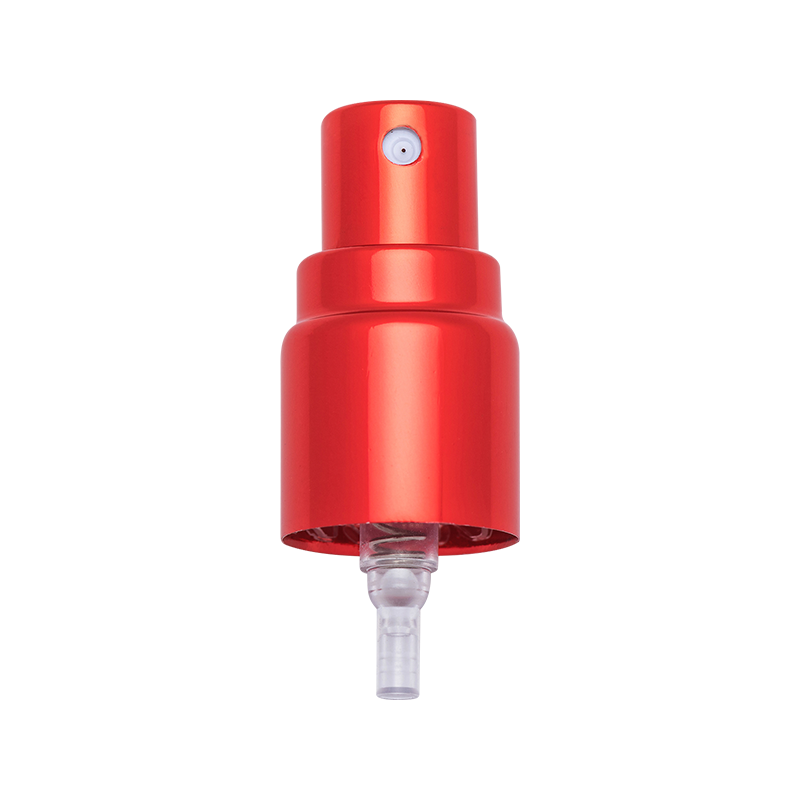 13mm Screw Perfume Fine Mist Pump Sprayer for Fragrance PackagingScrew-on 13/410 or 13/415 pump delivering 0.05–0.12 ml fine mist for perfume bottles, testers, and cosmetic sprays.View Product →
Dose volume should scale with concentrate level: 0.05 to 0.07 ml for an eau de toilette at 5% to 15% aroma, 0.07 to 0.10 ml for an eau de parfum at 15% to 25%, and no more than 0.07 ml for a 25% to 40% extrait that would otherwise over-apply on the first press.
Discharge volume is set by stroke length and chamber diameter rather than by the actuator. Moving from a 13 mm short-type crimp pump to a 20 mm higher-type pump raises the delivered dose without changing the finger feel, which lets a brand keep one bottle and one cap across two concentration tiers.
Formulation viscosity matters as much as geometry: above roughly 20 cP a standard fine mist pump starts to lose dose consistency and the swirl chamber has to be widened to compensate. The relationship between fill viscosity and pump output is set out in this note on 15/415 screw pump performance and viscosity.
 20mm Crimp Perfume Fine Mist Pump Sprayer Higher Type Bigger DischargeHigher-type 20mm crimp pump with 0.12–0.18 ml output for premium fragrance, body mist, and larger-dose spray applications.View Product →
A fine mist pump matched to its fill loses less than 1% of the bottle contents per year in an accelerated test at 40 degrees Celsius and 75% relative humidity.
The seal stack has four parts: the gasket between pump and glass, the crimp or thread joint, the dip tube, and the cap gasket. Ethanol-rich fills swell EPDM quickly, so nitrile (NBR) or fluoroelastomer (FKM) gaskets hold compression set far better, and ASTM D395 testing at 70 degrees Celsius for 22 hours is the standard way to compare candidates before a fill trial.
Dip tube diameter is the quiet variable. A 1.1 mm to 1.3 mm inner diameter keeps the chamber fed on a 200 ml bottle by the third consecutive stroke, while a tube cut flush to the base traps air and produces a weak first spray after every refill.
Actuation force between 15 and 25 N, a stroke of 6 mm to 8 mm, and a collar-to-cap gap under 0.15 mm are the three tolerances that decide whether a bottle feels premium in the hand.
The actuator is the only part of the package a consumer touches on every use. A 6 mm stroke with a 20 N release force reads as firm and controlled; the same geometry at 30 N reads as stiff, and users start pressing with the palm instead of one finger, which produces an off-axis spray.
The aluminum collar hides the joint and carries the finish. Stepped collars provide a machined shoulder that centres the cap, embossed collars press a logo into the metal, and anodised surfaces in gold, silver and matte black resist the alcohol residue that collects around a neck better than lacquered plastic. Cap pull-off force between 8 N and 15 N, with under 0.5 mm of side play, separates a closure that clicks shut from one that rattles.
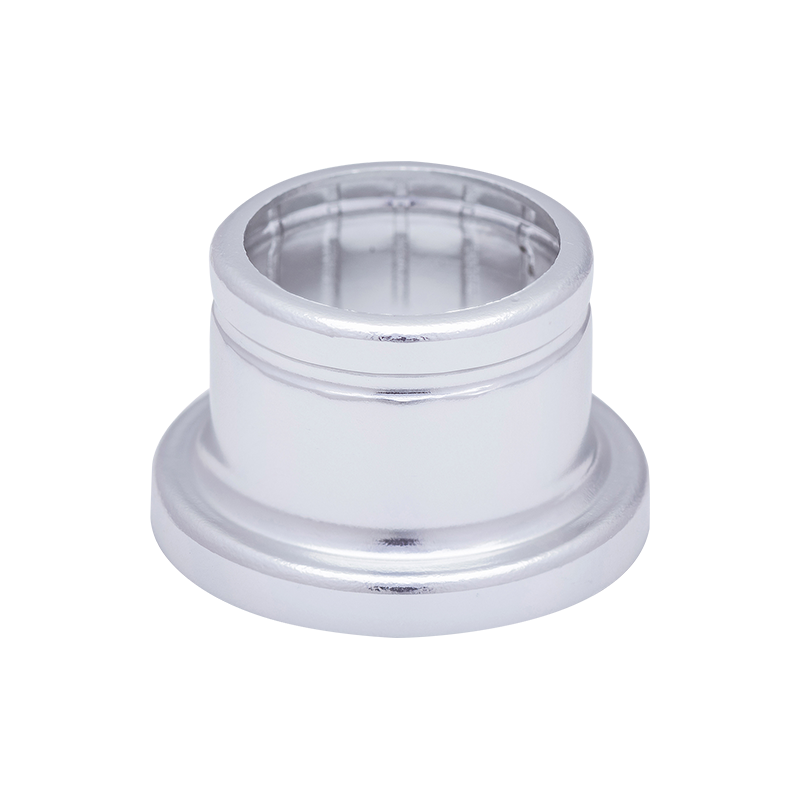 Gold/Silver Aluminum Stepped Perfume Cap Collar 17.3 mmAnodized stepped aluminum collar for crimp-neck perfume pumps, providing cap alignment and a finished gold or silver transition.View Product →
Target a Dv50 of 30 to 60 microns measured 150 mm from the actuator. Below 20 microns too much of the spray stays airborne, and above 100 microns the droplets coalesce into a visible wet patch.
At the standard 0.07 ml dose, a 100 ml flacon contains about 1,400 full strokes. A 0.10 ml pump drops that to roughly 1,000 strokes, which is why the same bottle can feel generous or short depending on the pump behind it.
Crimp. A swaged FEA15 ferrule is tamper-evident and adds no unscrew path, and it is the platform used on most 30 ml to 100 ml commercial flacons. Choose a 15/415 screw pump only when refilling or travel decanting is part of the product promise.
Write a 5% stroke-to-stroke tolerance into the purchase specification, add a 10,000-stroke endurance run at 21 strokes per minute, and require the Dv50 report to come from the same production batch as the shipment.
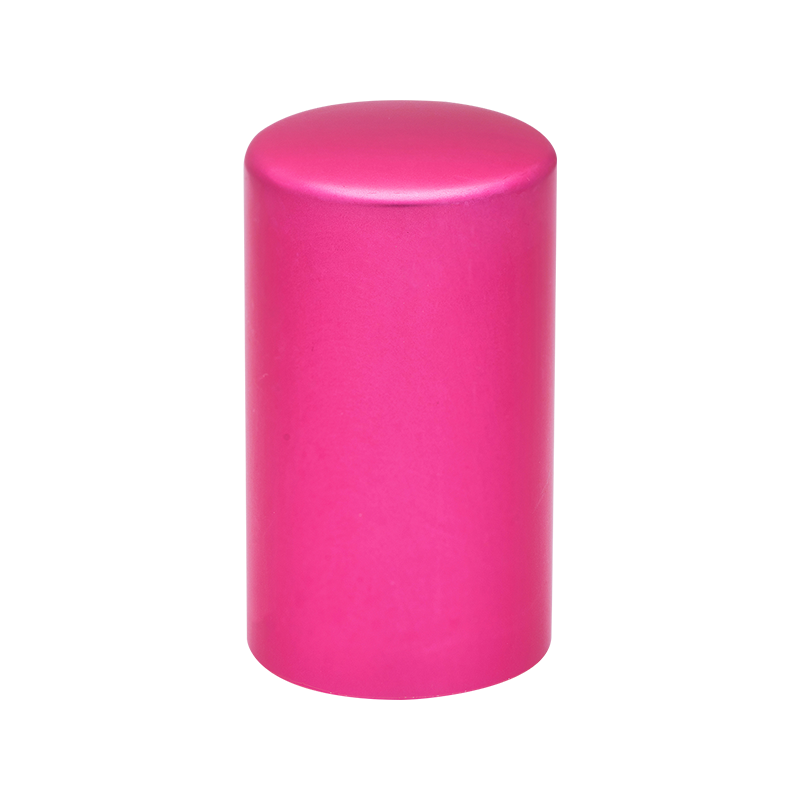 XY-LZ-18.6*32 Straight Perfume Bottle Aluminum Cap For Luxury Glass Fragrance Bottles, Minimalist Design
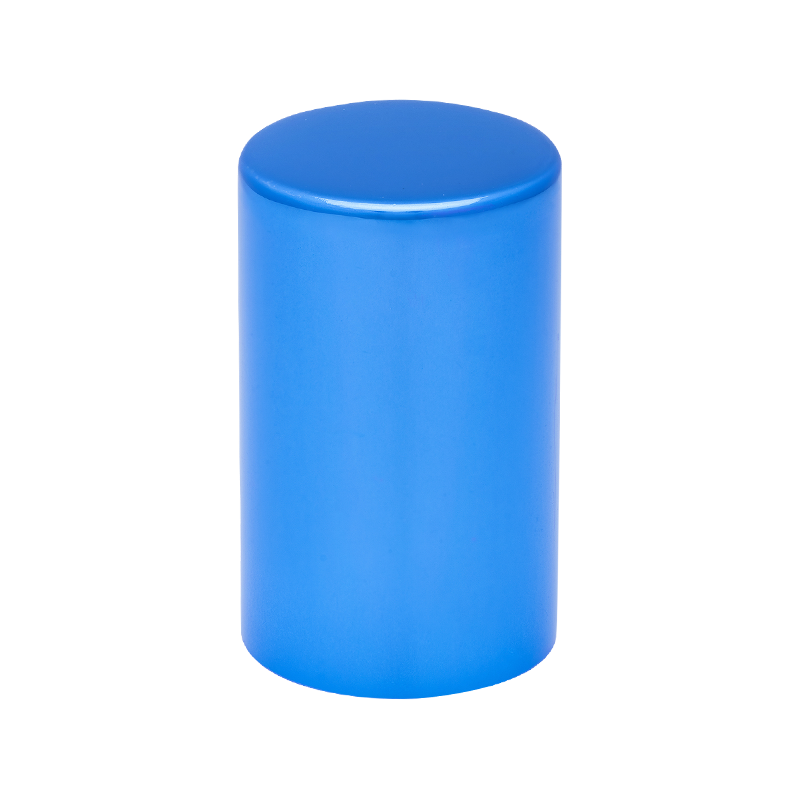 XY-LZ-20.6*34 Multiple Colors Straight Perfume Aluminum Cap/Lid For Fragrance, Essential Oil Bottle
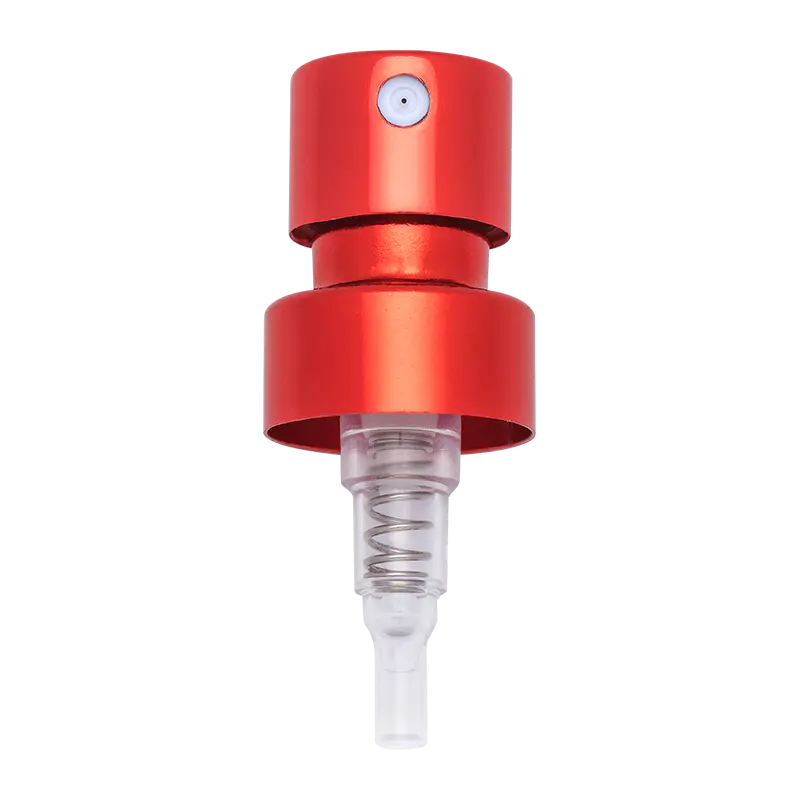 XY-PT-⊘13AB 13mm Crimp perfume fine mist pump sprayer short type
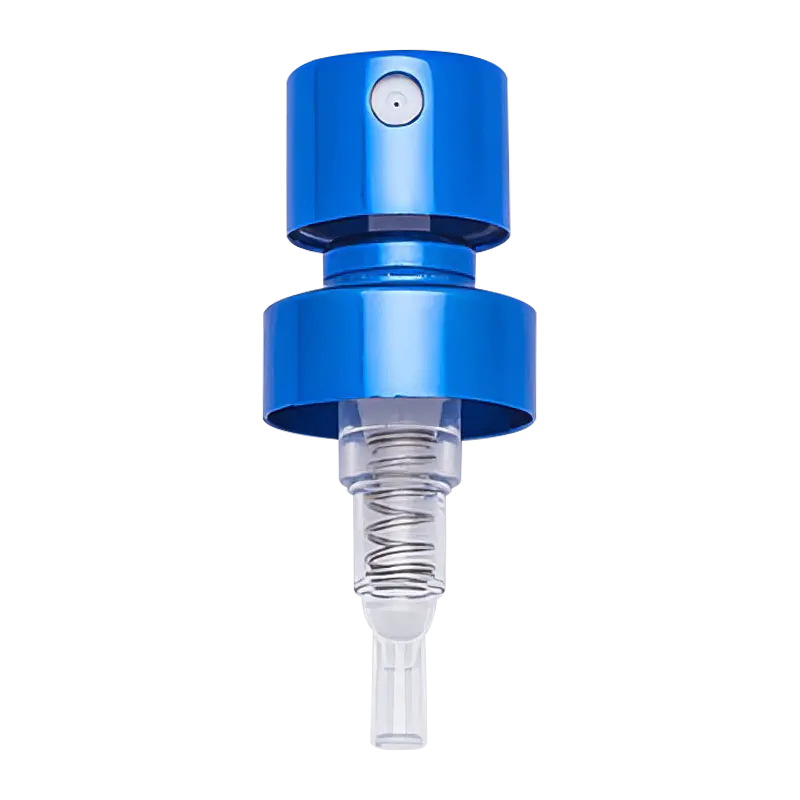 XY-PT-⊘13CAMG 13mm Crimp perfume fine mist pump sprayer shorter type
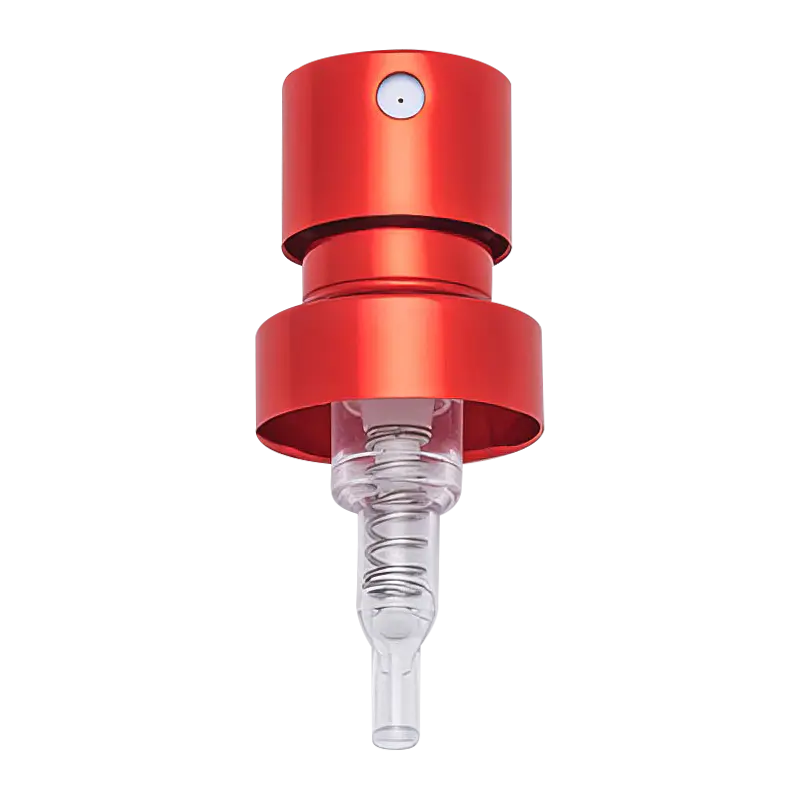 XY-PT-⊘15JDGB 15mm Crimp perfume fine mist pump sprayer high type
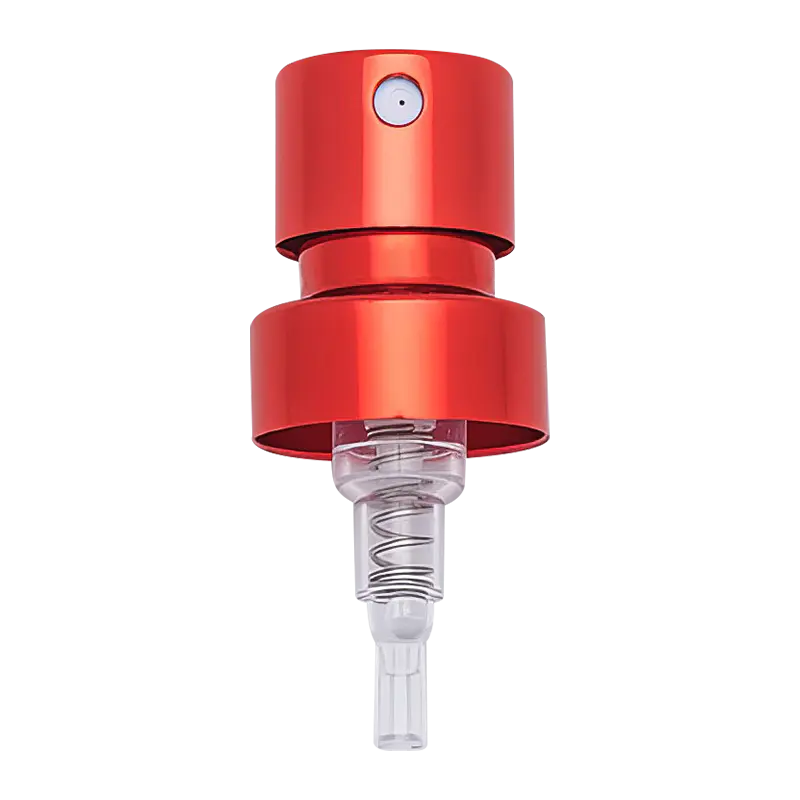 XY-PT-⊘15JDAB 15mm Crimp perfume fine mist pump sprayer short type
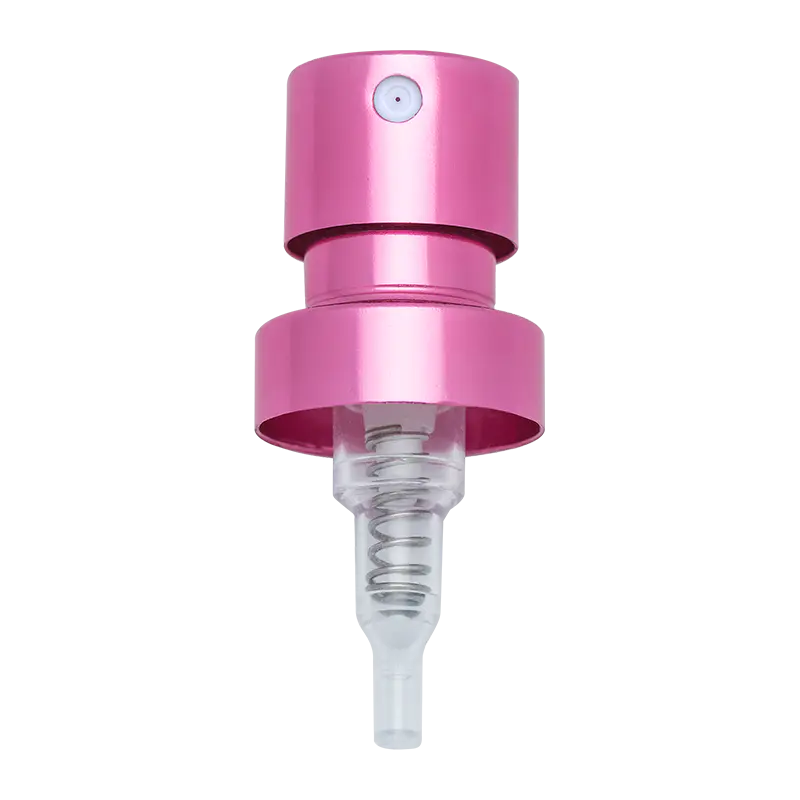 XY-PT-⊘15ABMG 15mm Crimp perfume fine mist pump sprayer short type
Tel: +86-13812990918
Phone: +86-512-58962260
Address: No.3, Xiangqun Road, Leyu, Zhangjiagang.


 English
 русский
 Español
 عربى
 Português
