Article Directory
Three measurable outputs decide whether a fragrance package performs: dose volume in microlitres, mist pattern quoted as a diameter at a stated distance, and seal integrity verified by vacuum and gravimetric evaporation testing. Every other feature on the pump exists to hold those three numbers stable across a run of 50,000 units.
The pump has seven functional parts and each one owns a distinct parameter. The chamber sets the dose. The insert sets the droplet size. The gasket compound sets chemical compatibility. The spring sets the pre-compression threshold. Swap one part and you have designed a different pump, even when the outside is unchanged.
Read any pump datasheet against the table below. A dose figure quoted without a chamber volume, an insert orifice and a gasket compound is a marketing number, not a specification.
| Component | Design variable | Parameter it controls |
| Spray insert | Orifice bore and exit geometry | Droplet size and spray cone width |
| Pump chamber | Internal volume | Dose delivered per stroke |
| Pre-compression spring | Opening pressure threshold | Mist consistency at any press speed |
| Gasket | Compound and hardness | Swelling, leakage and evaporation loss |
| Dip tube | Bore and cut length | Priming strokes and emptying rate |
| Collar or ferrule | Diameter, step height, crimp geometry | Neck fit, cap alignment and seal |
Chamber volume fixes the dose, and the dose fixes how many actuations a bottle delivers. At 100 microlitres a 100 ml bottle yields roughly 1,000 sprays; at 70 microlitres the same bottle yields roughly 1,400. That arithmetic runs backwards into the brief: a brand promising about 1,000 sprays on pack copy is choosing bottle size and dose at the same moment.
Dose tolerance belongs in the purchase order rather than in conversation. A working target is plus or minus 5 percent across a production batch, measured on a defined sample size with the finished concentrate instead of water.
| Dose (microlitres) | Sprays per 30 ml | Sprays per 50 ml | Sprays per 100 ml |
| 50 | 600 | 1,000 | 2,000 |
| 70 | 429 | 714 | 1,429 |
| 100 | 300 | 500 | 1,000 |
| 130 | 231 | 385 | 769 |
Two consequences follow. A smaller dose spreads a fixed fill weight across more wears, which lowers cost per application but weakens the delivery per press. And dose consistency outweighs dose size for premium positioning: a pump that releases 100 microlitres on press one and 85 on press fifty has a chamber or spring fault, not a filling problem.
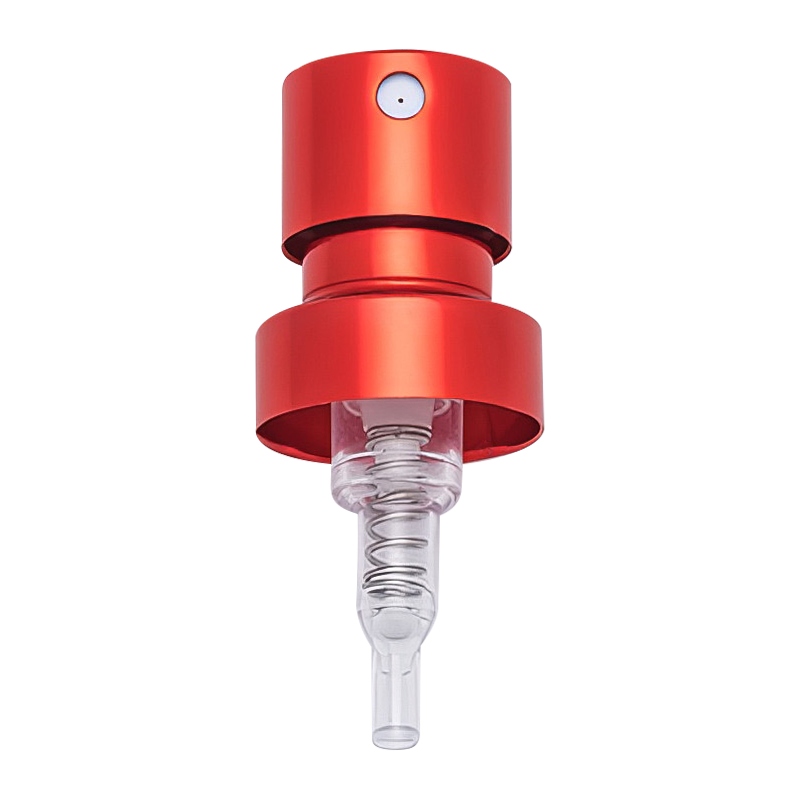 XY-PT-⊘15JDGB 15mm Crimp perfume fine mist pump sprayer high typeThe 15mm perfume spray pump head adopts fine atomization technology, which can provide a uniform and delicate spray experience for perfume products and is suitable for...View Product →
Droplet size is set by the insert orifice and the pre-compression spring, not by how hard the consumer presses. A pre-compression pump holds the outlet closed until internal pressure crosses a fixed threshold, so a slow half-press and a fast full press both release the same dose at the same velocity. Pumps without that valve dribble a weak, wet stream on a slow press.
This is why one fragrance can feel sharp in one pack and soft in another with no change to the juice. A narrower orifice gives finer droplets and a drier landing; a wider orifice moves more liquid per second and leaves a wetter patch on skin. Neither is automatically better. A fresh citrus usually reads cleaner as a fine, dry mist, while a heavy amber carries a slightly wetter spray without complaint.
Ask for four numbers before approving a spray sample:
A pattern diameter quoted without its distance is unusable. A 60 mm cone at 10 cm and a 60 mm cone at 30 cm describe two different pumps.
Fragrance pumps leak at two interfaces: pump to bottle, and actuator to stem. An eau de parfum is an aggressive fluid to seal against, typically 15 to 20 percent fragrance oil carried in an ethanol base, and it attacks gasket compounds that would survive a water-based lotion for years.
Gasket selection is a compatibility decision before it is a cost decision. Nitrile (NBR) resists non-polar oils but swells in high-ethanol systems. EPDM tolerates polar solvents and has weaker resistance to some fragrance materials. Fluoroelastomer (FKM) covers a wider range at a higher unit cost. Because a fragrance is a mixed alcohol and oil system, no single compound is universally correct: specify the compound against the finished concentrate and confirm it with an immersion swell test before bulk production.
Crimp and screw share the same internal pump engine and differ mainly in how the seal is closed, so the choice is a positioning decision before it is an engineering one. A side-by-side reading of 15/415 screw pumps and crimp pumps shows where the two formats separate in practice.
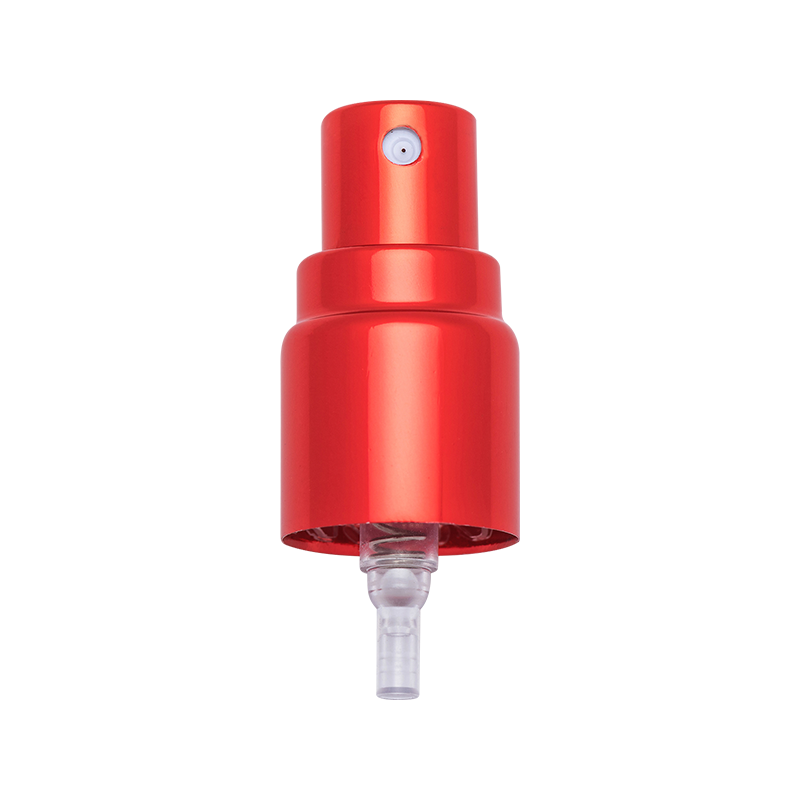 13/415 13 mm Screw Fine Mist PumpA 13 mm screw-on fine mist pump with 13/415 thread and adjustable 0.05–0.12 ml dosage, suited to comparing screw and crimp closure formats.View Product →
A leak test alone does not predict shelf life. A gravimetric evaporation check does: fill a defined sample set, weigh them, hold at a stated temperature for a stated period, weigh again, and express the loss as a percentage of fill weight. No single temperature is universal, so write the condition into the specification or two suppliers' results can never be compared.
A pump performs only as well as its fit to the bottle. FEA13, FEA15, FEA18 and FEA20 are ferrule diameters in millimetres; 13/415, 15/415 and 18/415 are screw neck finishes. Matching a 15 mm crimp pump to a 15 mm glass neck, or a 13/415 pump to a 13 mm finish, is the starting point, and the seal itself is made in tenths of a millimetre beyond that.
The collar is the part buyers underestimate. A stepped collar hides the crimp, centres the cap and defines the shoulder line of the bottle. If the step height drifts, the cap sits crooked and the crimp becomes visible under the cap skirt, a defect consumers read as counterfeit. Anodised aluminium adds a second variable, because coating thickness changes the fit, so the collar tolerance has to be specified after finishing rather than before.
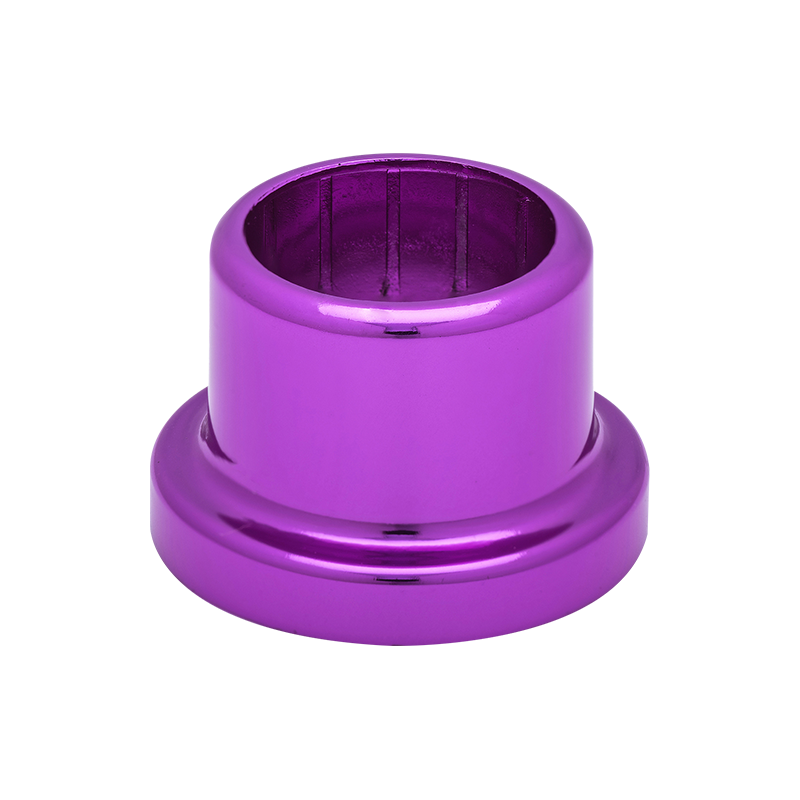 XY-ZT-17.05*15.6 22.8*4 Aluminum Cosmetic Perfume Collar With StepThis product is a smooth aluminum collar designed for cosmetic or perfume packaging . With a diameter of 22.8 mm and a height of 4 mm, it features a stepped design tha...View Product →
In practice the pump, collar and cap should be sampled as one assembly on the actual bottle. A pump that passes its own inspection can still fail when a 0.2 mm step error pushes the cap off centre.
Stable crimp geometry and a self-centring collar prevent more defects than any downstream inspection step. Crimp height outside tolerance produces loose ferrules that pass a visual check and leak in transit, while a mis-centred collar produces crooked caps that fail the first customer look.
Zhangjiagang XinYe Chemical Sprayer Co., Ltd. builds crimp, crimpless and screw pumps with matching aluminium collars and caps across three production sites that the company reports total 100,000 square metres of floor space, keeping stamping, injection moulding, anodising and automated assembly inside one ISO 9001 quality system. That kind of vertical integration shortens the loop between a fit problem and a tooling change, which is what the spray pump range is organised around.
Not on its own. A larger dose delivers more liquid per press, which raises perceived intensity at application, but strength also depends on concentrate. Two pumps at 100 and 130 microlitres differ by 30 percent in volume per press, which is roughly the gap between one spray and one and a third sprays.
A screw pump. Threaded formats such as 15/415 or 18/415 can be removed and re-tightened by the user, while a crimped ferrule is designed for single use. Refill programs also need a stated torque window so the closure seals again after the first opening.
Specify a stroke count rather than a time period. A 100 ml bottle at a 100 microlitre dose needs about 1,000 clean strokes, so a durability test should demonstrate a clear margin beyond the fill volume rather than stopping at the first sign of wear.
Rarely without re-validation. Viscosity and ethanol content shift between product types, and both change priming behaviour, dose accuracy and gasket swelling. Treat a new concentrate as a new compatibility project even when the bottle and the pump model stay the same.
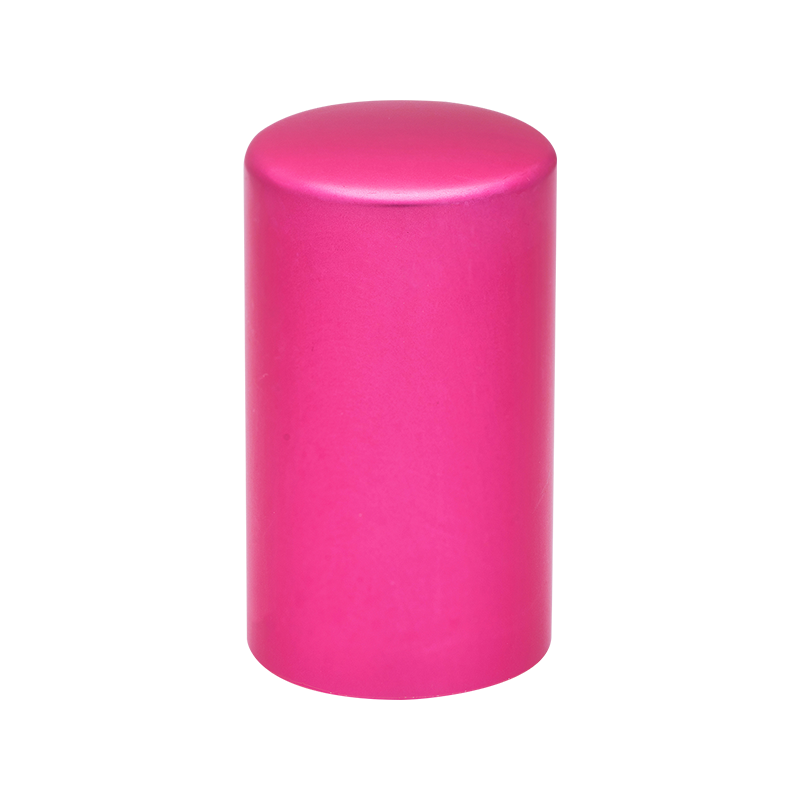 XY-LZ-18.6*32 Straight Perfume Bottle Aluminum Cap For Luxury Glass Fragrance Bottles, Minimalist Design
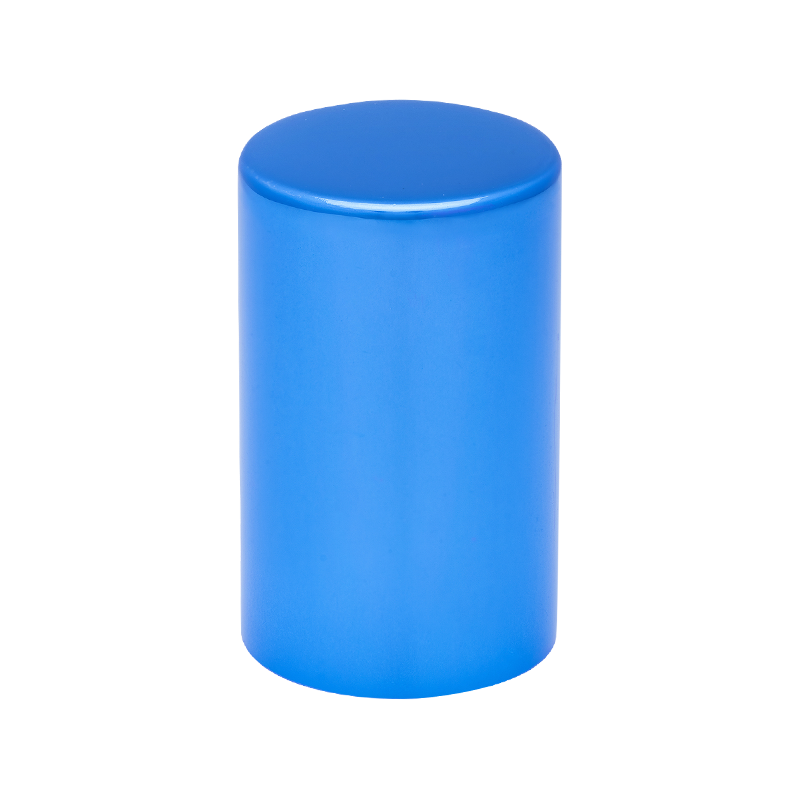 XY-LZ-20.6*34 Multiple Colors Straight Perfume Aluminum Cap/Lid For Fragrance, Essential Oil Bottle
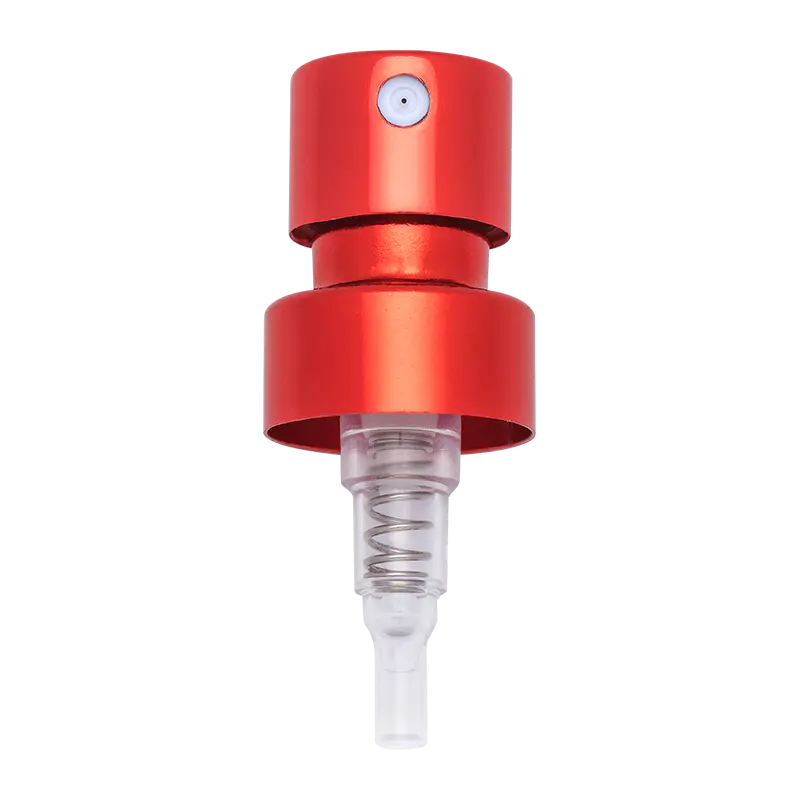 XY-PT-⊘13AB 13mm Crimp perfume fine mist pump sprayer short type
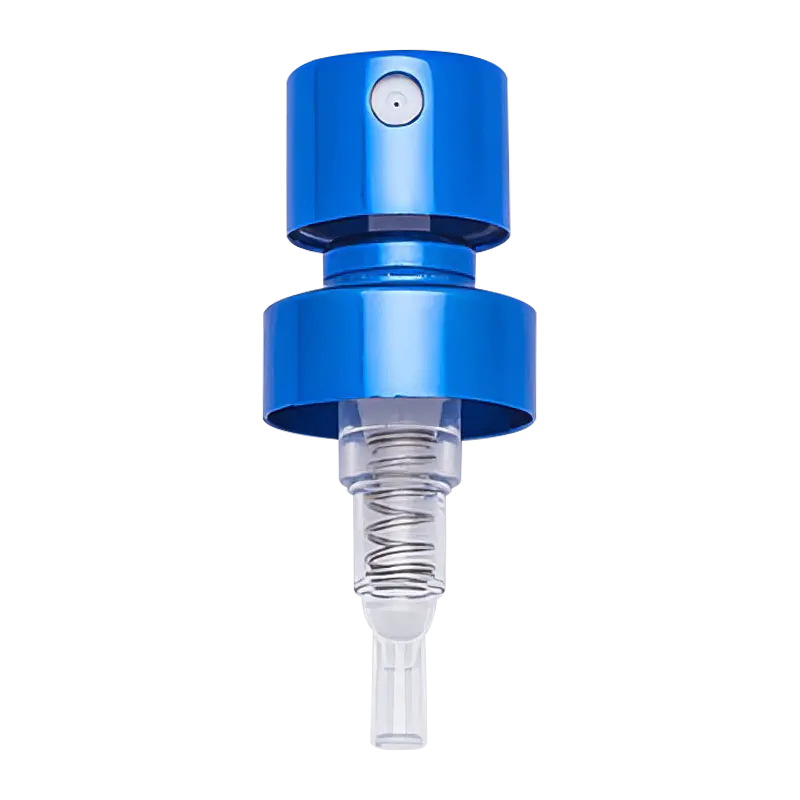 XY-PT-⊘13CAMG 13mm Crimp perfume fine mist pump sprayer shorter type
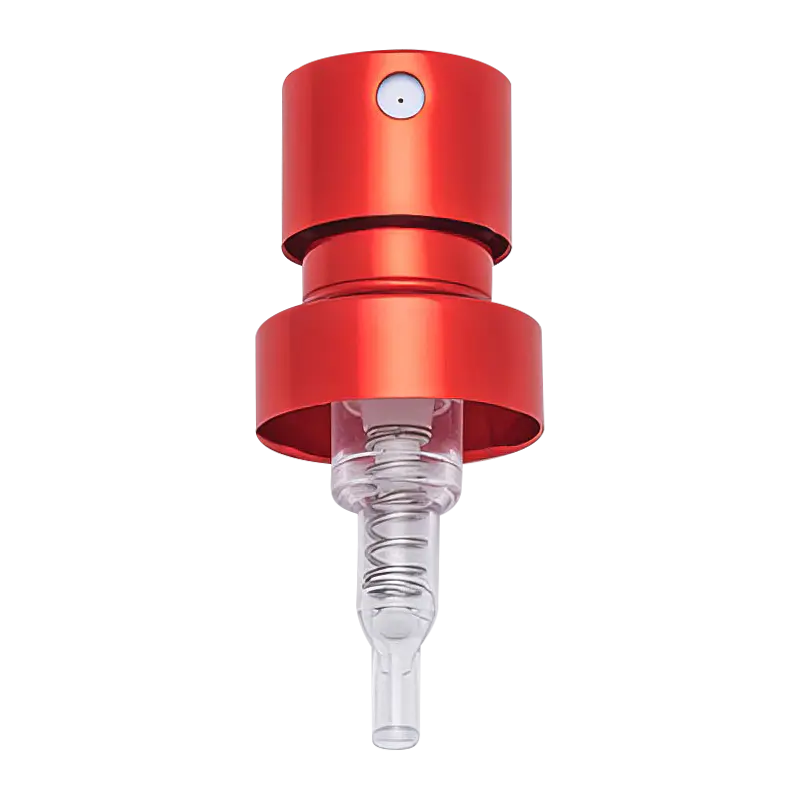 XY-PT-⊘15JDGB 15mm Crimp perfume fine mist pump sprayer high type
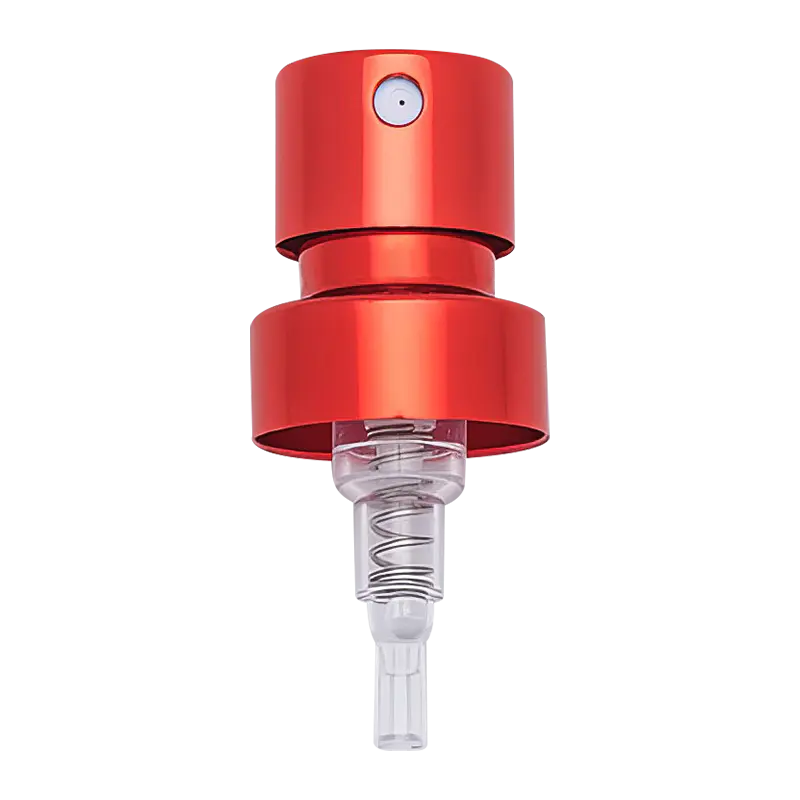 XY-PT-⊘15JDAB 15mm Crimp perfume fine mist pump sprayer short type
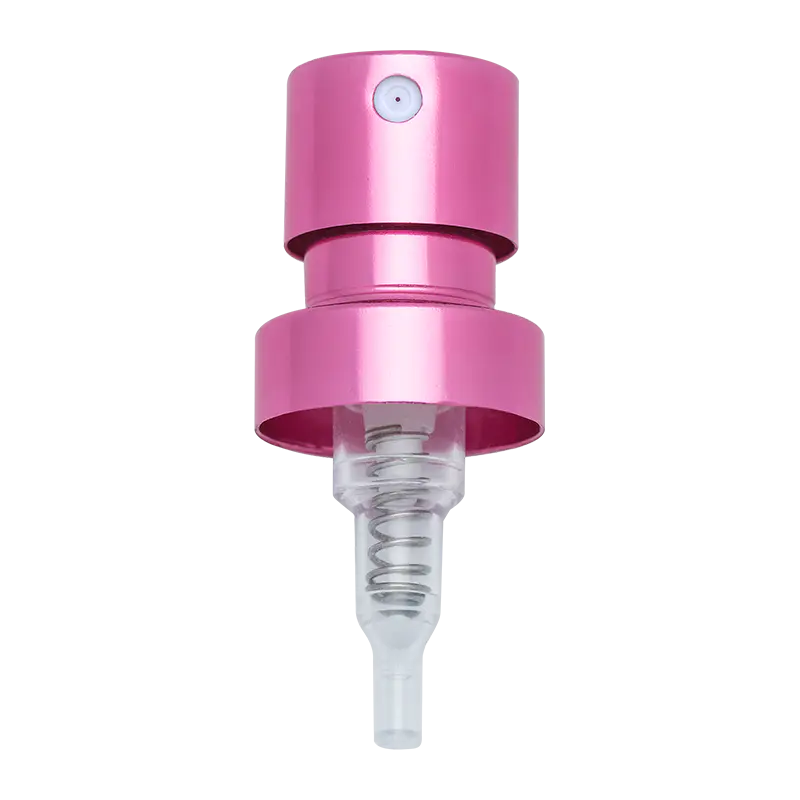 XY-PT-⊘15ABMG 15mm Crimp perfume fine mist pump sprayer short type
Tel: +86-13812990918
Phone: +86-512-58962260
Address: No.3, Xiangqun Road, Leyu, Zhangjiagang.


 English
 русский
 Español
 عربى
 Português
